Introduction
Methoni, located on the southwestern coast of the Peloponnese, was an important maritime settlement and fortified port. Its strategic position made it a valuable location for commercial and military powers operating across the Mediterranean.
The town is especially associated with Venetian rule, during which its harbor and fortress played important roles in regional shipping and defense.
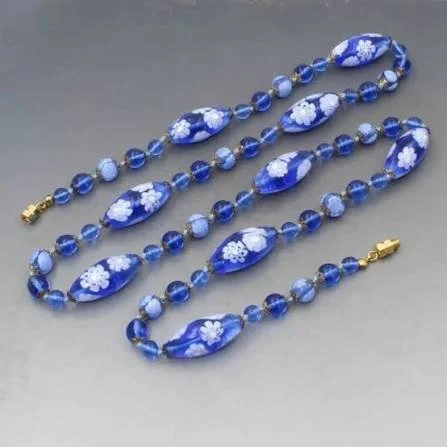
The title Venetian Glass Beads from Methoni Cache suggests the possibility of discovering a stored collection of glass beads connected with Venetian commercial activity.
Venetian glassmaking was internationally influential, and glass beads circulated widely through trade networks. However, a particular cache of Venetian beads from Methoni should not be presented as a confirmed archaeological find without excavation records.
Methoni and Venetian Rule
Methoni's harbor occupied a strategic position along maritime routes linking the Adriatic, Ionian, and eastern Mediterranean.
Venice recognized the importance of the settlement and maintained control over it during significant periods of its medieval and early modern history.
The fortress protected the harbor and supported the movement of ships and goods.
Methoni's history reflects the wider importance of fortified ports within Venetian maritime strategy.
Venetian Glassmaking
Venice became one of Europe's most important centers of glass production.
The island of Murano, near Venice, developed a particularly famous glassmaking tradition.
Venetian craftspeople produced vessels, decorative objects, mirrors, beads, and other glass products.
Their techniques and products circulated through commercial networks extending across Europe, the Mediterranean, and beyond.
The Production of Glass Beads
Glass beads could be manufactured using several techniques.
One method involved winding molten glass around a metal rod.
Another involved drawing glass into long tubes and cutting them into smaller sections.
Beads could also be shaped through moulding or other specialized processes.
Their colors were created through the addition of different mineral compounds and metallic substances.
Why Beads Were Valuable
Glass beads were small but highly portable.
They could be used as jewelry, decorative accessories, trade goods, and components of religious objects.
Their appeal came from their colors, shapes, transparency, and decorative possibilities.
Beads could circulate through long-distance exchange networks and reach communities far from their original workshops.
What Is an Archaeological Cache?
An archaeological cache is a group of objects deliberately deposited or stored together.
A collection of beads might represent merchandise awaiting sale, materials held by a craftsperson, personal possessions, or objects placed in a particular context for another purpose.
The interpretation depends on the location, arrangement, associated artifacts, and dating evidence.
A concentration of beads does not automatically indicate a merchant's hidden store.
Identifying Venetian Origin
Determining where a glass bead was produced can be challenging.
Researchers examine its shape, color, manufacturing technique, decoration, and chemical composition.
Scientific methods such as X-ray fluorescence and other compositional analyses may help identify the materials used in production.
Comparison with documented Venetian glass products can provide additional evidence.
However, a bead resembling Venetian examples may have been made elsewhere using similar techniques.
Methoni as a Commercial Meeting Point
Methoni's harbor connected different maritime communities.
Ships carried goods, passengers, and commercial information between ports.
A collection of imported beads could therefore reflect the town's participation in wider Mediterranean exchange.
Other objects found alongside beads might reveal the nature of the commercial activity.
Pottery, coins, weights, storage vessels, and shipping-related materials could help reconstruct the context.
Conservation of Glass Objects
Archaeological glass can be fragile.
Changes in soil chemistry and moisture can cause deterioration, surface flaking, and loss of transparency.
Objects recovered from buried deposits require careful conservation and controlled storage.
Three-dimensional photography and microscopic imaging can preserve details of their manufacturing techniques.
Conclusion
Venetian Glass Beads from Methoni Cache provide an interesting opportunity to investigate craftsmanship and trade in a major Venetian-era port.
Venetian glass production and Mediterranean bead commerce are historically established.
The existence of a particular bead cache at Methoni requires direct archaeological documentation, and its attribution to Venetian workshops would need scientific and stylistic analysis.
If securely identified, such a collection could reveal how small decorative objects moved through maritime networks and how a fortified Peloponnesian port participated in the wider commercial world of the Mediterranean.