Introduction
Trikala, in the Thessaly region of central Greece, has a long history extending from antiquity through the Byzantine and modern periods.
Its geographical position along routes connecting Thessaly with neighboring regions made it an important settlement area.
The title Roman Mosaic Floors in Trikala Basilica suggests the possibility of identifying mosaic pavements within a religious building associated with the Roman period.
The subject requires chronological care. The term "basilica" can refer to different architectural forms: Roman civic buildings, later Christian churches, and modern religious structures. A mosaic floor inside a building identified as a basilica does not automatically date to the Roman period.
Specific Roman mosaic floors in a particular Trikala basilica require archaeological confirmation.
Trikala in Antiquity
The wider Trikala area was associated with the ancient settlement of Trikka.
The region developed within the broader historical landscape of Thessaly, which contained agricultural communities, urban centers, sanctuaries, and transportation routes.
During the Roman period, Thessaly became part of the Roman political and administrative world.
Its settlements continued to participate in regional commerce and cultural exchange.
The Roman Basilica
In Roman architecture, a basilica was generally a large public building used for legal proceedings, administration, commerce, and civic gatherings.
Its interior commonly contained a broad central space, side aisles, and an architectural arrangement suitable for public activity.
Later, Christian communities adopted the basilica form for church architecture.
Consequently, the word "basilica" can describe buildings from different periods and with different functions.
Dating a particular structure requires architectural and archaeological evidence.
Roman Mosaic Floors
Mosaics were widely used in Roman buildings.
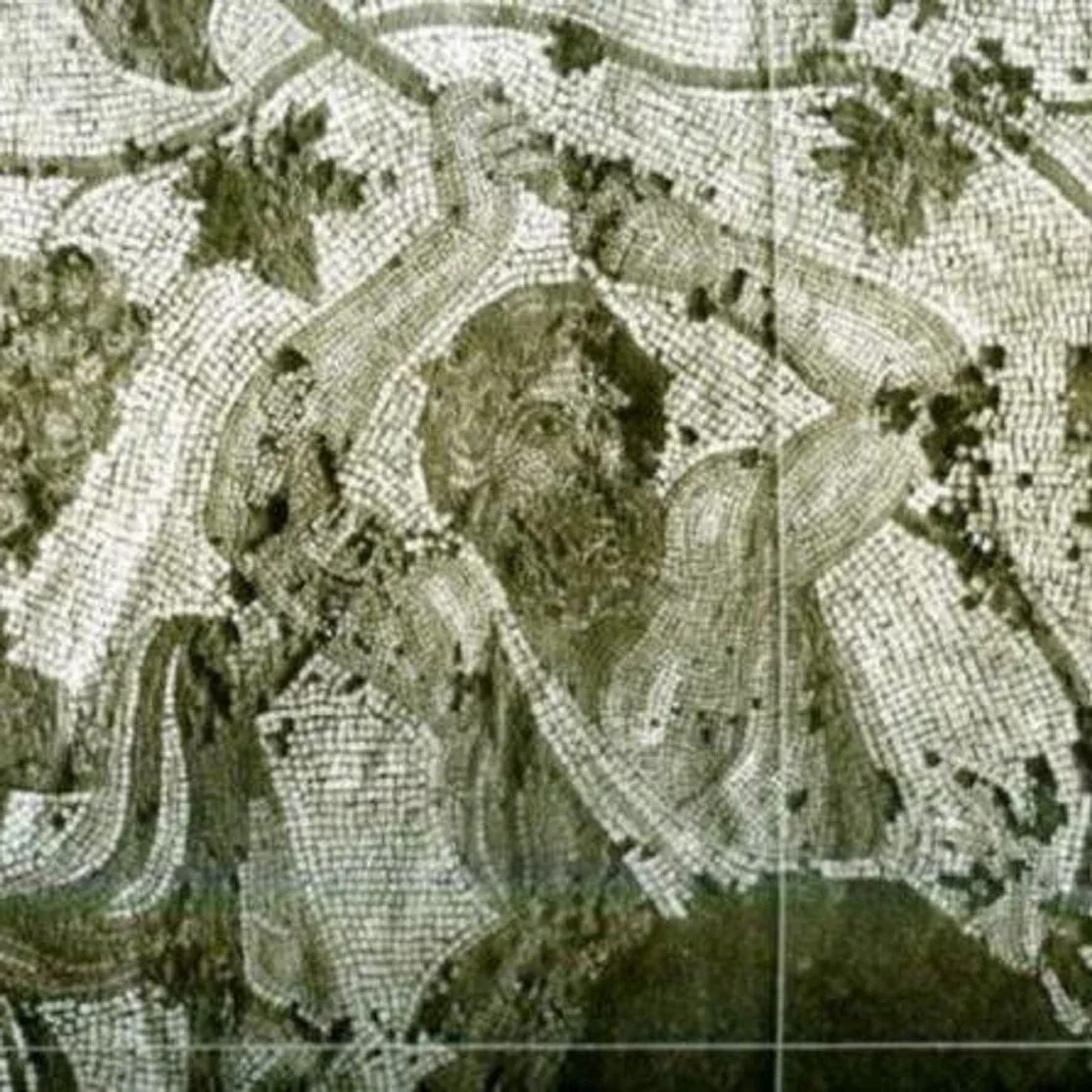
They were created by arranging small pieces of stone, ceramic, glass, or other materials into decorative patterns.
These pieces are known as tesserae.
Mosaic floors could feature geometric designs, floral patterns, animals, mythological scenes, and elaborate compositions.
Their complexity and materials varied according to the building's function and the resources available to its owners.
Techniques of Mosaic Construction
Roman mosaic floors required careful preparation.
The ground was usually prepared with several layers of material to create a stable surface.
A bedding layer held the tesserae in position.
Craftspeople arranged the small pieces according to a planned design.
The size, color, material, and arrangement of the tesserae could influence the appearance of the finished floor.
Some mosaics were produced by specialized workshops whose techniques circulated across the Roman world.
What Mosaic Designs Reveal
Mosaic patterns can provide information about artistic preferences and cultural connections.
Geometric designs might reflect broader decorative traditions.
Mythological scenes could communicate education, status, and religious or cultural interests.
Animals and plants might carry symbolic meanings or simply provide decorative variety.
The interpretation of a mosaic should consider its original architectural setting rather than relying only on its imagery.
Identifying the Building's Date
A major challenge is determining whether a mosaic belongs to the Roman period or a later phase.
Researchers examine the floor's construction, decorative style, tessera materials, and relationship with surrounding walls.
Coins, pottery, inscriptions, and other datable objects may help establish chronology.
Stratigraphic evidence is especially important because buildings can be renovated and reused over many centuries.
A later church may incorporate an earlier Roman structure or contain floors from several different periods.
Roman and Early Christian Architectural Continuity
The transition from Roman civic architecture to Christian religious buildings was gradual and varied across regions.
Some early Christian basilicas adopted architectural elements and construction techniques associated with Roman public buildings.
Mosaic decoration remained important, although its themes and religious significance changed.
A mosaic floor in a Christian basilica could therefore belong to the late Roman or early Byzantine period rather than the earlier imperial centuries.
Archaeological Documentation and Restoration
Mosaic floors require careful documentation and conservation.
Researchers record the arrangement of tesserae, construction layers, decorative details, and areas of damage.
Photogrammetry can produce accurate digital models.
Restoration should preserve original materials wherever possible and clearly distinguish modern additions from ancient fabric.
Protective coverings and controlled visitor access may be necessary to prevent further deterioration.
The Value of Mosaic Discoveries in Thessaly
A securely dated Roman mosaic in Trikala would contribute to understanding the region's urban and domestic architecture.
It could reveal the circulation of decorative styles, the availability of skilled craftspeople, and the resources available to local communities.
Comparison with mosaics from other Thessalian settlements could also help researchers identify regional artistic traditions.
Conclusion
Roman Mosaic Floors in Trikala Basilica provide an opportunity to investigate Roman architecture, decorative craftsmanship, and the development of religious buildings in Thessaly.
Roman mosaics and the later adoption of basilica architecture by Christian communities are well documented.
The existence and precise date of particular Roman mosaic floors in a Trikala basilica require archaeological verification.
If securely identified, such floors could reveal how local buildings incorporated wider Mediterranean artistic traditions and how architectural spaces evolved across the transition from the Roman world to early Christianity.