Introduction
The Serres region in northern Greece occupies a fertile landscape shaped by the Strymon River valley and the surrounding mountains. Its location connected communities in the interior Balkans with the Aegean coast.
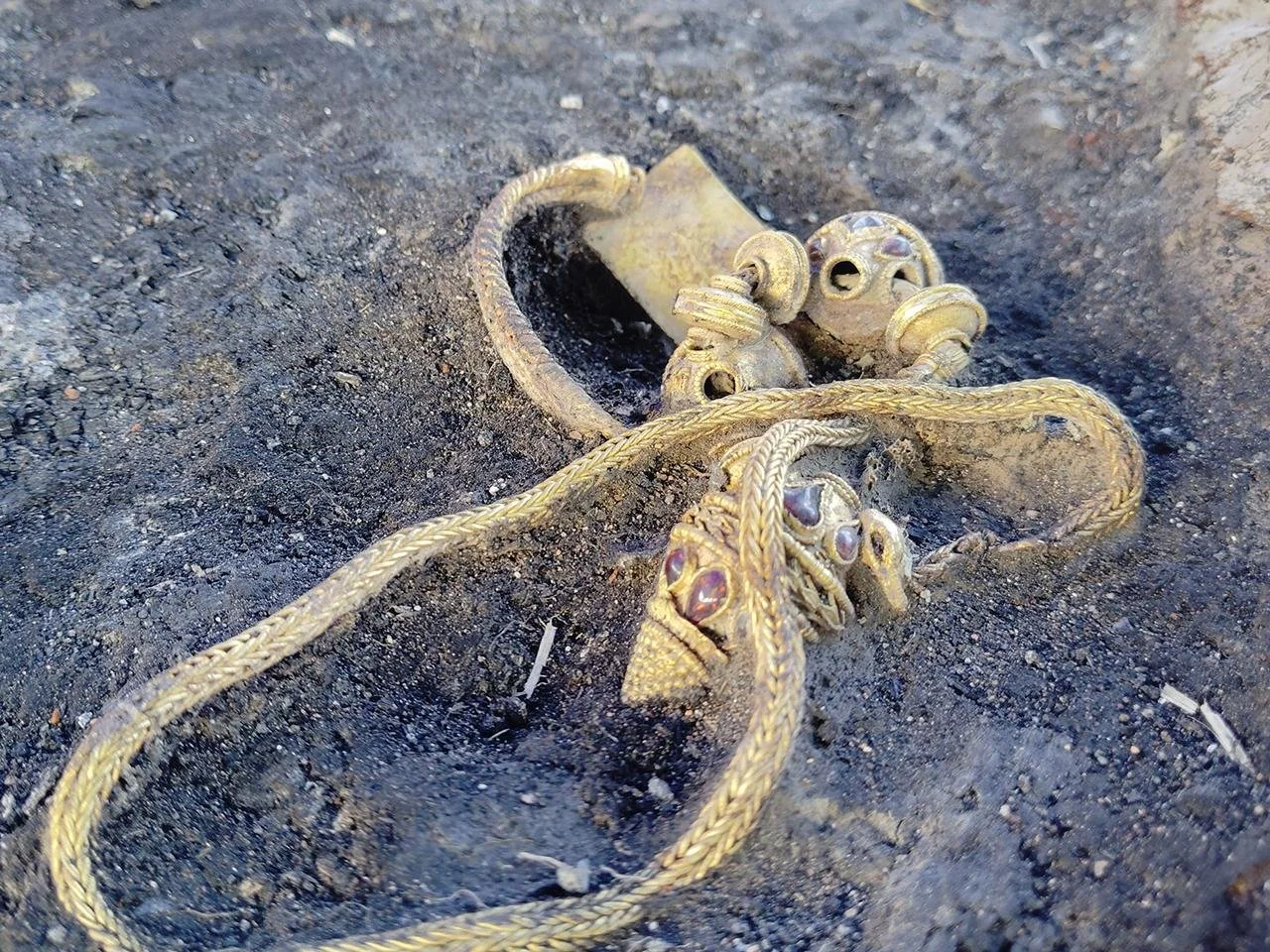
The title Rare Thracian Fibulae in Serres Valley Graves explores the possibility of identifying distinctive ancient clothing fasteners in burial sites across the region.
Fibulae are among the most useful small finds in European archaeology. Their designs, manufacturing methods, and distribution can help researchers investigate clothing, chronology, craftsmanship, and cultural interaction.
Thracian communities and their material traditions are well documented across southeastern Europe. However, specific rare fibulae from particular Serres valley graves require archaeological confirmation.
What Is a Fibula?
A fibula is an ancient brooch used to fasten clothing.
It generally consists of a pin and a body designed to hold fabric together.
Fibulae served a practical purpose, but they could also function as decorative objects and indicators of personal identity.
Their materials included bronze, iron, silver, and, in some cases, gold.
Some examples were simple and functional, while others featured elaborate shapes and decoration.
Thracian Communities
The ancient Thracians were a diverse collection of communities occupying parts of southeastern Europe.
Their territories included areas of modern Bulgaria, northeastern Greece, European Turkey, and neighboring regions.
They developed distinctive burial traditions, artistic styles, and metalworking practices.
However, Thracian society was not culturally uniform. Local communities maintained different traditions and interacted with Greek, Macedonian, and other neighboring populations.
The Serres Valley as a Cultural Corridor
The Strymon River valley provided a natural route between the Balkan interior and the Aegean.
Its fertile land supported agricultural communities, while the river corridor facilitated movement and exchange.
The region experienced contact among different populations over many centuries.
This makes it particularly valuable for studying how objects and artistic styles moved between communities.
Fibulae as Archaeological Dating Tools
Fibulae changed in form over time.
Researchers classify them according to features such as the shape of the bow, spring, catchplate, pin construction, and decorative elements.
Certain types became characteristic of particular chronological periods or geographical regions.
When found in a securely dated grave, a fibula can help establish a burial's approximate date.
However, objects could remain in use for generations, so their chronology must be considered alongside other evidence.
Clothing and Personal Identity
Fibulae reveal information about ancient clothing.
They may have been used to fasten cloaks, tunics, or other garments.
Their placement in a grave can sometimes provide clues about how a person dressed.
The material and decoration may also reflect wealth, gendered customs, regional affiliation, or personal preference.
Such interpretations must be made carefully because burial practices do not always reproduce everyday clothing exactly.
Metalworking Techniques
Ancient metalworkers used casting, hammering, bending, engraving, and joining techniques to produce fibulae.
Bronze was particularly common because it could be shaped and decorated with relative flexibility.
Metallurgical analysis can reveal the composition of an object and sometimes provide clues about manufacturing practices.
Microscopic examination may identify tool marks and repairs.
These details help distinguish locally produced objects from imported examples.
Burial Context and Social Organization
Fibulae are often discovered in graves alongside pottery, weapons, jewelry, and other personal objects.
The combination of grave goods can provide information about burial customs and social distinctions.
A group of similar fibulae across several graves may indicate shared clothing traditions or cultural connections.
Differences in material and decoration may reflect social status or access to specialized workshops.
Cultural Exchange in the Northern Aegean
The Serres region was connected to communities across the Balkans and the northern Aegean.
Objects could move through trade, migration, marriage, warfare, and diplomatic exchange.
A fibula with stylistic similarities to examples from elsewhere does not necessarily prove that its owner migrated from that region.
It may have been locally manufactured using an imported design.
Archaeologists therefore combine typology with metal analysis, burial context, and settlement evidence.
Conservation of Metal Finds
Bronze and iron artifacts can deteriorate after burial.
Soil chemistry, moisture, and corrosion affect their preservation.
Excavated fibulae may require careful cleaning, stabilization, and controlled storage.
Detailed photography and three-dimensional recording can preserve information about their original condition.
Conclusion
Rare Thracian Fibulae in Serres Valley Graves provide a valuable subject for examining clothing, identity, metalworking, and cultural exchange in ancient northern Greece.
Fibulae are well-established archaeological objects, and the Serres region offers a historically significant setting for studying Thracian and neighboring communities.
The specific discovery of rare examples in particular valley graves requires secure archaeological documentation.
If such finds were confirmed, they could help researchers reconstruct the connections between local burial traditions and the wider material culture of the ancient Balkans.