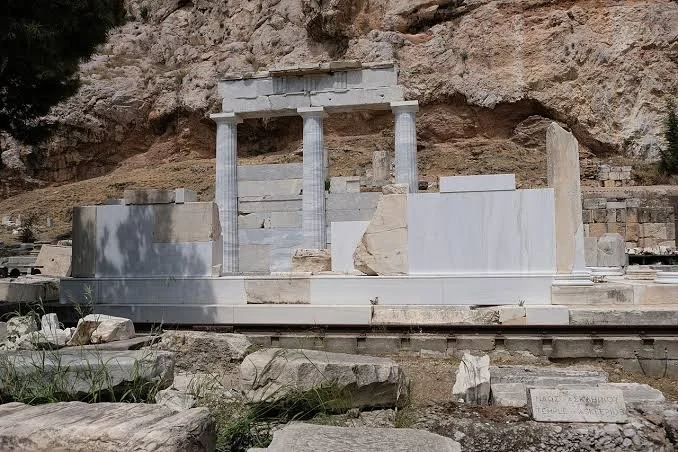
Did Ancient Greek Temples Really Have Secret Tunnels? The Truth Is More Fascinating Than the Myth
Stories about ancient temples often include secret passages, underground tunnels, hidden chambers, and mysterious routes used by priests.
Some ancient Greek sanctuaries did contain underground spaces, crypt-like structures, service areas, water systems, and architectural features hidden from ordinary visitors.
However, it would be historically inaccurate to claim that Greek temples universally contained secret tunnels designed for dramatic escapes or conspiracies.
The real architectural story is more complicated.
And in many cases, more interesting.
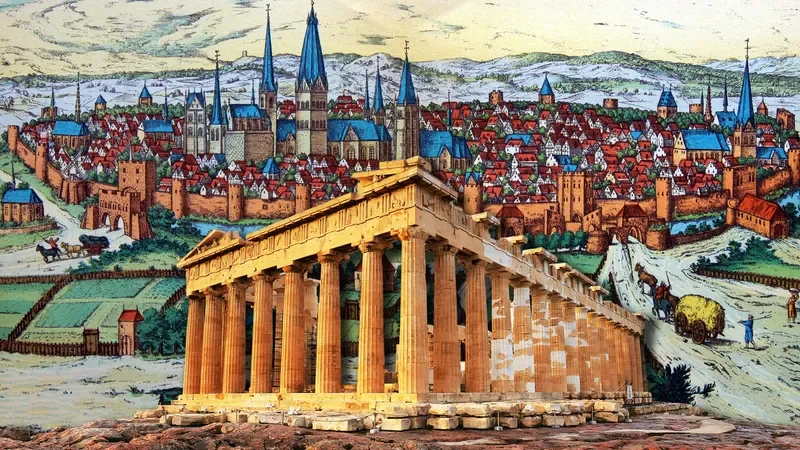
A Greek Temple Was Not a Modern Church
One of the biggest misunderstandings about Greek temples is the assumption that large congregations gathered inside them for worship.
In many Greek religious traditions, major rituals took place outside.
The temple primarily served as the house of the deity.
Inside could stand the cult statue and sacred offerings.
Access was often limited.
This already created a division between public and restricted space.
The Sacred Interior
The main room of a Greek temple was generally known as the naos or cella.
This contained the principal cult image.
The interior could be visually and physically separated from the exterior ceremonial space.
For an ordinary visitor, the sacred image might not always be freely accessible.
This restriction helped create an atmosphere of mystery.
Underground Sacred Spaces
Some Greek religious sites were associated with caves, underground chambers, or spaces connected with chthonic deities—gods associated with the earth and underworld.
Examples of Greek religious architecture could include:
Caves used as sanctuaries.
Underground chambers.
Sacred wells.
Subterranean water systems.
Oracular spaces.
These should not automatically be called “secret passages.”
They had religious or practical functions.
The Oracle and Hidden Architecture
Ancient sanctuaries associated with prophecy are particularly vulnerable to sensational stories.
At Delphi, for example, later traditions and popular imagination have created dramatic images of hidden chambers and mysterious vapors.
The archaeological reality is more complex.
The sanctuary developed over centuries.
Buildings were rebuilt.
Natural geological features influenced the landscape.
The interpretation of ancient ritual spaces continues to be debated.
Temple Foundations and Hidden Infrastructure
A monumental temple required engineering.
Beneath visible columns could exist:
Foundations.
Drainage systems.
Retaining structures.
Substructures.
These elements were invisible to ordinary visitors but essential to the building.
A “hidden passage” may therefore sometimes be nothing more than an underground architectural feature.
The Erechtheion and Sacred Landscape
The Acropolis of Athens demonstrates that Greek religious architecture interacted closely with myth.
The Erechtheion contained sacred associations connected with Athena, Poseidon, and legendary events.
The surrounding landscape itself became part of the religious experience.
Sacred objects, marks, and spaces could be associated with divine stories.
The mystery did not always depend on secret tunnels.
The entire sanctuary was designed as a sacred environment.
Priests and Restricted Access
Certain rituals involved specialized personnel.
Priests and other religious officials could enter spaces unavailable to the general population.
This created a distinction between ordinary and sacred knowledge.
But restricted access should not be confused with conspiracy.
Ancient religions often depended on ritual rules.
Some objects were not meant to be seen by everyone.
Some ceremonies occurred only during specific festivals.
Why the Myth of Secret Passages Survives
Humans are fascinated by hidden architecture.
When a temple contains:
A basement.
A cave.
A sealed room.
A water channel.
Modern imagination may immediately create stories of hidden escape routes.
The reality is usually more practical.
Ancient builders needed to manage water.
Support structures.
Protect foundations.
Organize sacred space.
The Real Secret of Greek Temples
The most important hidden feature of Greek temples was not necessarily a tunnel.
It was symbolism.
The architecture itself communicated order.
Columns created rhythm.
Proportion created harmony.
Orientation connected buildings with landscape and ritual.
A temple could transform ordinary stone into sacred space.
And perhaps that is more impressive than any fictional secret passage.
The Greeks did not need hidden corridors to create mystery.
They built mystery into the architecture itself.