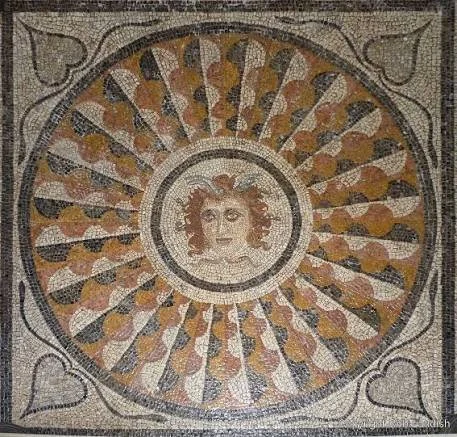
How Ancient Greek Artists Turned Thousands of Tiny Stones Into Stunning Works of Art
Before Roman mosaics covered villas and bathhouses across the Mediterranean, Greek artists were already experimenting with techniques that transformed floors into images.
Greek mosaic art developed from relatively simple arrangements of naturally colored pebbles into increasingly sophisticated compositions using carefully cut pieces known as tesserae.
The history of Greek mosaics demonstrates an important artistic evolution.
What began as decorative flooring became a medium capable of representing mythological scenes, animals, geometric patterns, and complex visual narratives.
The Earliest Pebble Mosaics
Early Greek mosaics frequently used naturally occurring pebbles.
Artists selected stones according to:
Color.
Shape.
Size.
The pebbles were embedded into prepared surfaces to create patterns.
At first, designs could be relatively simple.
But artistic experimentation increased.
Eventually, pebble mosaics were used to create recognizable figures and scenes.
Pella and the Mastery of Pebble Mosaics
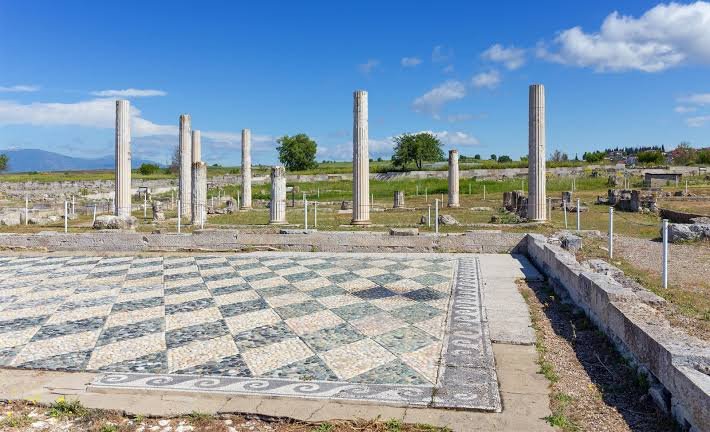
The ancient Macedonian capital of Pella became famous for spectacular mosaics.
Some surviving examples demonstrate impressive skill in representing movement and anatomy.
Artists created scenes involving:
Hunting.
Mythology.
Animals.
The use of differently colored pebbles created contrast.
Curved lines and careful arrangement could suggest movement.
From Pebbles to Tesserae
Over time, artists increasingly used tesserae.
These were small pieces of material cut into more regular shapes.
Materials could include:
Stone.
Marble.
Terracotta.
Glass.
Tesserae allowed greater control.
An artist could create more precise outlines.
Colors could be arranged with greater detail.
The transition expanded the possibilities of mosaic art.
Preparing the Floor
A mosaic required a stable foundation.
The floor had to be prepared carefully.
Layers could help provide support and stability.
The final setting material held the pebbles or tesserae in place.
This was not simply painting on the floor.
It was construction.
The Artist's Design
Complex mosaics required planning.
An artist might develop an outline or guide for the composition.
The central image could be surrounded by decorative borders.
Geometric patterns helped frame the narrative.
The viewer's attention was directed toward the main scene.
Mythology Beneath Your Feet
Greek mosaics often represented stories that viewers already knew.
A mythological image did not require a written explanation.
A familiar hero could be recognized.
A god could be identified by attributes.
An animal could symbolize a particular story.
The floor became a visual narrative.
Perspective and Shading
Greek artists experimented with techniques that created the illusion of depth.
Different shades could suggest:
Muscles.
Shadows.
Clothing folds.
Three-dimensional forms.
The mosaic could therefore imitate aspects of painting.
The Mosaic as a Social Statement
A sophisticated mosaic was expensive.
It required:
Skilled artists.
Large quantities of materials.
Time.
Architectural space.
A wealthy household could use mosaic decoration to display status.
Visitors entering a house might literally walk across evidence of the owner's resources.
Why Greek Mosaics Matter
Greek mosaic art represents the meeting of craft and fine art.
A floor needed to be functional.
People walked on it.
Yet artists transformed it into an image.
Stone became movement.
Pebbles became animals.
Thousands of small fragments became mythology.
The technique demonstrates an extraordinary artistic principle:
A masterpiece does not always begin with a single perfect material. Sometimes it begins with thousands of small pieces carefully placed in exactly the right position.