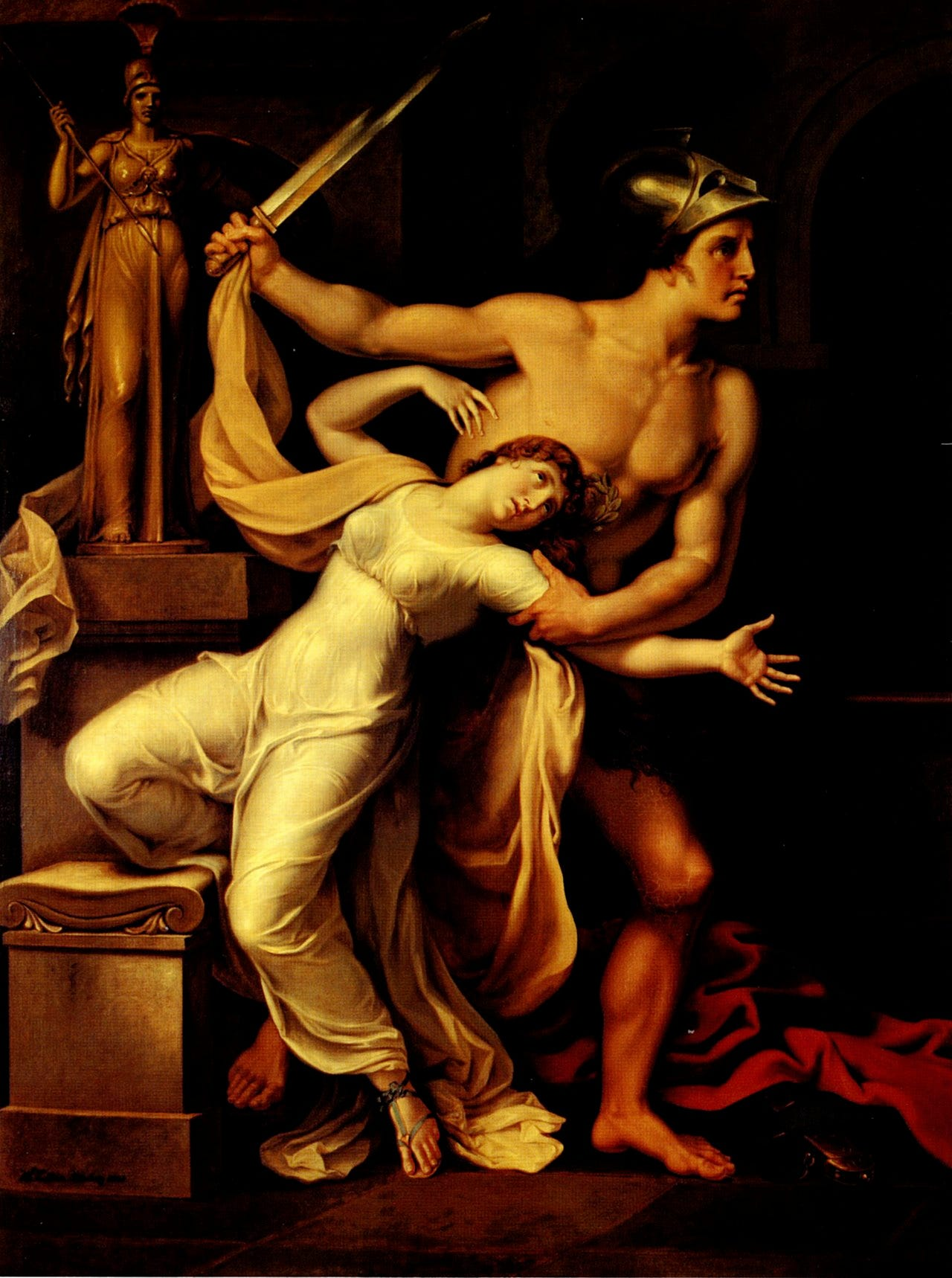
The Curse of Cassandra is one of the most tragic stories connected with the Trojan War.
Cassandra, daughter of King Priam and Queen Hecuba, possessed the extraordinary gift of prophecy.
Yet she was cursed so that no one would ever believe her predictions.
Her story becomes a tragedy of knowledge without power: she can see the future but cannot persuade others to act.
Cassandra of Troy
Cassandra was one of the daughters of Priam.
She belonged to the royal family of Troy and therefore witnessed the events leading to the city's destruction from inside the royal household.
The Gift of Prophecy
According to the most famous tradition, Apollo granted Cassandra the ability to see the future.
She became capable of predicting events that had not yet happened.
The Curse
Cassandra rejected Apollo's romantic advances.
In retaliation, he ensured that although her prophecies would always be true, nobody would believe them.
This created a cruel paradox.
She possessed knowledge but lacked influence.
Cassandra Warns Troy
Cassandra repeatedly warned the Trojans about disaster.
She understood the danger surrounding the war.
Yet the people ignored her.
Her warnings became symbols of truth dismissed by society.
Paris and Helen
Cassandra recognized the consequences of Paris' actions.
The arrival of Helen and the continuation of the conflict represented a serious threat to Troy.
But her warnings were disregarded.
The Trojan Horse
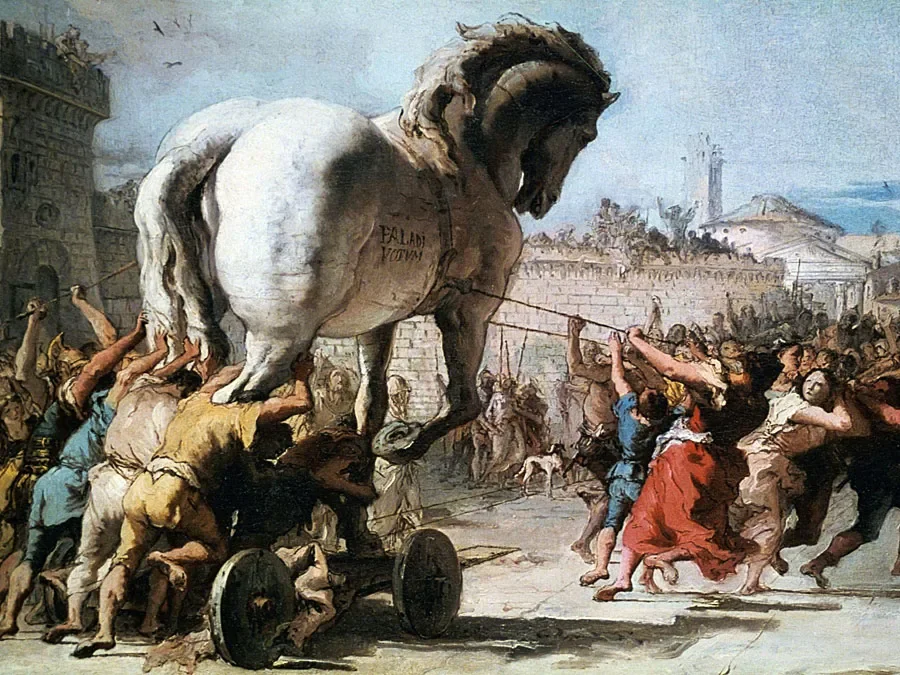
Cassandra's most famous warning concerned the Trojan Horse.
When the Greeks appeared to have abandoned the war and left the enormous wooden horse behind, Cassandra recognized the danger.
She warned the Trojans not to bring it inside the city.
Nobody listened.
Laocoön
Another Trojan, the priest Laocoön, also warned against the horse.
In the famous tradition, divine forces punished him and his sons.
The event convinced many Trojans that the horse should be accepted.
Troy Falls
The Trojans brought the horse into the city.
Greek soldiers hidden inside emerged during the night.
They opened the gates for the returning Greek army.
Troy was destroyed.
Cassandra at the Fall
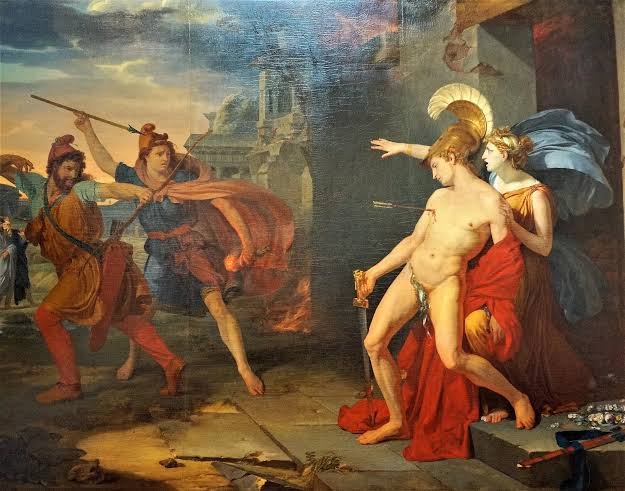
During the destruction, Cassandra sought refuge in the temple of Athena.
She was eventually seized by Ajax the Lesser according to the traditional account.
This act became one of the atrocities associated with Troy's destruction.
Agamemnon
Cassandra was taken by Agamemnon, leader of the Greek forces.
She became his captive and was brought to Mycenae.
But Cassandra foresaw that Agamemnon would also die.
Cassandra's Final Prophecy
Cassandra predicted the murders that awaited her and Agamemnon.
Yet once again, her warnings were not believed.
She entered the palace knowing that death was waiting.
Her Death
Agamemnon was murdered by Clytemnestra and her allies.
Cassandra was also killed.
The prophecy she had foreseen was fulfilled.
The Meaning of Cassandra
Cassandra has become a powerful cultural symbol.
Her story represents the tragic situation in which:
someone knows the truth;
accurately predicts danger;
warns others;
but is ignored.
Fate and Free Will
Cassandra's curse raises one of Greek mythology's central questions.
If she knows the future, can she change it?
The stories suggest that knowledge of fate does not necessarily grant control over fate.
Cassandra's Psychological Tragedy
Unlike many mythological heroes who gain glory through prophecy, Cassandra gains suffering.
Her knowledge becomes a burden.
She must watch people make decisions that she knows will lead to destruction.
The Fall of Troy
Her story is inseparable from the collapse of Troy.
The city does not fall because its people lack warnings.
It falls because they fail to act upon them.
Conclusion
The Curse of Cassandra and the Fall of Troy is one of Greek mythology's most powerful reflections on truth and human behavior.
Cassandra possesses perfect prophetic knowledge but is denied the ability to influence others.
She correctly predicts the catastrophe of the Trojan Horse, the destruction of Troy, and her own death.
Her tragedy lies not in ignorance but in knowing too much while possessing too little power.
For this reason, Cassandra has survived as one of mythology's enduring symbols of the unbelieved truth-teller—the person who sees disaster coming but cannot convince anyone else to prevent it.