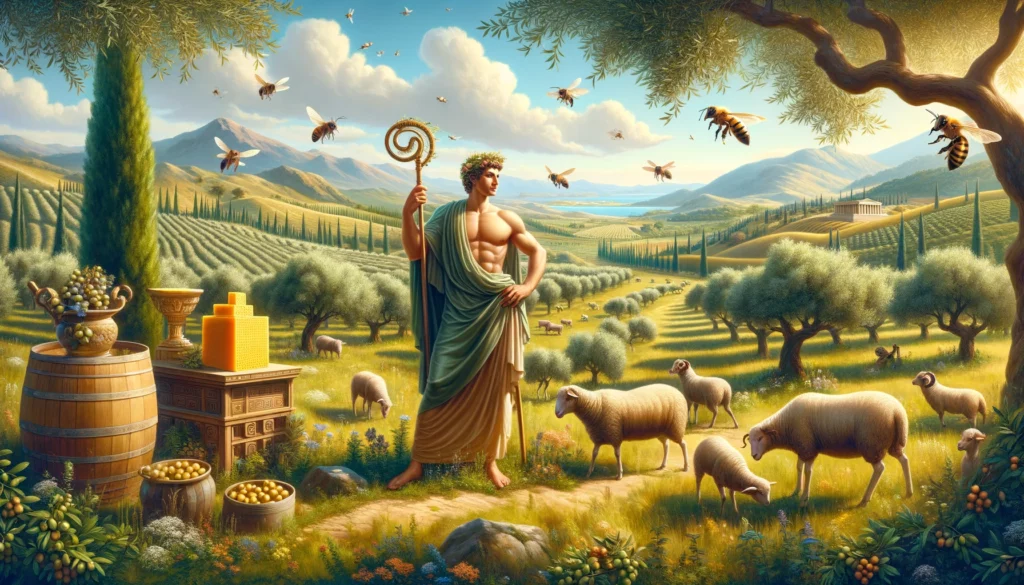
Aristaeus is a fascinating figure in Greek mythology associated with beekeeping, agriculture, shepherding, hunting, and rural knowledge.
Unlike the Olympian gods who dominate Greek mythology, Aristaeus represents the practical skills that allowed ancient communities to survive.
His story is especially famous because of the myth explaining how he learned to keep bees.
Aristaeus' Divine Origins
Aristaeus was generally described as the son of Apollo and Cyrene.
Cyrene was a powerful figure associated with hunting and pastoral life.
Apollo's divine ancestry gave Aristaeus supernatural status, while his mother's traditions connected him to the countryside.
A Teacher of Agriculture
Aristaeus was associated with useful agricultural practices.
Traditions credit him with teaching humans techniques related to:
beekeeping;
olive cultivation;
animal husbandry;
and rural crafts.
Beekeeping
Honey was extremely valuable in the ancient Mediterranean.
It served as:
food;
sweetener;
ingredient in medicine;
religious offering;
and component of fermented beverages.
Bees were therefore economically important.
The Death of Eurydice
Aristaeus becomes central to the tragic story of Orpheus and Eurydice.
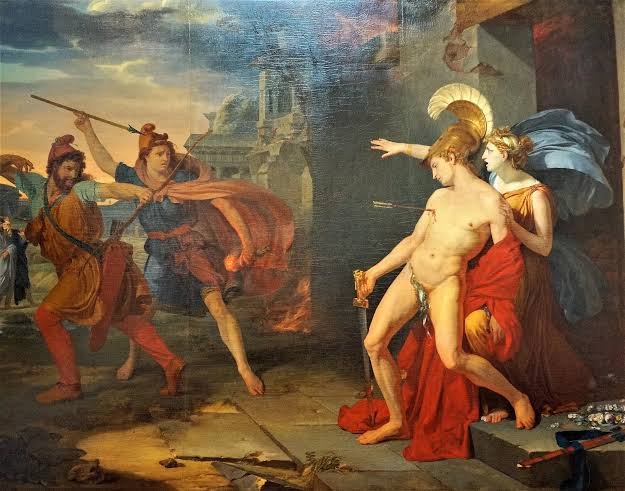
According to Virgil's Georgics, Aristaeus pursued Eurydice.
While escaping him, she stepped on a snake and died.
Orpheus' Grief
Eurydice's death led to the famous journey of Orpheus into the Underworld.
Orpheus attempted to retrieve his wife.
The tragedy eventually returned to Aristaeus.
The Bees Die
After Eurydice's death, Aristaeus' bees mysteriously died.
He had lost the creatures that represented his livelihood and divine agricultural knowledge.
Seeking an Explanation
Aristaeus went to his mother, Cyrene, for help.
She directed him toward the prophetic sea god Proteus.
Proteus
Proteus possessed knowledge of hidden truths but was famous for changing forms to escape questioning.
Aristaeus had to restrain him before he could obtain the explanation.
The Sacrifice
Proteus revealed that Aristaeus' bees had died because of the death of Eurydice.
Aristaeus was instructed to make offerings to the gods and the spirits of the dead.
The Birth of New Bees
After completing the rituals, Aristaeus discovered bees emerging from the bodies of sacrificed cattle.
This miraculous process is known as bugonia.
The story became one of the ancient world's famous mythological explanations for the origin of bees.
Agriculture and Religion
The myth connects farming with religious responsibility.
Agriculture was never purely economic in ancient Greek culture.
Farmers depended upon divine forces involving:
weather;
fertility;
soil;
animals;
and seasonal cycles.
Aristaeus as Civilizing Figure
Aristaeus represents humanity's transition from simply exploiting nature to understanding and managing it.
He embodies practical knowledge.
Conclusion
The Story of Aristaeus illustrates the ancient Greek respect for agricultural knowledge.
His association with bees, livestock, hunting, and farming reflects the importance of rural skills to Mediterranean civilization.
His connection to Eurydice's death also introduces a moral dimension: human actions can disrupt the natural world, and restoration requires acknowledgment, sacrifice, and respect for divine and natural forces.