Part of an ancient Greek burial site has been discovered beneath a road on the Italian island of Sicily.
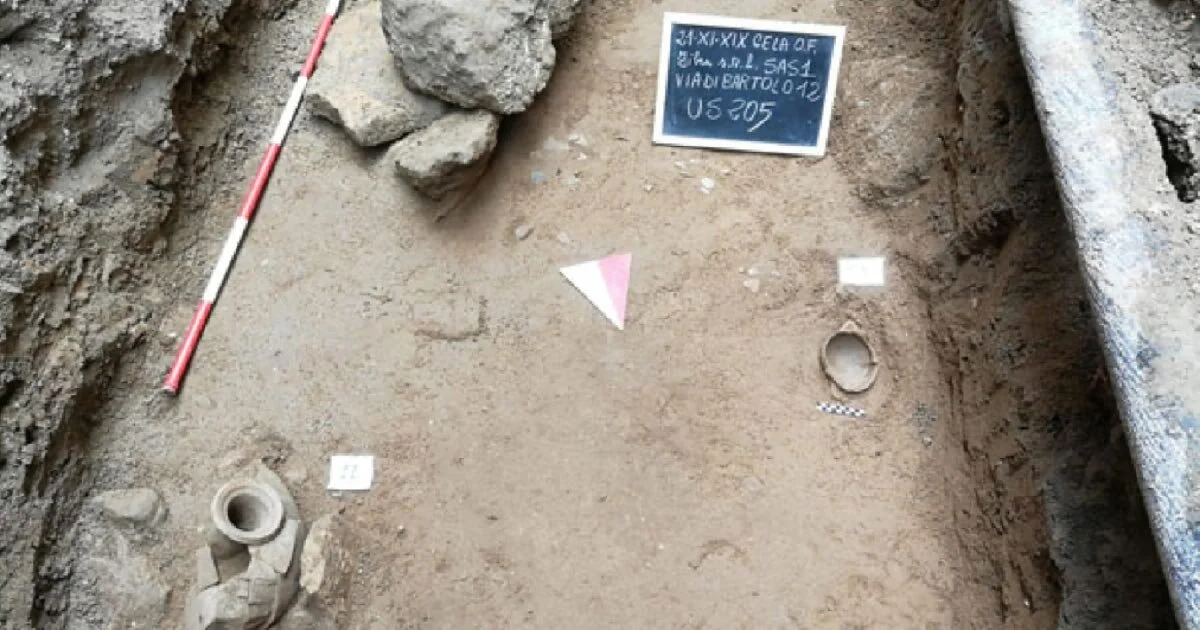
Workers made the find while installing fiber optic cables below Via Di Bartolo in the city of Gela for the company Open Fiber, according to the Sicilian regional government.
Open Fiber's in-house archaeologist Gianluca Calà said that the section of the Greek necropolis likely dates back to between the 7th and 6th century B.C.
Calà—who was on call during the installation work—said excavations had uncovered a ceramic water jug which contained the bones of newborn baby, as well as the skeleton of a large animal.
Around 20 ceramic finds have been identified at the site, the oldest of which is a beautiful cup of the Proto-Corinthian style dating back to between 700 and 651 B.C.
It is thought that the cup was deposited during a funerary ceremony which involved the slaughter and cooking of animals.
Last month, a sarcophagus containing an intact skeleton from roughly the same period was also uncovered in Gela.
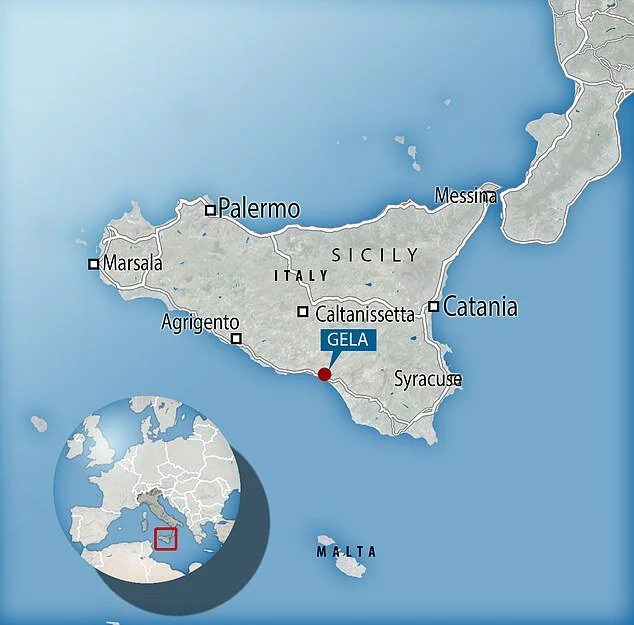
Sicily was colonized by the Greeks in around 750BC, and has been home to a number of recent archaeological discoveries that point to the unique superstitions about death in Greek culture
"Two weeks after the last important discovery of the sarcophagus and the intact skeleton carried out in what is certainly a Greek necropolis, Gela provides other extraordinary testimonies of the past," a statement from the Sicilian regional government read.
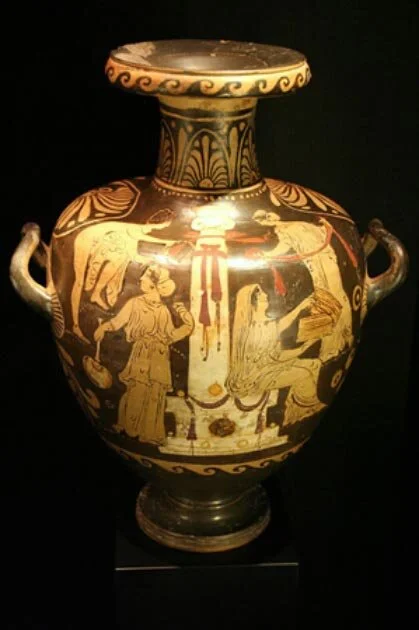
Example of an (ornate) 4 th century BC Greek hydria. (Archaeology Museum of Catalonia / Public Domain )
The latest find is thought to form part of a necropolis which was first excavated at the beginning of the twentieth century, The Local Italy reported.
"Once again, Gela confirms itself to be one of the Sicilian places that can tell an important part of our ancient history," president of the Sicilian Region, Nello Musumeci, said in a statement. "Two important archaeological finds, a short distance from each other, demonstrate the constant commitment in the work of preservation carried out by the Department of Cultural Heritage."
"It is confirmation of how much attention is paid to the Gela territory, which I consider to be a precious treasure chest of archaeological evidence," Musumeci said.
Archaeologists and historians think Gela is the site of one of the earliest settlements to be constructed in the area by Greeks from the islands of Rhodes and Crete.
"The newly-uncovered graves are seen as particularly important by historians as they're thought to hold the remains of the first settlers along with examples of the fine ceramics they brought with them," the statement from the regional government said.
Sicily—the largest island in the Mediterranean Sea—has a long history of migration and colonization by Greek peoples, a process which began in the 8th century B.C.
In fact, the Romans even referred to the coastal areas of modern-day southern Italy—including Sicily—as Magna Graecia due to the extensive numbers of Greek settlers.