Mycenaean administration, undeciphered fragments of history, and the archaeological potential of unexplored storage rooms.
The Possibility of a New Archive
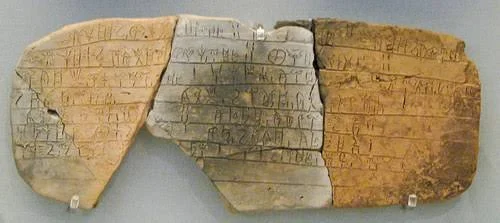
The palace of Pylos, associated with the Mycenaean world of the Late Bronze Age, offers an extraordinary glimpse into the administration of an ancient Greek kingdom. Its clay tablets, inscribed in Linear B, preserve records of commodities, personnel, offerings, and economic activity. These documents reveal a society in which writing played an important role in managing resources and organizing palace operations.
The possibility of discovering additional Linear B tablets in an unexcavated magazine would be significant. Yet the specific claim of a new discovery at Pylos in 2026 requires confirmation through an official excavation announcement or archaeological publication. An unexplored storage area is a plausible research setting, not proof that new tablets have been found.
What Linear B Records Can Reveal
Linear B was used to write an early form of Greek. Its decipherment in the twentieth century transformed understanding of Mycenaean administration, allowing researchers to interpret many of the tablets as bureaucratic records rather than literary works.
The surviving documents often record quantities of grain, livestock, textiles, metals, workers, and religious offerings. Their administrative purpose means they provide detailed information about palace economies, although they rarely offer a complete narrative of political events.
New tablets could expand this picture by preserving additional names, place references, commodities, or administrative practices. Even a small fragment might be valuable if it contains a sign sequence that can be compared with known texts.
Why Storage Rooms Matter
A magazine is a storage space, and in a palace complex it may have held containers, raw materials, finished goods, or administrative supplies. Tablets found in such a setting could help researchers understand how written records related to the movement and storage of resources.
Archaeological context is crucial. A tablet's position, associated pottery, architectural phase, and relationship to other objects can help establish when it was used and why it was deposited. A tablet discovered outside its original context may still be informative, but some of its historical value is lost.
Clay, Fire, and Preservation
Many Mycenaean tablets were made from unfired clay and survived because accidental fires hardened them. Their preservation is therefore closely connected to the destructive events that affected palace sites near the end of the Bronze Age.
Researchers must stabilize fragile tablets, photograph their surfaces, document their inscriptions, and compare the signs with established Linear B records. Any proposed new reading needs careful review rather than a speculative translation based on a few visible marks.
What a 2026 Discovery Would Need to Show
A verified report should identify the excavation team, precise archaeological context, number of tablets, preliminary dating, and the institution responsible for conservation and publication.
Until such documentation exists, the proposed tablets from an unexcavated Pylos magazine remain unconfirmed. The enduring importance of Pylos lies in the archive already recovered—and in the possibility that carefully documented future excavations may reveal additional evidence about the administration of Mycenaean society.