Migration, military service, kinship networks, and the changing communities of medieval southern Greece.
The Peloponnese During a Period of Transition
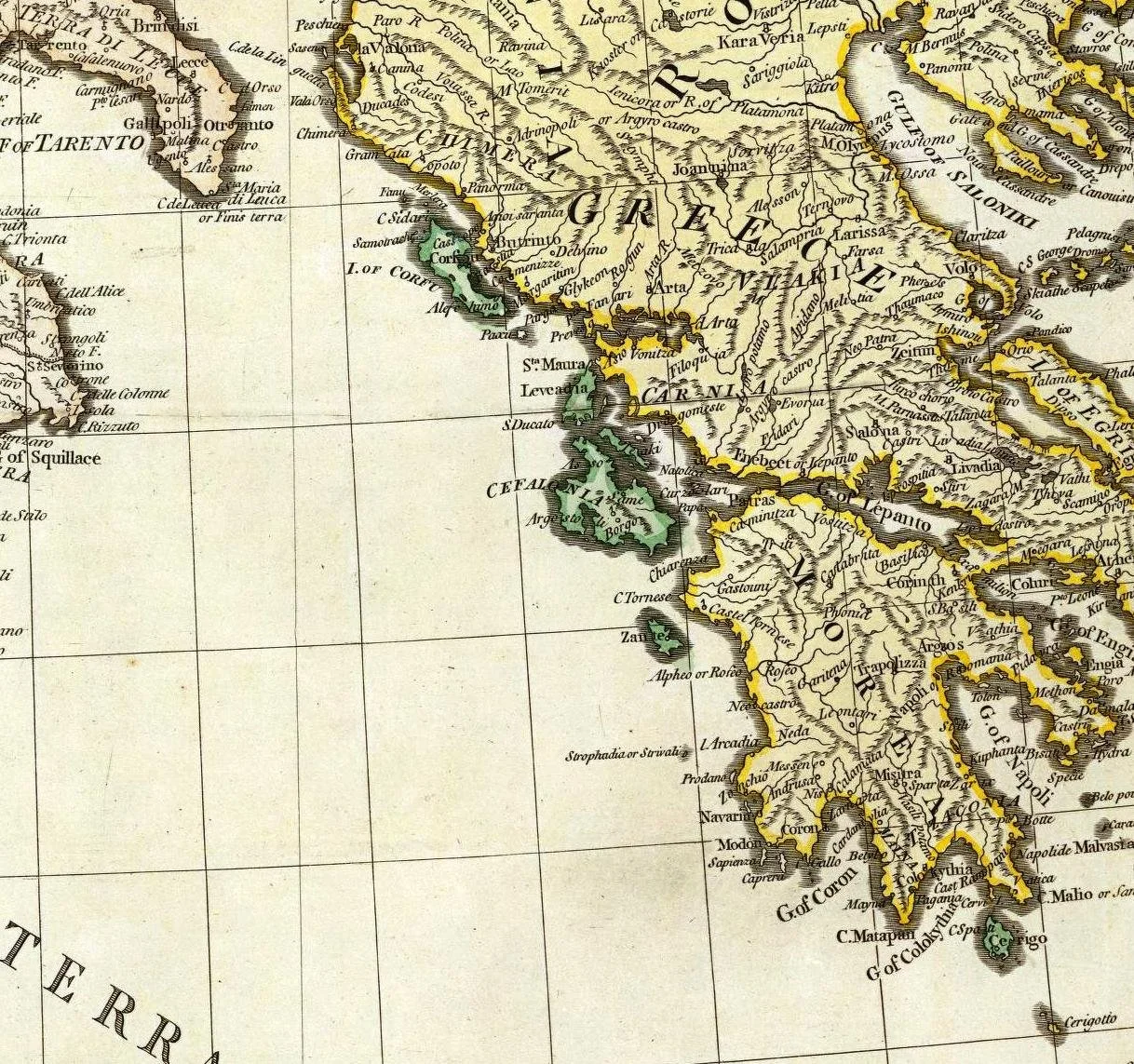
The fifteenth century was a period of major political change in the Peloponnese. Byzantine authority continued to weaken, regional leaders competed for influence, and Ottoman expansion increasingly shaped the future of southern Greece.
The peninsula was not a politically uniform territory. It contained fortified settlements, agricultural communities, ports, religious institutions, and areas governed by different authorities. Venetian interests, Byzantine institutions, local lords, and Ottoman forces all influenced the region's changing political circumstances.
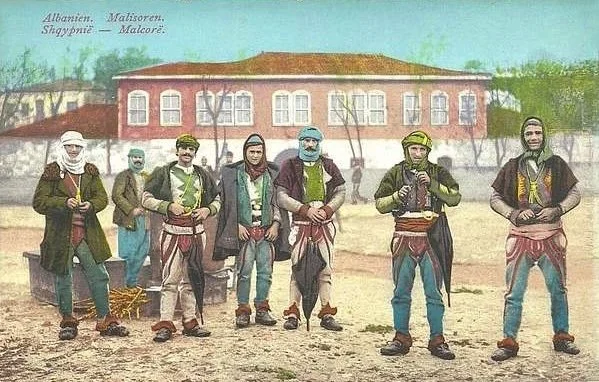
Within this environment, Albanian-speaking communities played an important role in the history of parts of the Peloponnese. Their presence was connected to broader movements of people across the Balkans, including migration associated with pastoralism, military service, landholding, and the search for security or opportunity.
The term Albanian clans should be used carefully. It may describe certain kinship-based groups, but it does not provide a complete picture of every Albanian-speaking community or its political organization.
Migration Across the Balkans
Movement between the Balkan interior and southern Greece occurred over several centuries. Communities relocated for many reasons, including access to land, military employment, political instability, and the opportunities offered by rulers seeking to strengthen their territories.
These movements did not necessarily occur as one coordinated migration. Families might move in stages, while individual fighters entered military service and later settled in new areas. Other groups could relocate with livestock or establish communities connected to pastoral and agricultural life.
Historical sources sometimes describe migrants collectively, but these labels may conceal substantial differences. People grouped under the same name might speak related dialects, follow different local leaders, or maintain distinct relationships with neighboring communities.
Migration should therefore be understood as a long process involving settlement, adaptation, and interaction rather than a single event with one cause.
Kinship, Leadership, and Community Organization
Kinship networks could provide important support in medieval societies where political protection was uncertain. Extended families and related households might cooperate in defense, negotiate with rulers, organize access to land, or provide assistance during periods of hardship.
However, the word clan can suggest a level of uniformity that did not necessarily exist. Some communities may have relied on extended family relationships, while others were organized around villages, local leaders, military obligations, or agreements with regional authorities.
Leadership could also change over time. A person who held influence during a military campaign might later lose authority because of a dispute, a change in political allegiance, or competition with another family.
Understanding these relationships requires evidence about specific communities rather than assuming that every group followed the same structure.
Military Service and Political Alliances
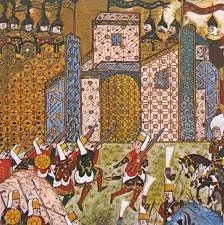
Rulers in late medieval Greece often needed soldiers who could move through difficult terrain and respond to local threats. Albanian-speaking fighters served under different authorities at different times, and their military participation could influence where communities settled.
Service might be connected to payment, land, privileges, or political agreements. These arrangements could provide opportunities for settlement while also creating obligations to a ruler.
Allegiance was not necessarily permanent. A group might cooperate with one authority during a particular conflict and later negotiate with another. Political decisions could be shaped by family ties, local rivalries, military opportunities, and the changing balance of power.
It would therefore be misleading to describe Albanian-speaking communities as a single political force acting uniformly across the Peloponnese.
Land, Agriculture, and Settlement
Access to land was an important consideration for many migrant communities. Agricultural production, livestock, and control over routes could determine whether a settlement remained viable.
A new community might establish itself near existing villages, cultivate previously underused land, or negotiate arrangements with a local ruler. These processes could create cooperation as well as conflict, depending on access to resources and the interests of neighboring populations.
Over time, communities could become integrated into local economic and social networks while retaining aspects of their language and cultural traditions. Settlement was therefore not simply a matter of arrival; it involved generations of adaptation.
Language and Identity in a Medieval Context
Albanian-speaking communities contributed to the linguistic and cultural diversity of the Peloponnese. Their descendants became part of the region's long history, interacting with Greek-speaking communities and other populations.
Modern national categories should not be applied mechanically to medieval people. Language, religion, ancestry, local identity, and political loyalty did not always correspond in the same way they do today.
Historians examine how people were described by contemporary writers, how administrative records classified them, and how later traditions preserved or reshaped their identities.
Evidence for Particular Clans
Researchers use chronicles, land grants, administrative records, place names, linguistic evidence, and later local traditions to reconstruct migration and settlement. Each source has limitations, and a broad regional pattern cannot confirm the existence of a particular clan in a particular valley.
A claim that a named group established a fortified settlement or controlled a specific area would require a reliable historical reference, archaeological evidence, or a combination of both.
A Shared and Changing Regional History
The history of Albanian-speaking communities in the fifteenth-century Peloponnese illustrates the complexity of migration and political adaptation in medieval Greece. Communities responded to changing rulers and economic opportunities while developing new relationships with the land and with neighboring populations.
Their history is best understood as part of the region's wider social transformation. A careful account can recognize their contributions without reducing diverse communities to a single political identity or presenting unverified clan traditions as established facts.