Imperial women, political punishment, and the complicated relationship between exile and religious retirement.
The Fragility of Imperial Power
The Byzantine Empire possessed elaborate political traditions, religious institutions, and a powerful imperial court. Yet the position of an emperor or empress could be precarious. Succession disputes, military defeats, court conspiracies, religious controversies, and changes in political alliances could rapidly transform an individual's fortunes.
Exile was one method used to remove a political rival from the center of power. It could involve relocation to a distant settlement, confinement in a religious institution, or a period of enforced separation from court life. The circumstances varied considerably, and the term exile does not necessarily imply the same conditions in every case.
For an empress, removal from the capital could mean losing direct access to the emperor, officials, and the institutions through which political influence was exercised. Yet an imperial woman might still possess wealth, attendants, family connections, or relationships with religious foundations.
The suggestion that Byzantine empresses were exiled to small Aegean islands is plausible as a subject for investigation, but particular individuals and destinations must be established through reliable historical sources.
The Political Roles of Byzantine Women
Women in the Byzantine imperial household could exercise significant religious, social, and political influence. Empresses participated in court ceremonies, supported churches and monasteries, patronized religious art, and sometimes acted as regents or political intermediaries.
Their influence depended on the circumstances of their lives. Some empresses were central to imperial government, while others exercised authority primarily through family relationships, charitable foundations, or religious patronage.
An empress's position could also change dramatically after the death or deposition of a ruler. A new government might regard a former empress as a potential focus for opposition, especially if she had a son or relative with a claim to the throne.
Removing such a person from the capital could reduce the possibility of political mobilization. Yet exile was not always a simple process of imprisonment. Some individuals continued to maintain relationships with supporters and religious communities.
Why Islands Could Be Used for Confinement
Islands offered practical advantages for controlling movement. Travel depended on access to boats and suitable landing places, while the sea created a natural barrier between a confined individual and the political center.
Some islands contained monasteries or established settlements that could provide accommodation and supervision. In certain circumstances, a monastery might offer a setting for religious retirement; in others, it could become a place where a political figure was expected to remain.
However, an island's remoteness does not prove that it was used for political confinement. Many monasteries served religious, educational, charitable, and community functions without any connection to exile.
The historical circumstances must be examined individually. Researchers need to establish whether a person was sent to a location against their will, entered religious life voluntarily, or experienced a mixture of political pressure and personal choice.
Monastic Retirement and Forced Exile
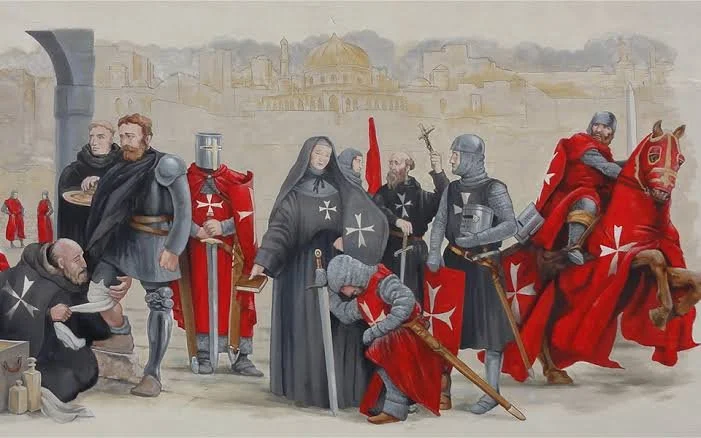
In Byzantine society, religious life could provide a new identity for someone who had lost political power. Members of the imperial family sometimes entered monasteries after a change of regime, and taking religious vows could make a return to secular political life less likely.
Yet the relationship between monastic retirement and coercion was complex. A person might genuinely choose a religious life, accept it under pressure, or use a monastery as a place of relative safety.
Written sources may emphasize spiritual transformation rather than explain the political circumstances that led to a person's withdrawal. A religious biography might celebrate the subject's devotion while saying little about the conflict that preceded it.
For historians, distinguishing these situations requires careful reading of the sources and comparison with other evidence.
The Sources for Imperial Exile
Byzantine political history is reconstructed from chronicles, letters, legal documents, inscriptions, religious biographies, and records associated with monasteries and churches. These sources preserve different kinds of information and often reflect the interests of their authors.
A chronicle might name an empress and describe her removal from court but provide little detail about the place where she lived afterward. A later writer might identify an island, although the account could be based on a tradition rather than contemporary evidence.
Researchers must verify the person's identity, establish the chronology, and determine whether the location can be securely identified. Similar names, changing place names, and retrospective accounts can complicate the process.
Reconstructing the Experience of Exile
Political exile could reshape every aspect of an individual's life. It might separate a person from family and familiar surroundings, reduce their ability to influence government, and expose them to uncertainty about their future.
At the same time, exile did not necessarily erase all forms of authority. An empress might continue to support a monastery, correspond with relatives, or retain a symbolic importance for people who opposed the ruling government.
The experience depended on the individual's resources, the reasons for their removal, and the political situation in the region where they lived.
What Can Be Established About the Aegean Islands?
The specific collection of Byzantine empress exiles in minor Aegean islands remains unverified as presented in the title. Establishing such cases would require named individuals, identifiable destinations, and documentary evidence that connects them.
Nevertheless, the broader subject offers a valuable way to study the vulnerability of imperial status and the relationship between political power, religious institutions, and gender in Byzantine society. Each securely documented case can reveal how the empire managed rivals and how former members of the imperial household adapted to life outside the court.