Engraved stones, Minoan administration, and the role of seals in the ancient Aegean.
Small Objects with Large Stories
Bronze Age seals are often small objects, but their engraved surfaces can preserve intricate designs and clues about administrative practices, identity, and social relationships. In Minoan Crete, seals were used in systems of marking and authentication, leaving impressions on clay and other materials.
The possibility of finding additional seals during an excavation on Crete's southern coast raises questions about regional administration and exchange. The specific discovery described here, however, should be treated as unconfirmed until an excavation report identifies the site and its finds.
How Ancient Seals Worked
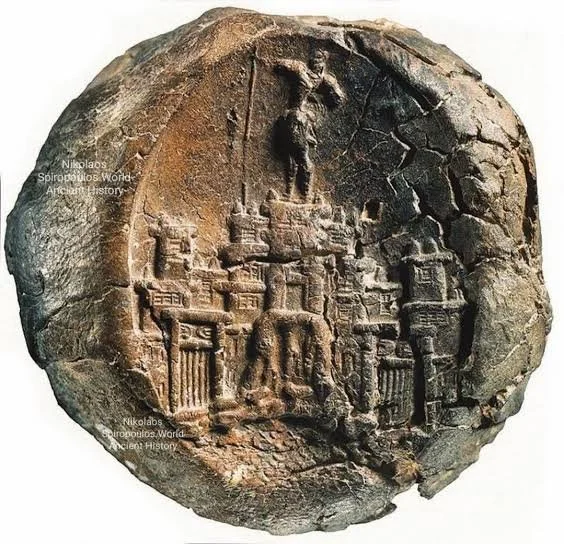
A seal could be pressed into a soft material such as clay to leave an impression. Depending on the object and its use, the impression might help identify a person, mark a container, secure a closure, or communicate administrative authority.
Seals were made from different materials, including stone and other hard substances. Their designs could include animals, human figures, geometric motifs, and symbols whose meaning is not always certain.
A seal's function cannot always be determined from its appearance alone. Researchers examine wear, the surface on which it was used, associated objects, and comparisons with other documented examples.
Crete's Bronze Age Administration
Minoan Crete developed complex settlements, craft production, maritime connections, and systems of resource management during the Bronze Age. Archaeological evidence from palaces, towns, and smaller sites provides insight into how these communities organized labor and exchange.
Seals and seal impressions can help researchers investigate how goods were identified or controlled. When impressions are found in a secure context, they may reveal administrative practices even when the original seal is missing.
However, not every engraved object is an administrative seal. The object's form, engraving, wear, and archaeological setting must be evaluated together.
Why the Southern Coast Matters
Crete's southern coastline connected settlements with maritime routes across the Libyan Sea and the wider eastern Mediterranean. The precise role of any particular settlement depended on its location, resources, and connections with other communities.
A new seal assemblage from the southern coast could contribute to research on regional exchange or local administration. Researchers would first need to establish the site's date and determine whether the objects were found in domestic, ceremonial, workshop, or storage contexts.
Recording and Interpreting Engraved Surfaces
High-resolution photography, microscopy, and three-dimensional imaging can document seal designs and engraving techniques. These methods allow researchers to compare objects without repeatedly handling fragile surfaces.
Inscriptions and motifs must be interpreted cautiously. Some symbols remain undeciphered, and similar designs can appear in different contexts without necessarily carrying identical meanings.
Scientific analysis of the material may also help determine whether the seal was made locally or originated elsewhere.
A New Collection Requires a Clear Context
The proposed seals from a southern Cretan excavation remain unverified as a specific discovery. If securely documented, they could help clarify how people used signs, images, and material objects to manage relationships and resources during the Bronze Age.
Their greatest value would come from the combination of craftsmanship, archaeological context, and careful comparison with other evidence from Minoan society.