Early Greek ceramic styles, hilltop settlements, and the archaeological interpretation of a buried collection.
The Patterns of the Geometric Period
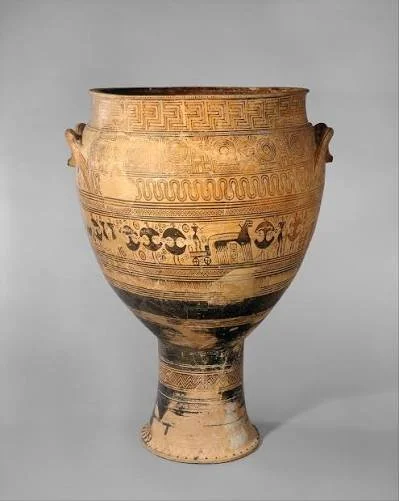
The Geometric period of Greek archaeology, conventionally dated from approximately the tenth to the eighth centuries BCE, is named for the prominent geometric patterns found on many ceramic vessels. Zigzags, meanders, triangles, concentric circles, and carefully arranged bands became defining elements of the period's pottery.
The proposed discovery of a pottery cache on a hill in Epirus offers an opportunity to explore how ceramic styles developed in northwestern Greece. Yet the specific cache requires confirmation through a documented archaeological find. A collection of patterned pottery cannot be assigned a date or cultural identity from its appearance alone.
What Geometric Pottery Can Reveal
Ceramic vessels were used for storage, cooking, serving, and ritual purposes. Their shapes and decorations can help archaeologists identify changes in craft traditions and compare material culture across different communities.
Some vessels were decorated with repeated geometric motifs, while others included stylized human or animal figures. The patterns were not merely decorative in every case; their arrangement may reflect conventions shared by particular workshops or communities.
Nevertheless, similar motifs can occur across different locations and periods. Researchers use vessel shape, clay fabric, manufacturing techniques, and archaeological context together to establish a more reliable chronology.
Epirus and Its Ancient Communities
Epirus, in northwestern Greece, has a varied landscape of mountains, valleys, and coastal areas. Its ancient communities developed within a wider network of contacts connecting inland routes with the Ionian Sea and neighboring regions.
Hilltop locations can be significant archaeological settings because they may provide defensive advantages, visibility, access to routes, or proximity to resources. However, the position of a site on a hill does not automatically indicate that it was a fortress, sanctuary, or settlement.
A proposed pottery cache would need a precise location and an examination of the surrounding landscape before its purpose could be interpreted.
How Archaeologists Investigate a Pottery Cache
Researchers record each vessel or fragment, including its dimensions, fabric, decoration, and condition. They also document whether the material was found in a container, a pit, a building, a burial, or a disturbed deposit.
Clay analysis may help identify the raw materials used in manufacture and compare them with local geological sources. Microscopic examination can reveal inclusions and production techniques, while residue analysis may sometimes provide information about the substances once held in a vessel.
The context is essential. A group of pottery fragments scattered across a hillside could represent a settlement deposit, a later disturbance, or material transported from another location.
Dating and Interpreting the Assemblage
Pottery is often dated through comparison with securely established ceramic sequences. Associated coins, inscriptions, architectural features, and datable organic remains can provide additional chronological evidence where available.
Researchers must also consider whether the pottery was deposited at the same time. A cache might contain objects from multiple phases, especially if the location was used repeatedly.
What a Verified Cache Could Tell Us
A securely documented Geometric pottery cache in Epirus could contribute to research on settlement, exchange, and regional craft traditions during the early first millennium BCE.
Until the specific find is documented, it remains an archaeological premise rather than an established discovery. The real value of such a collection would lie in the information preserved by its patterns, materials, and relationship to the landscape where it was found.