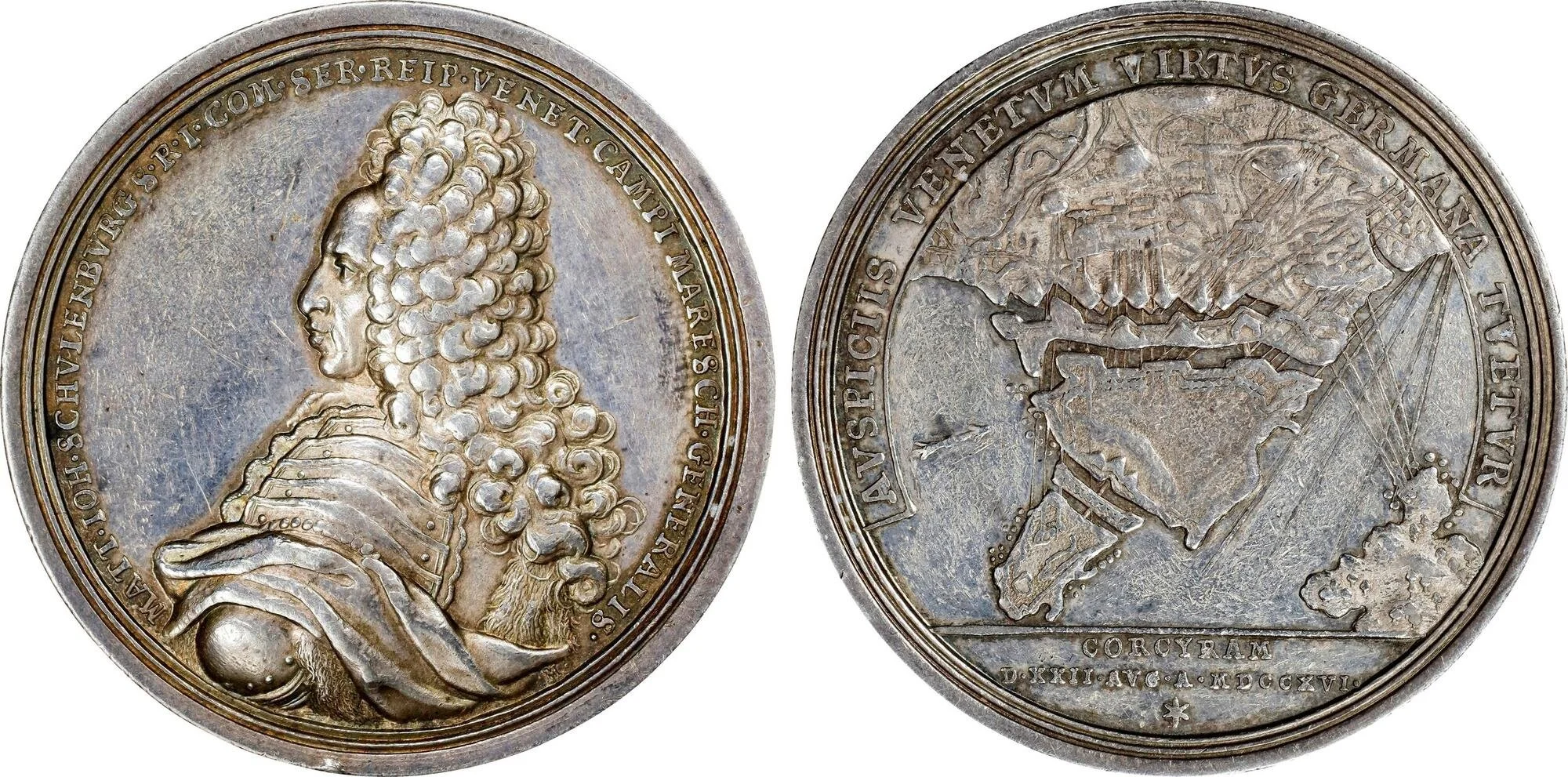
Maritime commerce, Venetian rule, and the historical significance of coins recovered from a coastal landscape.
Corfu at the Crossroads of Maritime Trade
Corfu occupies a strategic position near the entrance to the Adriatic Sea. Its location made the island important to maritime travel, commercial exchange, and political competition between Mediterranean powers.
Venetian influence shaped Corfu for centuries, leaving traces in its fortifications, urban architecture, administration, and material culture. Coins from this period could provide evidence of commerce, taxation, military activity, and everyday transactions.
The title refers to a coastal cache discovered in 2026. Because a recent archaeological discovery requires current, verifiable documentation, the existence of this particular cache should remain unconfirmed unless an official announcement or excavation report identifies it.
Venetian Coinage and Its Uses
Venice issued different denominations of coins over the centuries, using designs and inscriptions that reflected the political and religious identity of the republic. The precise appearance and value of a coin depended on its issuing authority, denomination, and date.
Coins circulated through trade, military payments, taxation, and personal exchange. A coin found on Corfu might have been minted in Venice, issued by another authority, or carried across the Adriatic through commercial networks.
Identifying the issuing authority requires careful examination of the design, inscription, weight, and metal. Wear and corrosion can obscure these details, particularly when coins have spent a long time in coastal environments.
Why Coins End Up in Coastal Caches
A cache may have been deliberately concealed, accidentally lost, or deposited during a period of uncertainty. The circumstances differ from one find to another, and not every group of coins found together represents a deliberate hoard.
Coastal conditions can also move objects through erosion, storms, and sediment transport. Coins discovered near the shoreline may have originated from a nearby settlement, a shipwreck, or a later disturbance of older deposits.
Researchers must therefore record the exact location, depth, sediment conditions, and relationship between the coins before interpreting the assemblage.
How a 2026 Discovery Would Be Verified
A credible report would identify the archaeological team or finder, the discovery location, the number of coins, their preliminary identification, and the procedures used to protect the find.
Official documentation would help establish whether the cache was excavated scientifically or reported after an accidental discovery. Conservation specialists would assess corrosion and stabilize the coins before detailed study.
Researchers would also compare the coins with known Venetian issues and examine whether the collection includes material from different periods. A cache assembled over time may tell a different story from a group deposited in a single event.
Reading Trade Through a Coin Collection
A well-documented assemblage can reveal which monetary systems circulated in a region and how they intersected with local economic life. If several coin types appear together, their combination may provide evidence of commercial links or political transitions.
However, a coin's minting date does not necessarily reveal when it reached Corfu. Coins could remain in circulation long after their issue, be stored as savings, or be reused in later contexts.
The Importance of Responsible Reporting
The alleged 2026 coastal cache remains unverified without an official archaeological record. If the discovery is confirmed, its interpretation should be based on the full assemblage and its context rather than the apparent rarity or market value of individual coins.
Corfu's Venetian history already offers a rich setting for studying maritime exchange. A carefully documented cache could add another piece to that history, showing how currency moved through the networks that connected the Adriatic with the wider Mediterranean.