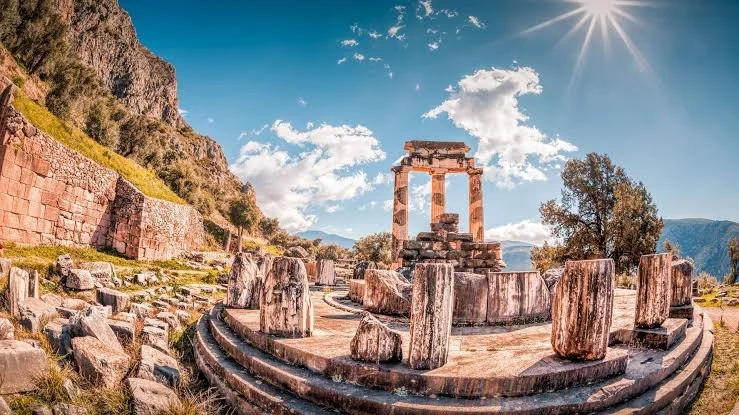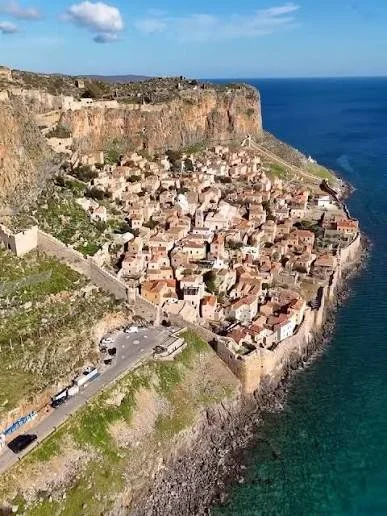
Stone fortifications, Ottoman-era conflict, and the defensive architecture of southern Greece.
A Landscape Built for Defense
The Mani Peninsula, in the southern Peloponnese, is known for its rugged terrain, rocky coastline, and distinctive stone settlements. Its landscape shaped centuries of local life, encouraging communities to build fortified houses, towers, and defensive structures that could protect families and control access through narrow valleys.
The possibility of Ottoman-era fort walls concealed among Mani's cliffs offers a compelling subject for historical investigation. However, a specific wall cannot be dated to the Ottoman period merely because it occupies a defensible position. Its construction history requires architectural, documentary, or archaeological evidence.
Ottoman Power and Local Resistance
Ottoman authority expanded across much of the Peloponnese during the early modern period, but the relationship between Ottoman officials and local communities varied considerably. Mani retained distinctive patterns of local autonomy, and its communities developed their own political alliances, rivalries, and defensive practices.
Fortifications in the region therefore cannot all be assigned to a single enemy or historical event. Some structures may have been built to defend against rival local groups, while others served as fortified residences or controlled movement through the landscape.
The historical interpretation depends on the individual building and the period in which it was constructed or modified.
Reading the Walls
Stone walls can reveal clues through their masonry, mortar, foundations, openings, and relationship to the surrounding terrain. Narrow entrances, elevated firing positions, and restricted approaches may suggest defensive purposes, but these features must be considered alongside other evidence.
A wall might also be part of a terrace, enclosure, agricultural boundary, or later reconstruction. Researchers compare construction techniques with documented fortifications and examine archival maps, historical descriptions, and inscriptions where available.
Archaeological survey can help establish whether a cliffside structure belongs to a known settlement or represents a previously undocumented feature.
Conservation of a Fortified Landscape
Mani's historic buildings are part of a wider cultural landscape that includes towers, churches, villages, paths, and agricultural remains. Recording individual walls without studying their surroundings may obscure the relationships that made the defensive system meaningful.
Unstable masonry and exposed cliff edges also make casual exploration hazardous. Any investigation should respect private property, archaeological protections, and the need to avoid damaging fragile structures.
A History Written in Stone
The proposed Ottoman fort walls remain unverified as a specific discovery. Nevertheless, Mani's defensive architecture offers a rich field for research into local power, conflict, and adaptation to difficult terrain.
A careful study could reveal whether a particular cliffside wall was an Ottoman-era military structure, a fortified residence, or a later feature. Its history must be established through evidence rather than appearance alone.