
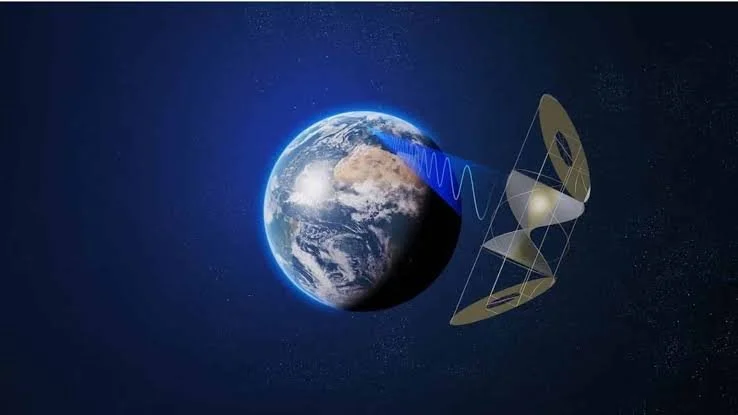
Space-based solar power, wireless energy transmission, and the challenge of connecting futuristic infrastructure to island electricity networks.
Harvesting Sunlight Above the Atmosphere
Solar energy is already an important part of the global transition toward lower-carbon electricity. On Earth, solar panels convert sunlight into electrical power, which can be used immediately, stored in batteries, or delivered to an electricity grid.
Space-based solar power proposes a more ambitious arrangement: collecting sunlight using large systems in orbit and transmitting some of that energy to a receiving station on Earth. The concept could avoid some limitations associated with nighttime and atmospheric conditions, but it faces substantial technical, economic, and regulatory challenges.
The idea of secret orbital solar farms beaming electricity directly to Kythira's grid is a striking scenario. However, no such installation should be considered real without verifiable evidence from the relevant space agency, energy operator, or project developer.
How Space-Based Solar Power Could Work
A proposed space-based solar power system would collect sunlight using photovoltaic equipment or another energy-conversion technology. The resulting energy would then be transmitted toward a receiving station on Earth, commonly imagined as using microwaves or lasers.
At the receiving site, specialized equipment would convert the incoming energy into electricity that could be used locally or transferred into the grid.
Each stage presents challenges. Orbital systems must withstand radiation, temperature extremes, and the difficulty of maintenance. Launching large structures is expensive, while assembling and repairing them in space requires complex operations.
Wireless power transmission introduces further questions about efficiency, beam control, atmospheric effects, safety, and the size of the receiving installation.
Why Kythira Is an Interesting Island Context
Kythira lies south of the Peloponnese and is part of Greece's island geography. Like many islands, its energy needs must be considered in relation to local infrastructure, demand patterns, weather, and the availability of generation and storage.
A project that supplied electricity from orbit would need to integrate with the island's actual grid arrangements. Engineers would assess the receiving site's location, connection capacity, conversion equipment, and the way power delivery would interact with existing generation.
The fact that an island may face energy-supply challenges does not establish that it has been selected for a space-based solar demonstration.
What Would Verification Require?
A credible project would need evidence of its orbital hardware, launch arrangements, ground receiving station, transmission tests, and grid connection. Independent technical documentation would be necessary to distinguish an operational system from a concept study or research proposal.
The term “secret” should not substitute for missing evidence. Space launches, satellite tracking, ground infrastructure, spectrum use, and electricity connections generally create multiple opportunities for independent verification, although individual project details may remain confidential.
Researchers would also need to clarify whether the system delivered usable electricity or merely demonstrated a component of wireless transmission.
Environmental and Economic Questions
Space-based solar power could require significant manufacturing, launch activity, and infrastructure. Its environmental performance would depend on the energy used to build and deploy the system, its operational lifetime, and the efficiency of the entire transmission chain.
A receiving station would also need appropriate siting, environmental assessment, and public consultation. Safety standards would be essential for any high-power transmission system.
Before comparing the concept with conventional solar farms, wind power, batteries, or grid upgrades, analysts would need realistic cost and performance data.
The Future of Energy from Space
Space-based solar power remains a serious area of research, but its commercial practicality is not established simply by demonstrating that energy can be transmitted wirelessly.
The proposed orbital farms serving Kythira remain unverified. The more useful question is whether future space-based systems could complement terrestrial renewable energy and what technical and economic evidence would be needed before an island grid could depend on them.







