
Cryogenic science, rock-cut environments, and the challenge of preserving biological material for the future.
Preservation Beyond Ordinary Refrigeration
Cryopreservation involves storing biological material at very low temperatures to slow or halt the processes that cause degradation. It is used in fields such as reproductive medicine, cell biology, and the preservation of certain biological samples.
The idea of underground cryo-preservation vaults hidden in caves around Meteora combines advanced science with a dramatic geological setting. Yet a specific network of cryogenic vaults in Meteora caves should not be presented as fact without reliable documentation.
The real scientific questions are substantial enough on their own: how biological material can be preserved, what kinds of storage systems are required, and why a natural cave is not automatically a suitable environment for a cryogenic facility.
How Cryopreservation Works
Biological material can be damaged when water freezes and forms ice crystals. Cryopreservation methods seek to limit this damage through carefully controlled cooling, protective chemicals, or other procedures appropriate to the material being stored.
Different samples require different approaches. Cells, embryos, reproductive material, tissues, and microorganisms may have distinct requirements for cooling rates, protective agents, storage temperatures, and recovery procedures.
Some systems use liquid nitrogen or specialized mechanical refrigeration. Maintaining stable conditions requires monitoring, backup capacity, controlled access, and procedures for responding to equipment failures.
Cryopreservation does not guarantee that every stored organism or tissue can later be revived. Successful recovery depends on the type of material, the preservation method, and the extent of damage during cooling and warming.
Why Meteora's Caves Are Not Automatically Vaults
Meteora is famous for its dramatic rock formations and monasteries built on elevated sandstone and conglomerate pillars. Its cultural and geological importance makes the region a sensitive environment for tourism, conservation, and scientific study.
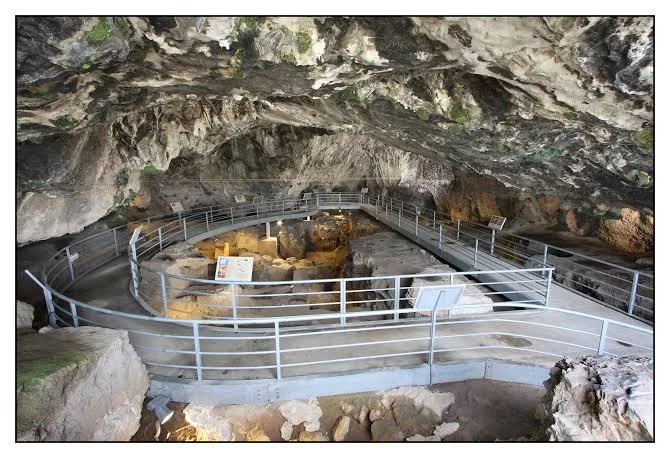
A natural cave or rock cavity may provide stable temperatures compared with the surface, but this is not equivalent to a controlled cryogenic storage facility. Humidity, water infiltration, rock movement, access limitations, and environmental variability can all create problems.
A proper facility would require engineered insulation, monitoring equipment, reliable power or cryogenic supply, emergency systems, and procedures for transporting samples. Those requirements would need to be reconciled with the site's geological and heritage protections.
What Would a Cryogenic Vault Require?
A credible cryogenic storage installation would need documented engineering plans and a clear account of what material it preserves. It would also require safety procedures, maintenance records, temperature monitoring, and a strategy for long-term continuity.
For biological collections, the provenance of each sample is important. Researchers need to know what was stored, under what conditions, and how the material can be accessed for legitimate scientific purposes.
The phrase “underground vault” can also refer to ordinary cold storage or a secure repository. These are not necessarily cryogenic facilities, and the terminology should match the technology actually used.
The Ethical Dimension of Long-Term Preservation
Preserving biological material raises questions about ownership, consent, privacy, and future use. Human samples in particular require careful governance, clear documentation, and compliance with relevant laws and ethical standards.
Long-term storage also creates a practical responsibility. A sample may remain valuable only if its records survive, the storage system remains functional, and future researchers can understand how it was collected and maintained.
Claims about a hidden facility should therefore be evaluated through reliable institutional sources rather than inferred from the existence of caves or secluded landscapes.
Science, Stone, and the Future
Cryopreservation is an established scientific practice, while the specific idea of secret cryogenic vaults in Meteora remains unverified. The contrast between advanced biological storage and an ancient rock landscape offers a useful way to examine how modern infrastructure interacts with natural environments.
Any real project in the region would need to demonstrate not only technical feasibility but also respect for geological stability, environmental protection, and Meteora's exceptional cultural heritage.







