Introduction
The history of Nafplio, known in Venetian records as Napoli di Romania, reflects the strategic importance of the eastern Mediterranean during the late medieval and early modern periods. Situated on the northeastern coast of the Peloponnese, the city possessed a valuable harbor, defensible terrain, and access to routes connecting the Aegean Sea with the interior of southern Greece. These geographical advantages made Nafplio an important location for maritime commerce, military operations, diplomacy, and intelligence gathering.
For the Republic of Venice, whose wealth and political influence depended heavily on maritime trade, settlements such as Nafplio formed part of a larger network of overseas possessions. Venetian officials needed information about neighboring powers, commercial competitors, local political conditions, and potential military threats. Intelligence was therefore an important component of government, even when it did not resemble the modern system of professional intelligence agencies.
The image of Venetian spies moving through the shadowy alleys of Nafplio is an evocative way to explore this history. Nevertheless, the existence of intelligence networks should not be confused with proof of particular spies operating in specific streets or conducting dramatic secret missions. A historically grounded account instead examines the institutions, informants, diplomatic channels, and surveillance practices through which Venice gathered information in its eastern Mediterranean territories.
Nafplio and the Venetian Maritime Empire
Nafplio's strategic significance emerged from its relationship with the sea. The harbor provided access to maritime routes, while the surrounding landscape offered defensible positions from which authorities could monitor approaches to the city. Control of Nafplio could support the movement of troops and supplies and strengthen a state's presence in the Peloponnese.
Venice acquired control of Nafplio in the late fourteenth century. Its rule continued until the Ottoman conquest in 1540. Venice regained the city in 1686 during the conflicts of the late seventeenth century, and Ottoman rule returned in 1715. These periods of Venetian government were separated by decades of Ottoman control, so the city's political history should not be treated as a continuous Venetian occupation.
The distinction matters when examining intelligence. The administrative institutions, military priorities, and external threats facing Nafplio differed between the fifteenth, sixteenth, and late seventeenth centuries. The information required by officials during a period of relative stability was not necessarily the same as that required during an approaching siege.
Venice's overseas possessions formed a network of ports, fortresses, islands, and commercial centers. Maintaining this network required communication between local governors and the government in Venice. Reports from distant territories helped officials assess military preparedness, the conduct of administrators, the reliability of alliances, and developments among neighboring states.
Nafplio's position within this system made information gathering a practical necessity rather than merely a dramatic feature of urban life.
How Venetian Intelligence Worked
Venetian intelligence did not depend exclusively on individuals who secretly followed suspected enemies. Information reached the government through several overlapping channels, including diplomatic correspondence, merchant reports, military observations, local informants, and intercepted communications.
Governors and other officials stationed overseas were expected to report developments that might affect Venetian interests. Their responsibilities could include evaluating the security of fortifications, monitoring the movements of rival fleets, assessing relations with local communities, and identifying administrative problems.
Diplomats were another important source of information. A diplomatic representative might report on a ruler's intentions, negotiations between rival powers, disputes among political elites, or preparations for military action. Such reports could include direct observations, conversations with intermediaries, and rumors whose reliability remained uncertain.
Merchants also possessed valuable information. People who regularly traveled between ports could observe changes in shipping, prices, military activity, and the movement of goods. A merchant returning from an Ottoman-controlled harbor might know whether vessels were being assembled, whether a port was experiencing shortages, or whether political tensions were affecting trade.
Not every merchant acted as a formal spy. Commercial information could reach officials through ordinary reporting, private correspondence, or voluntary cooperation. The boundary between trade, diplomacy, and intelligence was often less clearly defined than it is in modern bureaucratic systems.
Informants and the Politics of Trust
Local informants could help officials understand developments that were difficult for outsiders to observe. They might include interpreters, merchants, sailors, religious figures, servants, or people connected to local political families. Their knowledge could be especially useful when information involved language, social relationships, or local customs.
However, informants were not neutral sources by definition. A person might provide accurate information, exaggerate a threat, conceal inconvenient details, or deliberately mislead officials to advance personal interests. Local rivalries could shape what information was shared and how it was interpreted.
For example, a merchant involved in a dispute with a competitor might describe the competitor's activities in suspicious terms. A political rival could portray an opponent as sympathetic to an enemy power. An informant seeking payment might emphasize the importance of information that was already widely known.
Officials therefore had to evaluate the credibility of reports. Comparing accounts from different sources, examining the source's relationships, and checking whether reported events matched observable developments could reduce the risk of being misled.
This problem was especially important in a frontier environment where authorities had to make decisions under uncertainty. A false report about enemy preparations could divert resources, while a genuine warning that was dismissed could leave a fortress vulnerable.
Nafplio's Streets as an Intelligence Environment
The urban environment of a fortified port offered opportunities for information gathering. Markets, taverns, workshops, waterfront warehouses, religious institutions, and public gathering places brought people from different backgrounds into contact. Sailors exchanged news about distant ports, merchants discussed prices and shipping delays, and travelers carried stories about political events.
These everyday conversations could reveal developments that formal diplomatic channels had not yet recorded. News about a fleet's departure, a shortage of supplies, a change in local leadership, or an argument among officials might spread through commercial and social networks before reaching the authorities.
The city's alleys and crowded public spaces also made it possible for individuals to move without attracting much attention. Yet it would be speculative to claim that particular streets in Nafplio were established centers of espionage without documentary or archaeological evidence.
The more defensible conclusion is that the city possessed the social conditions in which informal intelligence could circulate. Its harbor connected people from different regions, and its urban institutions brought together residents, soldiers, merchants, travelers, and officials. These networks made information both abundant and difficult to verify.
Fortifications, Garrisons, and Military Observation
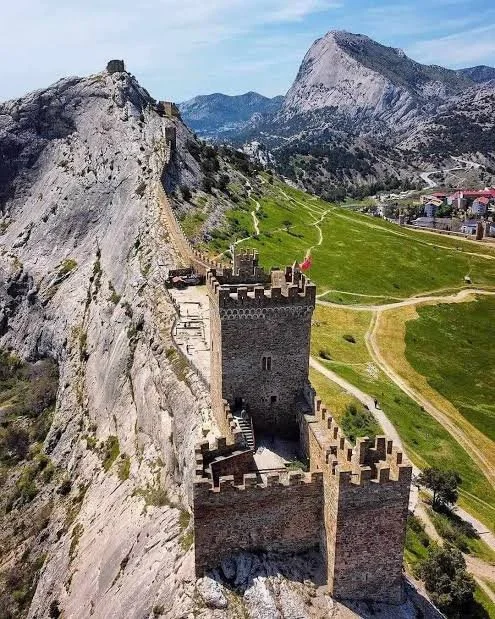
Nafplio's fortifications were central to its military significance. Defensive structures protected the harbor and surrounding settlement, while elevated positions offered views across important approaches. Maintaining these defenses required information about possible threats, the condition of weapons and supplies, and the loyalty and preparedness of the garrison.
Military observation could include monitoring shipping, examining reports from nearby settlements, and communicating with other Venetian-held locations. A warning received from another port might prompt officials to increase patrols or review defensive preparations.
The city's military officials also had to consider the reliability of their own personnel. Desertion, corruption, unauthorized trade, and conflicts among officers could affect the effectiveness of a garrison. Administrative reports and inspections helped authorities identify problems, although the success of these measures varied.
Intelligence was therefore not limited to learning what an enemy intended to do. It also involved understanding the condition of the state's own institutions. A fortress could be threatened by an opposing army, but its defenses could also be weakened by poor supplies, inadequate maintenance, or failures of administration.
Venice, the Ottoman Empire, and Regional Rivalries
Venetian intelligence in Nafplio must be understood in relation to the changing balance of power in the eastern Mediterranean. Venice and the Ottoman Empire competed for control of ports, islands, trade routes, and strategic territories. Their relationship included warfare, diplomacy, negotiated settlements, and periods of commercial interaction.
During periods of conflict, information about naval movements, troop concentrations, and the condition of fortresses became particularly valuable. During periods of peace, officials still needed to monitor trade, diplomatic developments, and the behavior of local administrators.
Intelligence was not necessarily directed only against the Ottoman state. Venice also had to consider rival maritime powers, changing alliances, piracy, and political disputes within territories under its own control.
The republic's interests were commercial as well as military. Information about shipping routes, customs practices, port security, and commercial restrictions could influence decisions affecting merchants and state revenue.
This broad purpose explains why intelligence gathering was integrated into ordinary government. A report about a harbor might matter because it revealed a military threat, but it could also matter because it indicated a change in trade or the behavior of a local official.
The Limits of the Evidence
Historical research into Venetian intelligence must distinguish between the documented existence of information networks and claims about individual secret agents. Venetian archives preserve extensive administrative and diplomatic material, but a particular allegation must still be connected to a reliable source.
A report describing an informant does not necessarily establish that the person was a professional spy. Likewise, a letter mentioning suspicious activity does not prove that an organized espionage operation took place. Historians must examine the document's author, intended audience, date, and political circumstances.
Records may also preserve the perspective of officials who were seeking to justify their decisions. A governor who requested additional troops might emphasize the danger of an enemy attack. An official accused of negligence might argue that intelligence had been inadequate or unreliable.
These documents remain valuable, but their claims should be compared with other evidence whenever possible. Administrative records, diplomatic correspondence, military accounts, and local histories can help establish what happened and how contemporaries understood it.
Conclusion
Venetian intelligence in Nafplio formed part of a wider system through which the Republic of Venice managed its overseas possessions and protected its commercial and military interests. The city's harbor, fortifications, and position in the Peloponnese made information about shipping, neighboring powers, and local political conditions particularly valuable.
Information circulated through officials, diplomats, merchants, interpreters, and local informants. Markets and waterfront spaces created opportunities for news to spread, while military institutions required regular reports about defenses and potential threats.
Although the image of spies moving through Nafplio's alleys is compelling, individual agents and secret missions should be identified only when supported by evidence. The historical significance of Venetian intelligence lies not in an imagined network of omniscient spies, but in the practical challenge of governing a distant port through information that was often incomplete, contested, and difficult to verify.