Introduction
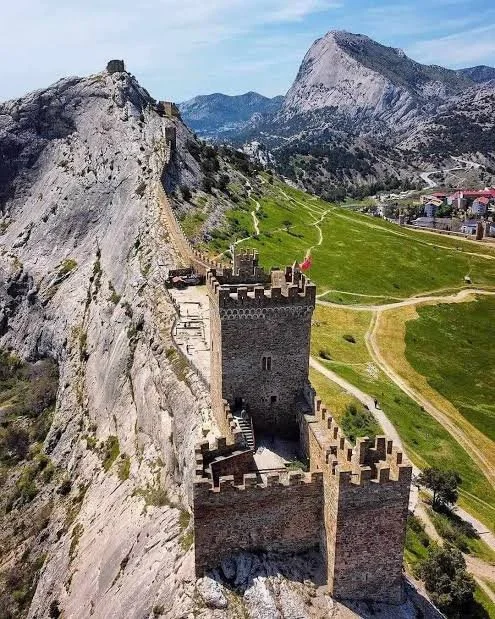
Mount Parnassus rises above central Greece in a landscape of steep slopes, limestone formations, deep ravines, and high-elevation habitats. Its geological character reflects the long history of sediment deposition, tectonic compression, mountain building, fracturing, and erosion that shaped much of the Hellenides.
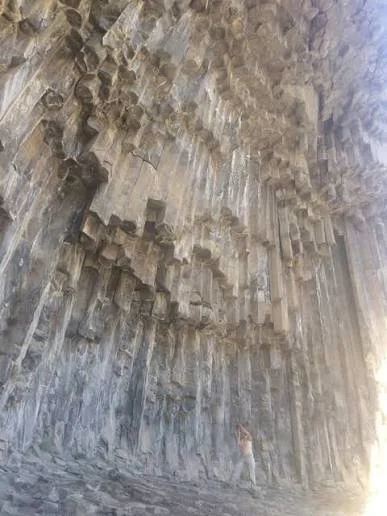
The phrase “crystal formations” may suggest caves filled with glittering mineral structures or isolated chambers containing large, clear crystals. Such features occur in some geological environments, but the presence of dramatic gorges does not automatically indicate that extensive crystal caves exist there.
Parnassus is a useful setting for exploring mineral formation, especially the role of fractures, groundwater, and the chemical conditions under which crystals grow. Any claim about a specific forgotten crystal deposit or cave would require geological documentation.
What Is a Crystal?
A crystal is a solid whose atoms or molecules are arranged in an organized, repeating structure. This internal arrangement influences the crystal's shape, cleavage, hardness, and optical properties.
Crystals form in several ways. They may develop as molten rock cools, as dissolved minerals precipitate from water, or as existing minerals recrystallize under changing pressure and temperature. Different processes produce different mineral assemblages.
Quartz, calcite, gypsum, and many other minerals can form crystals under suitable conditions. Their appearance depends on chemical composition, temperature, pressure, available space, and the rate of growth.
A mineral may occur as microscopic crystals within a rock or as larger crystals lining a cavity. Large crystals require conditions that allow them to grow without being crowded out by other mineral grains or disrupted by later geological processes.
Limestone, Fractures, and Mineral Deposits
Much of the Parnassus region is associated with carbonate rocks, including limestone. Limestone forms primarily from carbonate material that accumulates in marine environments and later becomes consolidated into rock.
When groundwater containing dissolved carbon dioxide moves through limestone, it can dissolve portions of the rock. Over time, this process creates fractures, cavities, and cave passages. If water chemistry changes, calcite may precipitate from solution and form mineral coatings, stalactites, stalagmites, or other cave deposits.
These formations are often called speleothems. Their growth depends on factors such as water chemistry, humidity, ventilation, and the rate at which water enters a cave. They may preserve information about past environmental conditions, although interpreting that record requires specialist analysis.
Other mineral deposits can develop along fractures when groundwater or hydrothermal fluids carry dissolved substances. As temperature, pressure, or chemistry changes, minerals may crystallize on cavity walls or within veins.
Why Crystal Reports Need Verification
Descriptions of hidden crystal chambers often circulate in travel writing, local stories, and informal accounts of cave exploration. Some may refer to genuine mineral features, while others may use “crystal” as a general description for sparkling calcite, quartz, or reflective rock surfaces.
A scientifically useful report should provide the exact location, geological formation, mineral identification, and context of the discovery. Researchers may use hand specimens, microscopy, X-ray diffraction, or chemical analysis to identify minerals reliably.
Visual appearance alone is insufficient. Two minerals may look similar but have different compositions and geological origins. Likewise, a reflective surface may consist of many small mineral grains rather than a single large crystal.
Claims of exceptional or previously unknown deposits also need to be assessed against existing geological maps and records. A formation may be unfamiliar to visitors while already being known to local geologists or cavers.
The Parnassus Landscape and Conservation
The region's gorges and mountain slopes are valuable not only for their geological features but also for their ecological and cultural significance. Rock faces, caves, forests, and alpine environments support different organisms and create habitats that can be sensitive to disturbance.
Collecting minerals may damage formations or disturb protected sites. Entering caves without suitable equipment and knowledge can expose visitors to falling rock, flooding, disorientation, and unstable passages. Some underground spaces may also contain archaeological or biological features that require protection.
Responsible geological tourism emphasizes observation, documentation, and respect for access restrictions. Guided interpretation can help visitors recognize rock types and understand how landscapes develop without removing material.
Conclusion
Parnassus provides a compelling setting for investigating mineral formation in a mountainous limestone environment. Fractures, groundwater, and changes in mineral chemistry can create crystals and cave deposits over long periods.
However, the title's reference to forgotten crystal formations should not be taken as confirmation of a specific hidden deposit. Reliable identification requires location data and geological evidence. The region's real geological processes are sufficiently remarkable to reward exploration without exaggerating what is known.