Introduction
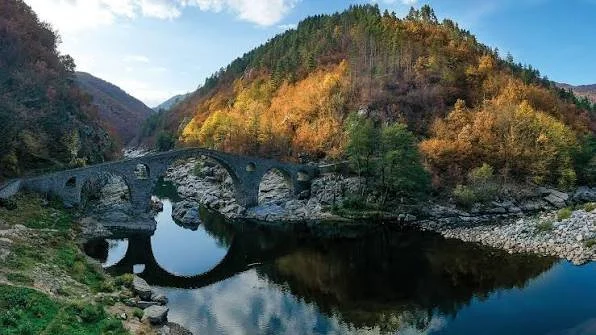
The Rhodope Mountain Range extends across southern Bulgaria and northeastern Greece, forming one of the most geologically complex regions of the Balkan Peninsula. Its rugged landscapes, metamorphic rocks, mineralized fault zones, and history of tectonic activity have attracted the attention of geologists studying the evolution of southeastern Europe. Beneath its forests and mountain slopes lie records of ancient deformation, magmatic activity, and the movement of mineral-rich fluids through the Earth's crust.
The title Hidden Onyx Veins in the Rhodope Mountain Range evokes the possibility of dark, banded mineral deposits concealed within remote mountain valleys. Onyx is a form of banded chalcedony, a microcrystalline variety of quartz, and is valued for its distinctive layers and use in ornamental objects. However, the documented mineral wealth of the Rhodope region should not be confused with proof of extensive onyx veins. Specific onyx deposits in the range would require mineralogical confirmation.
The geological story of the Rhodopes is nevertheless compelling. Its metamorphic rocks, hydrothermal veins, and mineral deposits provide a useful framework for understanding how ornamental minerals form and how scientists distinguish a genuine mineral occurrence from an unverified report.
The Geological History of the Rhodopes
The Rhodope Massif preserves evidence of a long history of mountain building, metamorphism, faulting, and magmatic activity. The rocks have experienced substantial changes in pressure and temperature, while later tectonic movements exposed deeper crustal material at the surface.
During the geological evolution of the region, some rocks were buried deeply within the crust and transformed under elevated pressure and temperature. These processes, known as metamorphism, can change a rock's mineral composition and texture without completely melting it.
Later extension and faulting created pathways through which fluids could move. Some of these fluids carried dissolved metals and other chemical components. When temperature, pressure, acidity, or other chemical conditions changed, minerals precipitated within fractures and surrounding rocks.
Research on the Rhodope Massif documents a range of hydrothermal ore deposits, including lead-zinc-silver, copper-molybdenum, and gold-silver mineralization. These deposits demonstrate that mineral-rich fluids played an important role in the region's geological history. <Cite refs={["turn478061search5","turn478061search8"]} />
This evidence establishes the Rhodopes as an important mineralogical region, but it does not mean that every attractive mineral associated with hydrothermal activity occurs there.
What Is Onyx?
Onyx is generally a banded variety of chalcedony, composed mainly of microscopic quartz crystals. Its characteristic appearance comes from alternating layers that differ in color, transparency, or the presence of impurities.
The word is sometimes used loosely in the gemstone trade. Commercial materials sold as onyx may include banded calcite, dyed chalcedony, or other decorative stones. These materials can resemble one another but have different mineral compositions and geological origins.
True chalcedony forms when silica-rich fluids deposit microscopic quartz in cavities, fractures, or other openings. The silica may originate from groundwater interacting with surrounding rocks or from fluids associated with geological processes. Changes in fluid chemistry and the conditions of deposition can produce layers with different colors or textures.
Iron compounds, manganese, and other impurities may contribute to coloration. The precise appearance of a specimen depends on its chemical composition and formation history.
To determine whether a dark, banded stone is onyx, a geologist or mineralogist may examine its texture, hardness, optical properties, and chemical composition. More specialized methods can establish whether the specimen consists of chalcedony, calcite, or another mineral.
How Mineral Veins Develop
A mineral vein forms when minerals fill a fracture or opening in rock. The process commonly begins when tectonic stress creates cracks or when fluids exploit existing faults and fractures.
If a fluid contains dissolved minerals, those substances may precipitate as the fluid cools, changes pressure, mixes with another fluid, or reacts with the surrounding rock. Repeated episodes can create multiple layers, producing veins with complex internal structures.
Not all veins are alike. Some contain economically valuable metallic minerals, while others consist mainly of quartz, calcite, or other nonmetallic minerals. A vein's appearance alone does not establish its commercial value.
In the Rhodopes, documented mineralization is associated with a variety of geological structures and rock types. The relationship between faults, metamorphic rocks, intrusive bodies, and hydrothermal fluids is particularly important to understanding the region's mineral deposits. <Cite refs={["turn478061search7","turn478061search8"]} />
A genuine onyx occurrence would need to be examined within this geological context. Researchers would need to determine whether the material is chalcedony, how it formed, and whether it occurs as a natural vein rather than as a different mineral or a transported fragment.
Why Hidden Mineral Deposits Attract Attention
Mineral deposits can remain difficult to recognize when they are covered by soil, vegetation, weathered rock, or younger sediments. Mountainous terrain can also make some geological formations challenging to access.
Geologists use geological maps, field observations, remote sensing, and laboratory analysis to investigate mineral occurrences. They examine the relationship between rock types, fractures, alteration zones, and mineral assemblages. Sampling is most useful when each specimen's location and geological setting are documented.
However, an isolated attractive stone is not enough to establish a significant mineral deposit. A deposit requires evidence about its extent, continuity, composition, and geological origin. Claims of a large or previously unknown onyx vein should therefore be supported by field documentation and mineralogical analysis.
Conservation and Responsible Mineral Collecting
Mineral collecting can support public interest in geology, but collecting from sensitive locations may damage outcrops, disturb habitats, or destroy evidence of how a mineral formed. Removing a specimen without recording its position can also reduce its scientific value.
Collectors should follow local laws and land-access rules, especially in protected areas and locations where mining or geological research is regulated. Commercial extraction requires additional consideration of environmental impacts, worker safety, and the stability of the surrounding terrain.
The scientific significance of a mineral is not determined solely by its beauty or price. A small specimen preserved with accurate geological information may be more useful to researchers than a larger specimen removed without context.
Conclusion
The Rhodope Mountain Range is a well-documented geological region with a complex history of metamorphism, faulting, hydrothermal activity, and mineral formation. Its mineral deposits provide substantial opportunities for research into the processes that concentrate metals and other minerals within the Earth's crust.
The specific existence of extensive hidden onyx veins in the Rhodopes should not be treated as established without direct mineralogical evidence. Nevertheless, investigating possible silica-rich veins in this geological setting would be a legitimate scientific question. By distinguishing confirmed regional mineralization from unverified onyx claims, the geological story of the Rhodopes can be explored accurately and responsibly.