Introduction
The Prespa Lakes region, shared by Greece, Albania, and North Macedonia, is one of the most distinctive wetland landscapes in the Balkans. Its lakes, marshes, reed beds, meadows, and surrounding mountains create a range of habitats for birds, fish, amphibians, and plants. Differences in water depth, soil chemistry, seasonal flooding, and exposure allow many species to occupy specialized ecological niches.
Among the most intriguing plants found in wetlands around the world are carnivorous plants. Unlike ordinary plants that obtain most of their mineral nutrients through their roots, carnivorous species can capture and digest small animals, usually insects and other invertebrates. They use specialized leaves or other structures to supplement nutrients in environments where certain essential minerals are scarce.
The idea of rare carnivorous plants hidden in the Prespa marshes is worth examining, but a specific claim about an unusual or previously unknown species needs reliable botanical confirmation. The presence of extensive wetlands does not, by itself, prove that a particular carnivorous plant grows there.
Why Some Plants Become Carnivorous
Plants require sunlight, water, carbon dioxide, and mineral nutrients to grow. Nitrogen and phosphorus are particularly important for building proteins, nucleic acids, and other components of living tissue.
In some habitats, the soil contains very limited amounts of available nutrients. This can occur in acidic bogs, nutrient-poor wetlands, and certain sandy or waterlogged environments. Under these conditions, carnivory can provide an additional source of nitrogen and phosphorus.
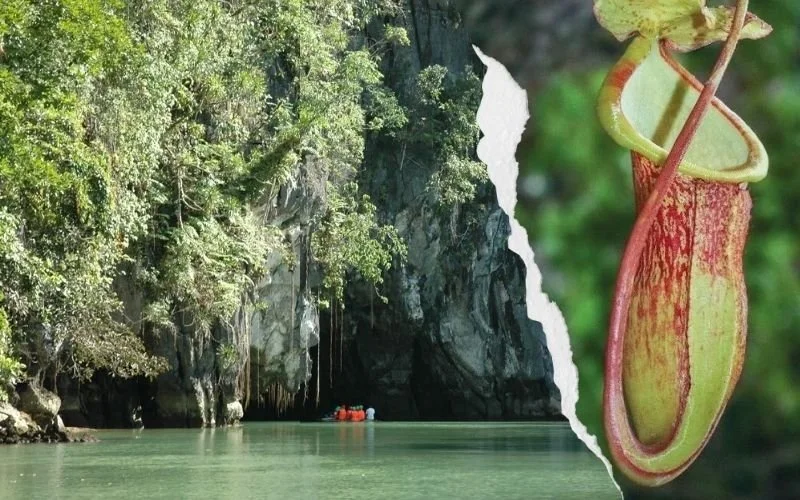
Carnivorous plants have evolved several different trapping strategies. Some possess sticky leaves that capture insects. Others form small chambers that trap tiny aquatic organisms. Pitcher-shaped leaves can collect prey and digestive fluid, while snap traps close rapidly when triggered by contact.
These adaptations are not merely unusual curiosities. They reflect evolutionary responses to specific ecological pressures. A plant's ability to capture prey must be balanced against the energy required to produce and maintain its trapping structures.
Wetland Habitats and Botanical Diversity
Wetlands are not uniform environments. A marsh with nutrient-rich sediment may support a different plant community from a shallow, acidic pool or a small patch of saturated soil. Even within one wetland, water depth and seasonal flooding can create sharply different conditions.
Prespa's ecological importance arises partly from this habitat diversity. The lakes and their surrounding landscapes support distinctive communities of aquatic and terrestrial organisms. Protecting these habitats requires attention to water quality, hydrological conditions, land use, and the ecological relationships among species.
Carnivorous plants, where present, may be difficult to notice. Some are small, blend into wet vegetation, or occur in localized patches. Reliable identification can require examination of leaf structure, flowers, growth patterns, and other diagnostic characteristics.
A scientific report should document the location, habitat, and identifying features of the plant. Photographs can assist identification, but some species require specialist examination or comparison with botanical reference collections.
Distinguishing a Rare Species from an Unverified Report
The word “rare” can have several meanings. A species may be rare throughout its geographic range, uncommon within a particular country, or locally scarce in a specific habitat. It may also be difficult to observe because it is small or seasonal.
These meanings should not be confused. A plant that is unfamiliar to visitors is not necessarily rare, and a rare species is not automatically endangered. Conservation status depends on evidence about distribution, population size, threats, and population trends.
To establish that a carnivorous plant occurs in the Prespa Lakes marshes, researchers would need to consult regional floristic surveys, herbarium records, botanical publications, and, where appropriate, carefully documented field observations. Claims about a new species would require a much more rigorous taxonomic process.
This distinction is important because inaccurate species reports can misdirect conservation work or encourage collectors to search for and remove vulnerable plants.
Threats to Specialized Wetland Plants
Wetland plants may be affected by drainage, water extraction, pollution, altered flooding, invasive species, and changes in land management. Nutrient pollution can change the competitive balance among plants, allowing fast-growing species to dominate habitats that once supported more specialized vegetation.
Climate change can also affect wetland hydrology. Higher temperatures may increase evaporation, while shifts in precipitation can alter water levels and the duration of seasonal flooding. Species adapted to a narrow range of conditions may be especially sensitive to such changes.
Conservation measures should therefore protect the ecological processes that maintain wetlands, rather than focus only on individual species. Monitoring water quality, maintaining natural hydrological patterns, and limiting disturbance can help preserve habitat diversity.
Conclusion
The Prespa Lakes region provides a compelling setting for studying wetland ecology and specialized plants. Carnivorous plants illustrate how evolution can produce unusual adaptations to nutrient-limited environments, but their occurrence in a particular marsh must be established through botanical evidence.
A responsible account of rare carnivorous plants in Prespa should identify confirmed species and their habitats rather than assume that a mysterious, undiscovered population exists. By combining careful field observation with habitat conservation, researchers can improve understanding of the region's botanical diversity while protecting the wetland systems on which it depends.