Introduction
Zakynthos, one of the Ionian Islands of western Greece, is known for its coastal cliffs, marine habitats, and sedimentary landscapes. Like other parts of the Mediterranean region, its geology reflects changes in sea level, sediment deposition, tectonic movement, and the gradual transformation of ancient marine environments.
Fossils provide a way to investigate these changes. The remains of marine organisms preserved in sedimentary rock can reveal which animals lived in a particular environment, what the seafloor was like, and how ecological communities changed over time.
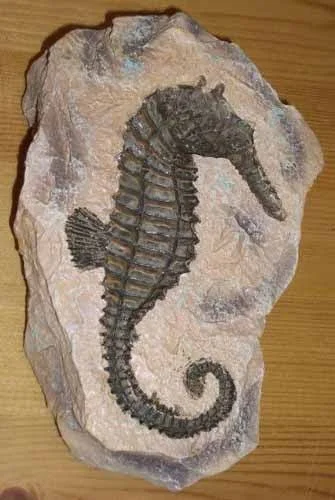
The title “Rare Fossilized Seahorses from Miocene Zakynthos Beds” suggests a specific fossil discovery. However, the presence of Miocene marine sediments on an island does not establish that fossilized seahorses have been found there. Such a claim would require published descriptions, identifiable specimens, and reliable information about their geological context.
The subject nevertheless provides a useful introduction to fossil formation and the challenges of reconstructing ancient marine life.
The Miocene Mediterranean
The Miocene epoch lasted from approximately 23 million to 5.3 million years ago. During this period, the Mediterranean region experienced major geological and environmental changes.
The Mediterranean basin was connected to the Atlantic through changing seaways, while tectonic activity continued to shape the surrounding mountain chains and islands. Sediment accumulated in marine basins, coastal environments, and river-influenced settings. These deposits later became sedimentary rocks.
The late Miocene included the Messinian Salinity Crisis, a major episode during which restricted connections between the Mediterranean and the Atlantic led to substantial changes in the basin's water balance and salinity. The effects varied across the region, and the geological record preserves evidence of evaporite deposits and changing marine conditions.
A fossil's age cannot be established from its appearance alone. Researchers use the geological layer in which it occurs, associated fossils, stratigraphic relationships, and sometimes radiometric or other dating methods to determine its age.
How Seahorses Become Fossils
Seahorses are marine fish belonging to the genus Hippocampus. Their unusual body shape, upright posture, and specialized tail make them distinctive among fishes. Their skeletons contain numerous small bony elements, but their delicate structures can be difficult to preserve intact.
Fossilization is a rare outcome of a sequence of conditions. After an organism dies, its remains may be scavenged, broken apart, or decomposed. Burial by sediment can protect some remains from these processes, while the chemistry of surrounding water influences how much detail survives.
Soft tissues generally disappear more readily than hard structures. Fossil fish may therefore preserve only parts of the skeleton, although exceptional deposits can retain much finer anatomical details.
Seahorses are relatively small, and their bodies may be fragmented before burial. A specimen that can be confidently identified as a fossil seahorse would be valuable because it could provide evidence about the distribution and evolutionary history of the group.
However, a small fish fossil should not be identified as a seahorse solely because its shape resembles one. Detailed anatomical comparison is necessary.
What Fossil Seahorses Could Reveal
A securely identified fossil seahorse from Miocene sediments could contribute to several areas of research. It might help establish the historical distribution of the genus, provide information about the evolution of its distinctive body form, or indicate the types of marine habitats available at the time.
Associated fossils would be particularly useful. Mollusks, other fishes, marine invertebrates, and microscopic organisms can help researchers reconstruct water depth, salinity, sediment conditions, and the broader ecological community.
The location of the fossil within the sedimentary sequence is also important. A specimen found in a transported block may not have originated where it was collected. Researchers need to distinguish fossils preserved close to their original habitat from material that was moved by water, erosion, or human activity.
These details are essential for interpreting fossil discoveries accurately.
Verifying a Rare Fossil Claim
A scientific account of fossilized seahorses from Zakynthos should identify the collecting locality, geological formation, age estimate, and repository where the specimen is held. A published description would ideally include photographs, anatomical comparisons, and an explanation of the identification.
If no such record can be located, the claim should remain unverified rather than being repeated as a confirmed discovery. This is especially important because rare-fossil stories can circulate widely without enough information to allow independent assessment.
Fossils should also be collected and handled according to local laws and conservation requirements. Removing a specimen without recording its geological context can destroy information that is as valuable as the fossil itself.
Conclusion
Miocene marine sediments provide a window into the changing ecosystems of the ancient Mediterranean. Fossils can preserve evidence of fishes and other organisms that inhabited waters millions of years ago, helping researchers reconstruct their environments and evolutionary histories.
The specific claim of rare fossilized seahorses from Zakynthos requires documented specimens and geological verification. Until such evidence is established, it is more accurate to treat the title as a research topic than as a confirmed discovery. The scientific value of the subject lies in the questions it raises about fossil preservation, ancient marine biodiversity, and the changing geology of the Ionian region.