Introduction
The Messara Plain lies in southern Crete, surrounded by mountains and connected to a landscape shaped by agriculture, settlement, and a long geological history. Its fertile soils and archaeological remains have made the region important to the study of Cretan civilization. Beneath the surface, as in many sedimentary landscapes, groundwater and variations in rock composition help determine how the terrain develops.
The idea of underground salt caves beneath the Messara Plain raises questions about evaporite geology, mineral deposits, and the movement of groundwater. Salt caves are genuine geological features in certain parts of the world, but they form under particular conditions. A claim that a substantial network of such caves exists beneath Messara requires evidence from geological surveys or documented exploration.
The subject is therefore best approached through the science of salt deposits, the geology of Crete, and the distinction between underground water systems and caves formed by the dissolution of salt.
How Salt Deposits Form
Rock salt, known mineralogically as halite, forms when water containing dissolved salts evaporates and leaves minerals behind. In ancient geological settings, shallow seas or restricted basins sometimes experienced intense evaporation. As water levels fell, dissolved minerals became concentrated and began to precipitate.
Over time, successive episodes of evaporation could create thick layers of evaporite minerals. These deposits might later be buried beneath other sediments, deformed by tectonic forces, or exposed by erosion.
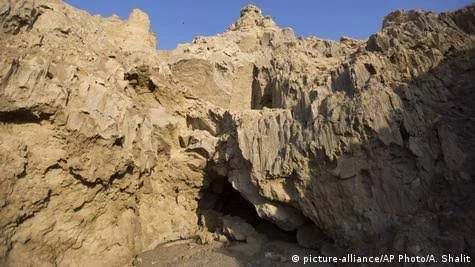
Salt is highly soluble in water. When groundwater encounters a substantial salt deposit, it can dissolve the mineral and create cavities. If the process continues, small openings may enlarge into channels or chambers. The resulting caves can be unstable because salt is weaker and more soluble than many common cave-forming rocks.
Salt caves are therefore associated with specific geological conditions. They cannot be inferred simply from the presence of underground water or from the occurrence of salt in local soil.
Salt, Groundwater, and Crete's Geology
Crete has a complex geological structure, reflecting the interaction of tectonic units, sedimentary rocks, and mountain-building processes. Limestone is widespread in parts of the island, and groundwater has shaped many of its caves and springs.
Limestone caves and salt caves form through different processes. Limestone dissolves relatively slowly under suitable chemical conditions, while halite can dissolve much more readily. A cavern in limestone should not be described as a salt cave unless there is evidence that salt dissolution played a significant role.
Salty groundwater can also occur without a salt cave. Water may acquire dissolved minerals while moving through sediment or rock, or it may be affected by seawater intrusion in coastal aquifers. Saline water is therefore not proof of an underground rock-salt deposit.
To determine whether the Messara Plain contains salt caves, geologists would need to examine local stratigraphy, groundwater chemistry, borehole records, and geophysical surveys. Evidence of evaporite layers would be especially important.
Why Underground Salt Matters
Salt deposits have influenced human history in many regions because salt was essential for food preservation, animal husbandry, and various crafts. Communities obtained it through evaporation, mining, or the collection of naturally occurring saline water.
In Crete, the history of salt use must be investigated through specific archaeological, documentary, and environmental evidence rather than inferred from the possibility of underground deposits. Coastal salt production and underground salt mining are different activities and should not be conflated.
Salt also has modern economic importance, but underground extraction can create environmental and engineering challenges. Removing soluble material may alter groundwater pathways or produce unstable cavities. Any proposed mining operation requires careful geological assessment.
Exploring Subterranean Features Responsibly
Underground environments can be difficult to investigate safely. Caves may contain unstable ceilings, narrow passages, sudden drops, flooding hazards, and air-quality problems. Salt-rich environments may also be particularly vulnerable to dissolution and collapse.
Researchers should establish whether a suspected cave exists before attempting entry. Geological mapping, remote sensing, borehole information, and professional cave surveys can help determine the structure of the subsurface.
Cave systems may also contain archaeological remains, specialized organisms, or mineral formations that can be damaged by disturbance. Responsible exploration prioritizes documentation and protection over collecting material or entering restricted spaces.
Conclusion
The possibility of underground salt caves beneath the Messara Plain offers an opportunity to examine the relationship between evaporite minerals, groundwater, and subterranean landscapes. Salt caves are scientifically real, but their formation depends on specific geological conditions.
A documented salt-cave network beneath Messara should not be assumed without evidence. The region's actual geological history, including its sedimentary formations and groundwater systems, offers substantial material for investigation. By distinguishing salt deposits from limestone caves and saline groundwater, researchers can establish what lies beneath the plain without turning a geological possibility into an unsupported discovery.