Introduction
Naxos is one of the most important islands in the history of ancient Greek stoneworking. Its marble became widely valued for sculpture, architecture, and monumental construction, while the island's quarries preserve evidence of the relationship between natural resources and artistic production.
Marble column drums are particularly useful for studying ancient architecture. These cylindrical sections formed part of columns and were stacked to create vertical supports in temples and other monumental buildings.
The title's reference to Archaic Naxos marble drums in unquarried veins raises an interesting archaeological and geological question: how can unfinished architectural elements and natural marble deposits be connected? The answer requires distinguishing actual quarry remains from unworked geological formations.
Naxos and Its Marble Resources
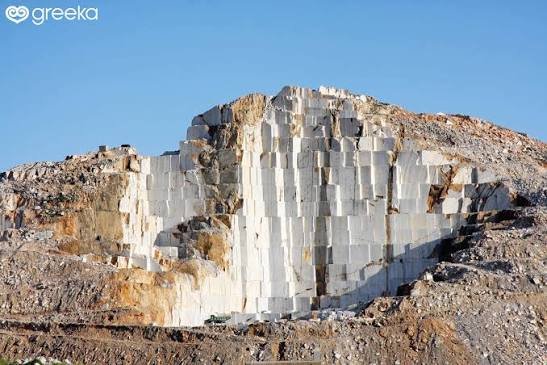
Naxos contains extensive marble deposits formed through geological processes involving the transformation of carbonate rocks under heat and pressure.
The island's marble became an important resource during antiquity. Its availability supported sculpture and architectural projects, contributing to the development of local craftsmanship.
Naxian marble was used in major works across the island and beyond. Its historical importance is particularly visible in monumental structures such as the Portara, the impressive entrance associated with the unfinished Temple of Apollo at Naxos.
The island's stone resources were therefore connected to both local identity and wider artistic traditions.
The Archaic Period and Monumental Architecture
The Archaic period of Greek history, generally dated from approximately the eighth to the early fifth century BCE, witnessed the development of increasingly monumental temples and public buildings.
Stone construction became more sophisticated as communities invested in religious sanctuaries and civic architecture.
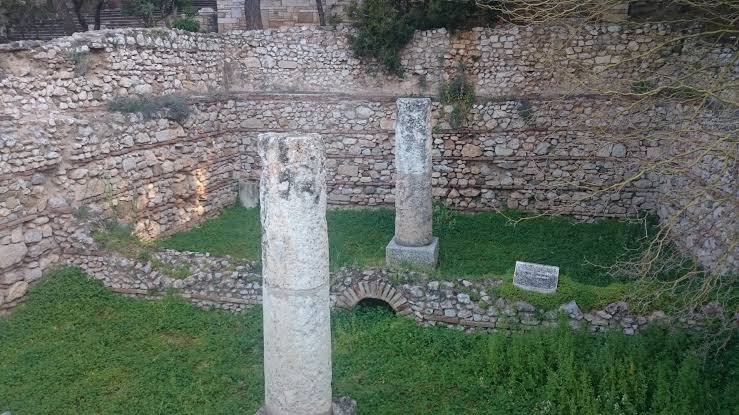
Columns were essential elements of many monumental structures. They supported roof systems and helped establish the proportions and visual character of temples.
During this period, builders experimented with different architectural forms and materials, including local limestone, marble, and timber.
Understanding Marble Column Drums
A column drum is a cylindrical or slightly tapered stone block that forms one section of a column shaft.
Instead of carving an entire column from a single enormous block, builders could produce several drums and stack them vertically. The joints between sections were carefully prepared to maintain alignment and stability.
Some ancient drums incorporated central holes or joining systems that helped secure the sections. These features varied according to building techniques and architectural requirements.
The dimensions, surface treatment, and tool marks of a drum can help researchers identify its intended architectural role.
Quarries and Unfinished Stonework
Ancient quarries preserve evidence of extraction methods, including cut channels, tool marks, abandoned blocks, and partially detached stone.
An unfinished column drum might remain at a quarry if a block fractured during extraction or proved unsuitable for transport.
Such abandoned objects are valuable because they reveal the stages of production before a stone element reached a building site.
However, an unquarried marble vein is something different. It is a natural geological deposit that has not yet been extracted or shaped by human activity.
A natural vein cannot itself contain an ancient column drum unless the object has been deliberately cut from the surrounding stone.
Geological Veins and Marble Deposits
Marble deposits can vary in color, grain size, mineral composition, and structural quality. Geological fractures and changes in mineral content may create visible patterns within the stone.
These variations influenced ancient quarry selection. Builders preferred stone that could be extracted in sufficiently large blocks without excessive cracking or weaknesses.
Geologists can examine the composition and structure of a marble deposit to understand its formation and suitability for carving.
Comparing the mineral characteristics of an architectural fragment with local geological sources can sometimes help identify where the stone originated.
The Production Process
Creating a marble column drum required substantial labor and technical knowledge.
Workers first selected a suitable block and detached it from the bedrock. They then shaped the stone using metal tools, gradually refining its cylindrical form.
The finished or partly finished drum might be transported by sledges, carts, or other methods depending on the terrain and distance.
Large blocks could also require specialized lifting and positioning techniques at the construction site.
Evidence of unfinished work can help archaeologists reconstruct these stages and understand the organization of ancient quarry labor.
Dating and Attribution
A marble drum cannot always be dated simply by its material or shape. Similar architectural forms were used across different periods, and unfinished blocks may have remained at a quarry for centuries.
Dating requires comparison with securely dated buildings, architectural details, tool marks, inscriptions, and associated archaeological deposits.
A drum identified as Archaic should therefore be supported by more than a general resemblance to early Greek columns.
The claim that particular Archaic drums remain within unquarried Naxian veins requires especially careful wording. If the stone was never extracted, it is more accurate to describe it as a geological resource rather than an architectural artifact.
Preserving Naxos' Stoneworking Heritage
Ancient quarries are important cultural landscapes. Their preservation allows researchers to study extraction methods, labor organization, and the relationship between geology and ancient craftsmanship.
Modern quarrying, construction, weathering, and unauthorized stone removal can threaten these remains.
Detailed mapping and photography help document quarry faces, abandoned blocks, and unfinished architectural elements. Geological analysis can also contribute to understanding the distribution and quality of ancient marble resources.
Conclusion
Naxos' marble heritage offers a valuable opportunity to explore how natural stone deposits supported the development of ancient Greek architecture. Column drums and unfinished quarry blocks can reveal the practical processes behind monumental construction during the Archaic period.
However, the distinction between an extracted architectural element and an unquarried geological vein is essential. The specific claim of Archaic marble drums within unquarried veins should be treated cautiously unless supported by documented archaeological evidence. Naxos' known marble resources and ancient stoneworking remains nevertheless provide a strong foundation for investigating the island's contribution to Greek monumental art.