Introduction
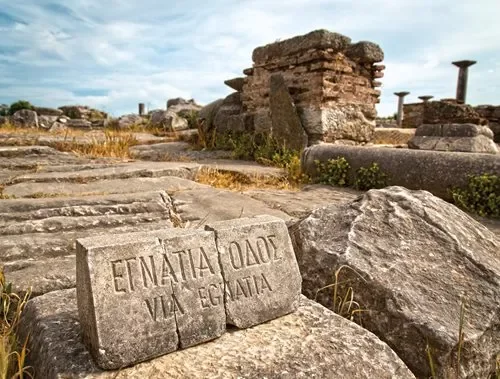
Ancient Messene, located in the southwestern Peloponnese, was one of the most significant fortified cities of classical Greece. Founded in 369 BCE after the liberation of Messenia from Spartan control, the city developed an extensive defensive system, public buildings, sanctuaries, and military facilities.
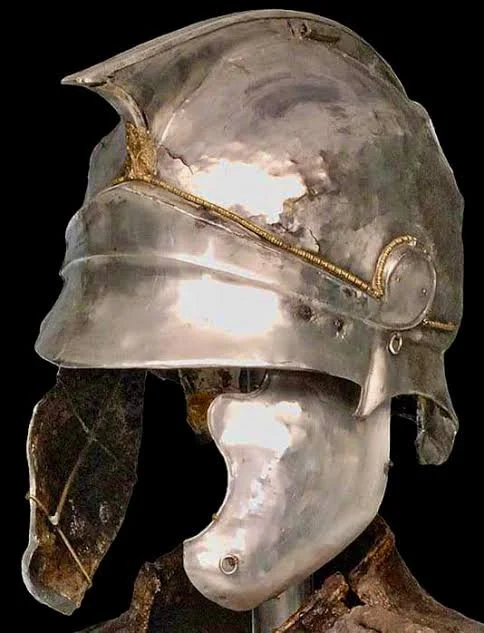
The possibility of Epirote-linked helmets in a Messene armory raises questions about military connections between the Peloponnese and Epirus. Such objects could help researchers investigate how weapons, armor-making techniques, and military fashions circulated between Greek regions.
However, the existence of a specific collection of Epirote helmets in a Messene armory should not be treated as established without archaeological documentation. The subject is best explored through known Greek helmet types, regional military traditions, and the historical connections between the two areas.
Messene as a Military Center
Messene was established during a period of major political change in the Greek world. Its foundation followed the defeat of Sparta at the Battle of Leuctra in 371 BCE, which weakened Spartan dominance over neighboring territories.
The new city became a center of Messenian political independence. Its monumental fortifications included towers, gates, and long defensive walls designed to protect the surrounding territory.
The scale of these defenses reflects the importance of military security to the city's founders. Messene's location also placed it within a wider network of political and military relationships involving Arcadia, the Peloponnese, and other Greek regions.
The Military Traditions of Epirus
Epirus, in northwestern Greece, had its own distinctive political and military traditions. Its communities maintained connections with southern Greek states while also interacting with Illyrian, Macedonian, and other neighboring populations.
During the fourth and third centuries BCE, the Molossian royal house became particularly influential. Figures such as King Pyrrhus of Epirus developed military reputations through campaigns in Greece, Italy, and the western Mediterranean.
Epirote armies used equipment associated with broader Greek military traditions, including helmets, shields, body armor, and spears. Regional differences could nevertheless appear in decorative details, construction methods, and the adoption of particular forms.
Greek Helmet Types
Ancient Greek helmets developed through several major forms.
The Corinthian helmet, recognizable by its enclosed face and narrow openings for the eyes and mouth, became especially associated with the heavily armed infantryman.
The Chalcidian helmet offered greater visibility and ventilation while retaining substantial facial protection. It was widely used during the Archaic and Classical periods.
The pilos helmet, with its simpler conical shape, became increasingly common in later Greek warfare. Other forms, including Thracian and Phrygian-inspired helmets, also circulated throughout the Greek world.
These designs were not always confined to the regions suggested by their modern names. Soldiers, craftsmen, and armies carried equipment across political boundaries.
What Would Make a Helmet Epirote?
Identifying a helmet as Epirote requires more than recognizing a general Greek style.
Archaeologists would examine its manufacturing technique, shape, decoration, material composition, and archaeological context. Comparisons with securely dated objects from Epirus could help establish similarities.
Metal composition may provide information about the copper alloys used in production. Tool marks and construction details can also reveal whether an object was produced by a particular workshop tradition.
Even when a helmet resembles examples associated with Epirus, this does not automatically prove that it was manufactured there. It may have been imported, captured, inherited, or produced by a craftsman working elsewhere.
Military Contacts Between Epirus and the Peloponnese
The Greek world was connected by political alliances, mercenary service, trade, diplomacy, and warfare.
Epirote rulers participated in regional conflicts and maintained relationships with other Greek states. These interactions created opportunities for military equipment and techniques to move between communities.
Messene's political history also placed it within changing alliances. Its independence depended partly on the balance of power among major Greek states.
An Epirote-style helmet found at Messene would therefore be historically plausible in a broad sense. It could reflect the movement of soldiers, diplomatic exchanges, military service, or the circulation of equipment through trade.
The Armory Question
The word armory suggests a dedicated place for storing and maintaining military equipment. Ancient Greek cities possessed facilities associated with weapons, armor, and other military supplies, although their precise organization varied.
A building containing helmets, spearheads, shield fittings, or armor fragments might have served a military function. However, identifying an archaeological structure as an armory requires evidence from its layout, contents, and relationship to other civic buildings.
A concentration of military objects could also represent a sanctuary deposit, a destruction layer, a workshop, or material collected after a battle.
The interpretation of any proposed Messene armory must therefore depend on the archaeological context rather than the objects alone.
Scientific Examination of Helmet Fragments
Modern research can reveal details that are difficult to identify through visual examination.
X-ray imaging can expose internal construction features and concealed repairs. Microscopy can identify hammering marks, casting techniques, and evidence of corrosion.
Portable X-ray fluorescence may provide preliminary information about an object's elemental composition. More detailed laboratory analysis can help distinguish manufacturing traditions, although metal composition alone rarely identifies a specific workshop.
Researchers can also compare helmet dimensions and decorative features with securely documented examples from other Greek sites.
Conservation and Historical Interpretation
Ancient bronze helmets are vulnerable to corrosion, especially when recovered from damp soil or environments containing salts.
Conservation specialists must stabilize fragile surfaces before attempting cleaning or reconstruction. Excessive restoration can remove evidence of manufacturing techniques and later repairs.
Digital modeling can help researchers compare incomplete fragments with known helmet forms. Such reconstructions should distinguish original material from modern interpretation.
Conclusion
The possibility of Epirote-linked helmets in a Messene armory offers a useful way to examine military connections across ancient Greece.
Helmet forms, manufacturing techniques, and decorative traditions can reveal how equipment circulated between regions. Messene's military importance and Epirus' active political role make such connections historically plausible.
Nevertheless, a specific collection of Epirote helmets at Messene requires secure archaeological evidence. Until such evidence is documented, the subject should be understood as a research question rather than a confirmed discovery.