Introduction
Tiryns, one of the most important fortified centers of Mycenaean Greece, is renowned for its massive Cyclopean walls, monumental architecture, and connection to the palace culture of the Late Bronze Age. Located in the Argolid near modern Nafplio, the settlement occupied a strategic position within a landscape of agricultural plains, coastal routes, and neighboring Mycenaean centers.
Pottery associated with the settlement's outer defensive walls offers an especially interesting subject for archaeological investigation. Although pottery fragments can be recovered from construction fills, occupation layers, and later disturbances around fortifications, their presence does not automatically mean that vessels were stored or manufactured within the walls themselves. Understanding their context is essential to reconstructing how Tiryns developed and defended its territory.
Tiryns and Its Fortified Landscape
Tiryns became famous for its enormous stone fortifications, which enclosed the citadel and incorporated passages, chambers, and protected spaces. The walls were constructed and modified during the Late Bronze Age, particularly as the settlement developed into a major political and administrative center.
The defensive system was not simply a barrier. It shaped movement through the settlement, controlled access to important buildings, and protected areas associated with the palace and its supporting activities. The surrounding lower settlement also formed part of the wider urban landscape, making the relationship between the citadel and its exterior particularly important.
Mycenaean Pottery as Archaeological Evidence
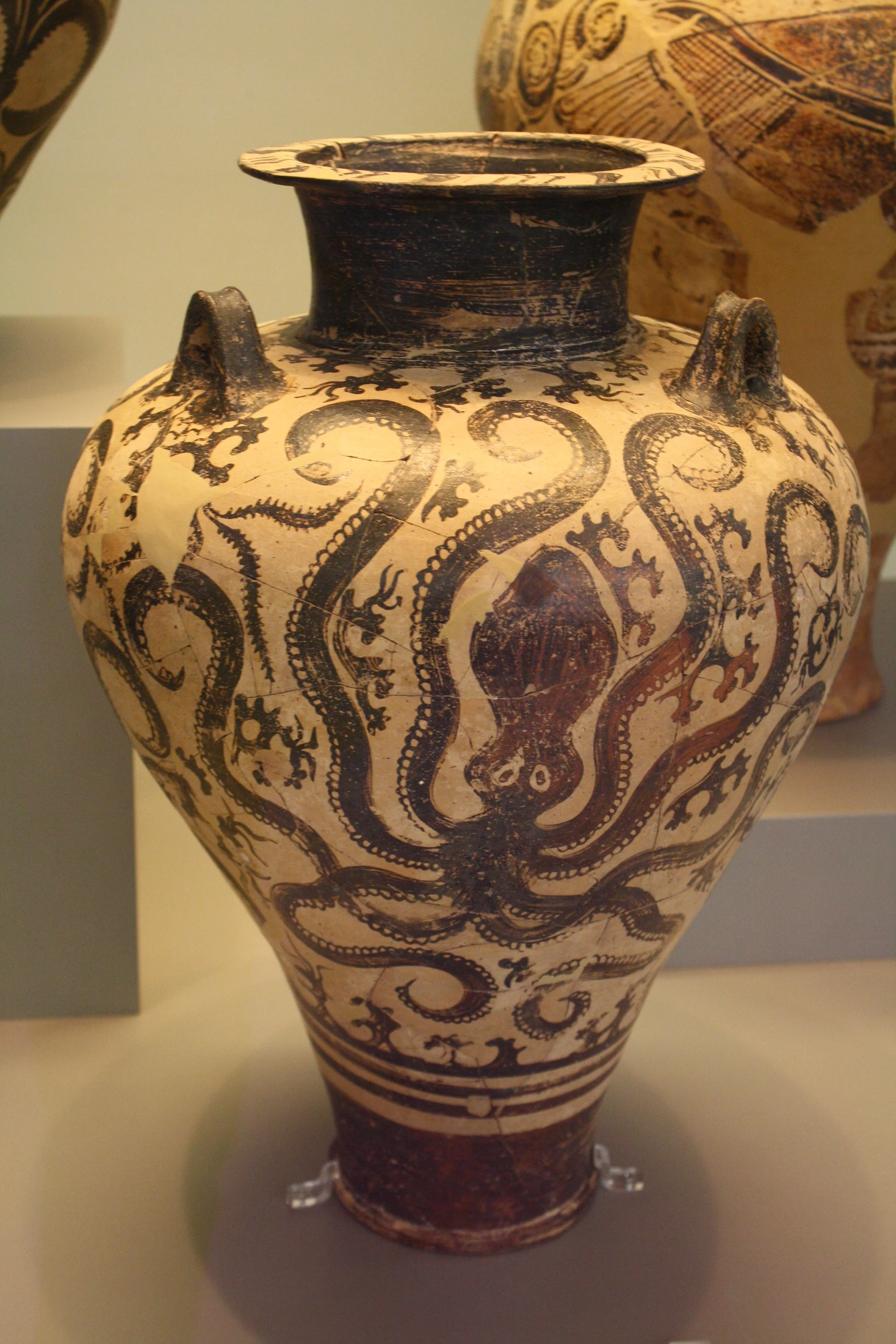
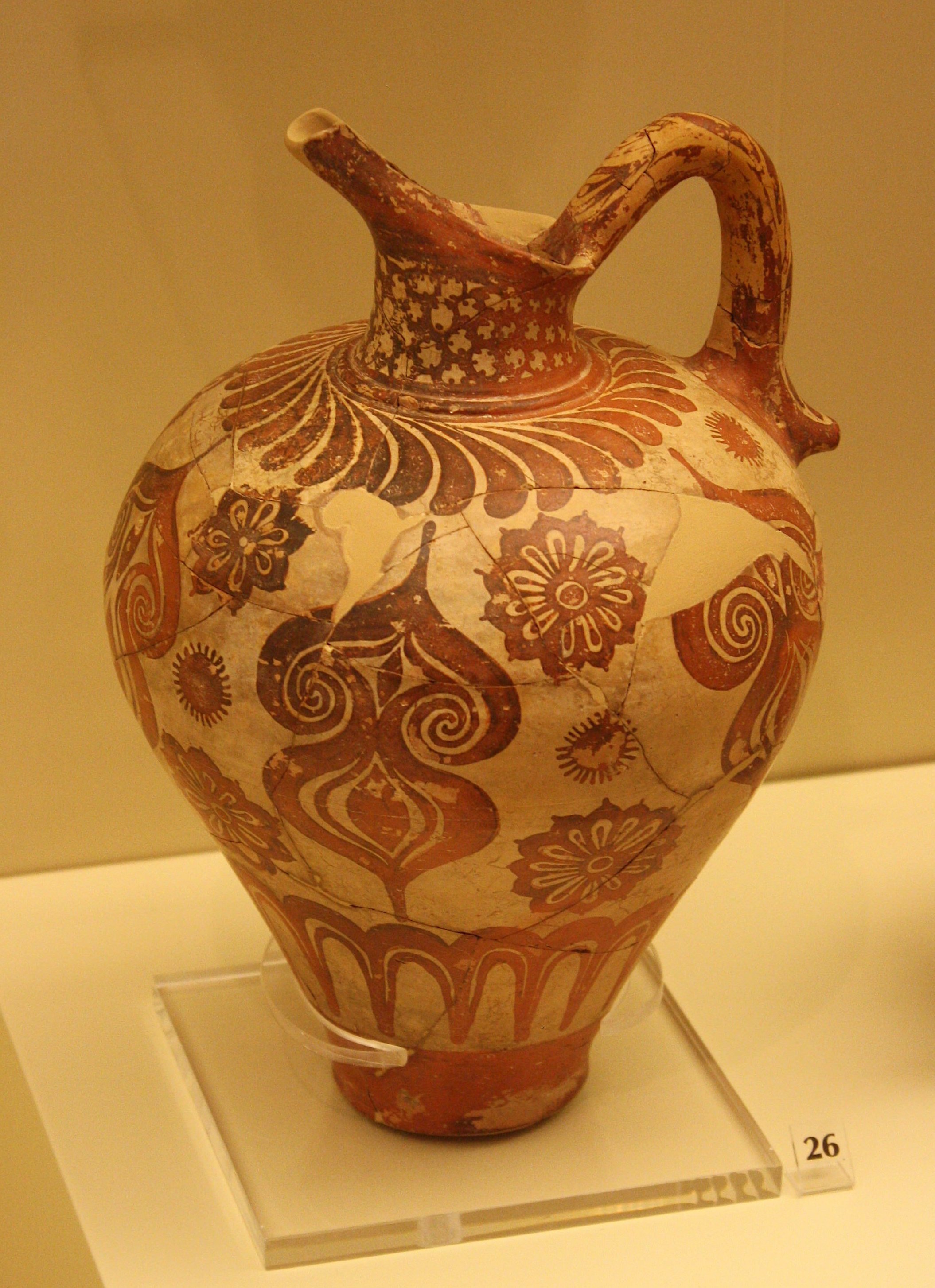
Mycenaean pottery includes a wide range of vessels, from large storage jars to drinking cups, bowls, stirrup jars, and decorated containers. Their forms and painted designs changed over time, allowing archaeologists to establish chronological sequences and identify connections between settlements.
At Tiryns, pottery can help distinguish domestic activities from administrative, ceremonial, and storage functions. Large vessels may indicate the handling of agricultural products, while smaller drinking and serving vessels can reflect food consumption and social gatherings.
Painted pottery is particularly useful because its decorative styles can be compared with material from other Mycenaean centers. Such comparisons help establish whether a vessel was produced locally, obtained through exchange, or influenced by broader regional traditions.
Pottery Around the Outer Walls
The phrase “pottery from the outer walls” requires careful archaeological interpretation. Ceramic fragments discovered near a fortification may have entered the deposit through several processes. They could have been incorporated into construction fill, discarded during nearby occupation, washed into the area through erosion, or deposited during later periods of reuse.
A securely dated assemblage from a wall foundation or construction layer could help establish when a particular section was built or repaired. However, pottery found on the surface beside a wall cannot independently date the fortification.
Archaeologists therefore examine the exact relationship between ceramic fragments, stonework, soil layers, and associated materials before assigning a chronological interpretation.
Everyday Life Beyond the Citadel
Pottery from areas outside the central citadel can reveal activities that were not necessarily connected to royal administration. Domestic vessels may indicate cooking, food storage, and household consumption, while specialized containers could point toward craft production or commercial exchange.
The lower settlement around Tiryns is important because Mycenaean urban life extended beyond monumental palaces. Workers, farmers, craftspeople, and other residents contributed to the economic system that supported the fortified center.
Ceramic evidence can help reconstruct these activities, particularly when vessels are recovered from well-preserved floors, refuse deposits, workshops, or storage areas.
Trade and Regional Connections
Tiryns was part of a wider network of Mycenaean settlements connected through land and maritime routes. Pottery styles and fabric analysis can help researchers investigate these relationships.
Scientific examination of clay composition may identify whether vessels originated in the Argolid or came from other production areas. Differences in manufacturing techniques, surface treatment, and decoration can also reveal cultural connections.
These findings should be interpreted alongside other archaeological evidence, including imported objects, metalwork, seals, and architectural similarities. Pottery alone cannot establish the precise route or organization of trade.
Conservation and Archaeological Challenges
The massive walls of Tiryns have survived for thousands of years, but their preservation requires continuous attention. Weathering, vegetation, water infiltration, and human activity can affect both the stone structures and archaeological deposits surrounding them.
Ceramic fragments are also vulnerable to erosion and displacement. Their archaeological value depends heavily on accurate recording, including their location, depth, orientation, and relationship to surrounding materials.
Modern archaeological documentation, including digital mapping and scientific material analysis, can improve the understanding of deposits associated with the fortifications.
Conclusion
Mycenaean pottery associated with Tiryns' outer defensive areas offers a valuable opportunity to explore the relationship between monumental architecture and everyday life. Properly documented ceramic deposits can help researchers investigate construction chronology, domestic activities, storage practices, and regional exchange.
However, the specific claim of a distinct pottery assemblage originating from the outer walls should be supported by excavation records and secure archaeological contexts. The broader evidence from Tiryns remains significant because it demonstrates how pottery, architecture, and settlement organization can be studied together to reconstruct one of the great fortified centers of Bronze Age Greece.