Introduction
The ancient region of Epirus, in northwestern Greece, developed a distinctive cultural landscape shaped by mountain communities, fortified settlements, pastoral economies, and connections with neighboring regions. Among its most important ancient centers was Passaron, traditionally associated with the Molossian kingdom and the political organization of the Epirote tribes.
Gold rings provide an intriguing way to investigate wealth, personal identity, craftsmanship, and social relationships in ancient Epirus. When discovered in funerary contexts, such objects can reveal aspects of burial customs and the ways communities expressed status through personal ornaments.
The proposed association between Epirote gold rings and tumuli near Passaron is a subject that requires precise archaeological documentation. The existence of ancient burial mounds in the region does not by itself confirm a particular collection of gold rings or establish their date and origin.
Passaron and the Molossian World
Passaron was an important political and ceremonial center of the Molossians, one of the principal tribal groups of ancient Epirus. It occupied a strategic position in the region's mountainous interior and was connected to the political development of the Epirote kingdom.
Ancient traditions associate Passaron with assemblies and ceremonies involving the Molossian community. Its importance was therefore not limited to military defense or settlement administration.
The surrounding landscape contained agricultural areas, routes through mountain valleys, and communities whose relationships were expressed through political alliances, religious practices, and exchange.
The Significance of Epirote Tumuli
Tumuli are burial mounds created by accumulating earth and stone over one or more graves. They occur in many parts of the ancient Mediterranean and Balkans, although their construction and use varied considerably between periods and communities.
In northwestern Greece, funerary monuments can provide evidence of changing burial traditions and relationships between local populations and neighboring cultural groups.
A tumulus may contain multiple burials, successive deposits, or evidence of later disturbance. Its architecture and contents must be examined before archaeologists can determine whether it belonged to a single family, a broader community, or an individual of elevated status.
Gold Rings and Personal Identity
Gold rings were valuable objects in many ancient societies. They could function as personal ornaments, symbols of wealth, objects of exchange, or markers of social relationships.
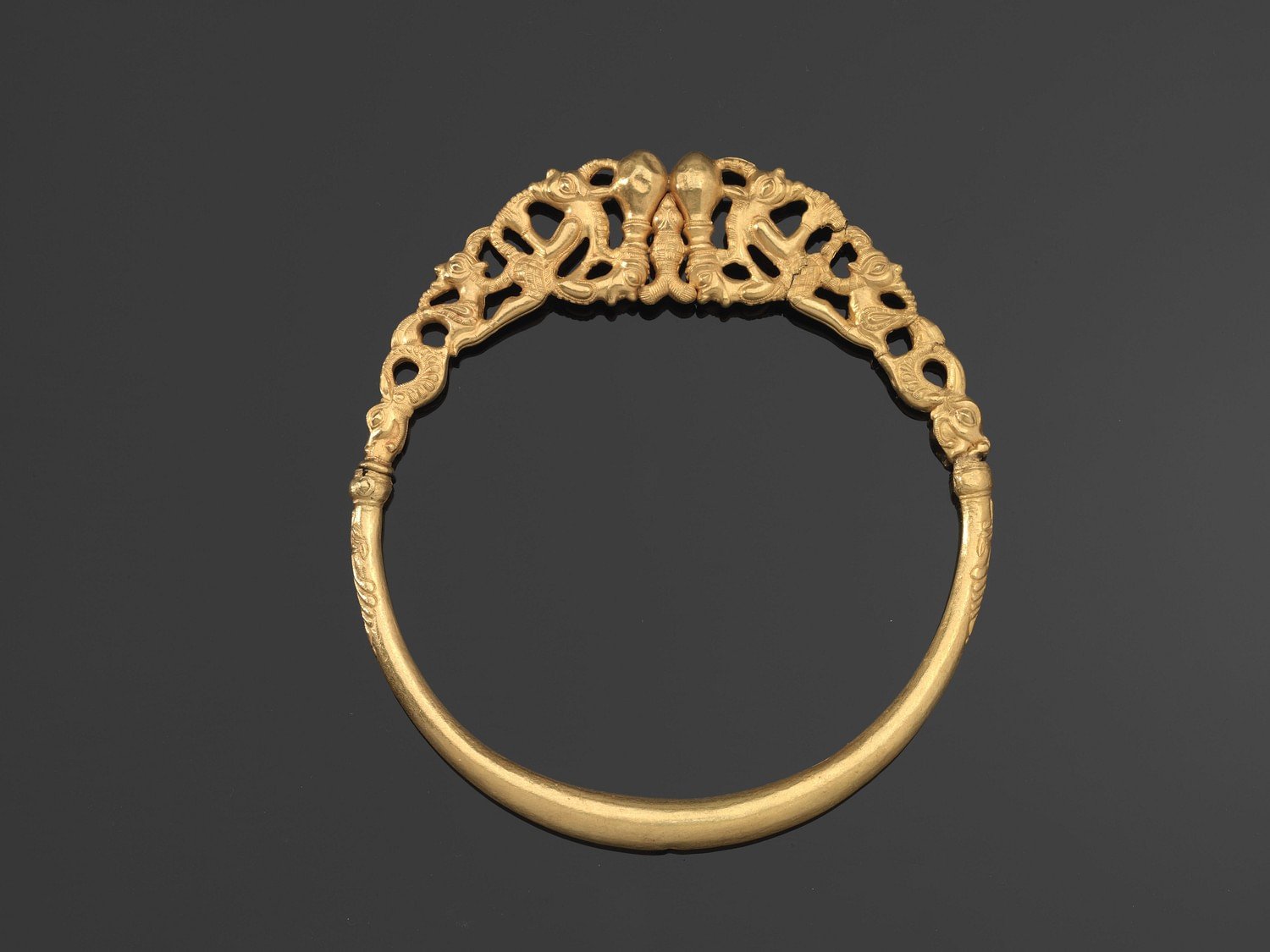
Some rings were simple bands, while others incorporated decorated bezels, engraved surfaces, or settings for precious and semiprecious materials. Their designs could reflect local craftsmanship or wider artistic influences.
In funerary contexts, rings may have been buried with the deceased as personal possessions or as deliberate offerings. Their presence does not automatically prove that the individual held political office or belonged to a royal family.
Craftsmanship and Regional Influences
Goldworking required specialized knowledge of metal preparation, shaping, joining, and surface decoration. Ancient artisans used techniques such as hammering, casting, soldering, engraving, and granulation.
The study of a ring's manufacturing process can help researchers distinguish different workshop traditions. Microscopic examination may reveal tool marks and joining techniques, while chemical analysis can provide information about the metal's composition.
Comparisons with jewelry from Macedonia, Thessaly, southern Greece, and the wider Balkans can help identify artistic connections. However, similarities in style do not necessarily prove that an object was manufactured in the region where it was discovered.
Burial Customs and Social Hierarchy
Gold ornaments in a grave can indicate access to valuable resources, but their interpretation requires caution. Burial wealth does not always correspond directly to an individual's political authority or economic position during life.
Archaeologists examine the entire burial assemblage, including pottery, weapons, tools, clothing accessories, and the structure of the grave.
The arrangement of objects can be especially informative. Jewelry worn by the deceased may have served a different purpose from ornaments placed separately as offerings.
Multiple burials within a mound can also reveal how funerary monuments were reused and how communities maintained connections with earlier generations.
Epirus and Wider Exchange Networks
Epirus was not isolated from the rest of the ancient Greek world. Its communities participated in networks connecting the Adriatic coast, central Greece, Macedonia, and the western Balkans.
Metal objects and jewelry could move through trade, diplomatic gifts, marriage alliances, military service, or the circulation of skilled craftspeople.
A gold ring discovered near Passaron could therefore reflect both local traditions and external influences. Establishing its origin would require a combination of archaeological context, stylistic comparison, and scientific analysis.
The Importance of Secure Provenance
The proposed gold rings from Passaron tumuli should not be treated as an established archaeological discovery without a published excavation record or reliable collection documentation.
For an object to contribute meaningfully to historical research, its exact findspot, burial association, archaeological layer, and conservation history must be known.
Unprovenanced jewelry can still be studied for its physical characteristics, but it cannot securely establish the identity, chronology, or burial customs of a particular ancient community.
Conclusion
Gold rings associated with the funerary landscape of Passaron would offer an important opportunity to explore Epirote craftsmanship, social distinction, and regional exchange. Their value would extend beyond their precious material, especially if they were recovered from securely documented tumuli.
At present, the specific claim of a defined assemblage of Epirote gold rings from Passaron tumuli requires verification. The broader archaeological setting, however, provides a compelling framework for investigating how personal ornaments expressed identity and social relationships in ancient Epirus.