Introduction and Historical Background
Personal ornaments are important sources of information about ancient society. Jewelry could communicate wealth, social position, personal identity, religious affiliation, and cultural connections. Among these objects, gold earrings are particularly valuable because they demonstrate both technical skill and the social significance of precious materials.
Ikaria, an island in the eastern Aegean, occupied a geographical position connected to maritime routes between the Cyclades, Asia Minor, and other parts of the Aegean. Its archaeological record can contribute to the study of regional interaction during different periods of Greek history.
The proposed study of Archaic gold earrings from Ikaria tombs focuses on the relationship between funerary customs, jewelry production, and social identity. The Archaic period, generally dated from approximately 700 to 480 BCE, witnessed major developments in Greek artistic production, trade, and political organization. However, specific gold earrings from Ikaria tombs must be verified through archaeological documentation before their date and provenance can be established.
Gold Jewelry in the Archaic Period
Gold was valued throughout the ancient Mediterranean for its appearance, durability, and relative rarity. It was used to produce earrings, necklaces, rings, pendants, decorative fittings, and other personal ornaments.
Archaic jewelry reflected a combination of local traditions and external influences. Greek artisans adopted and adapted decorative elements from the eastern Mediterranean, while developing distinctive forms and manufacturing techniques.
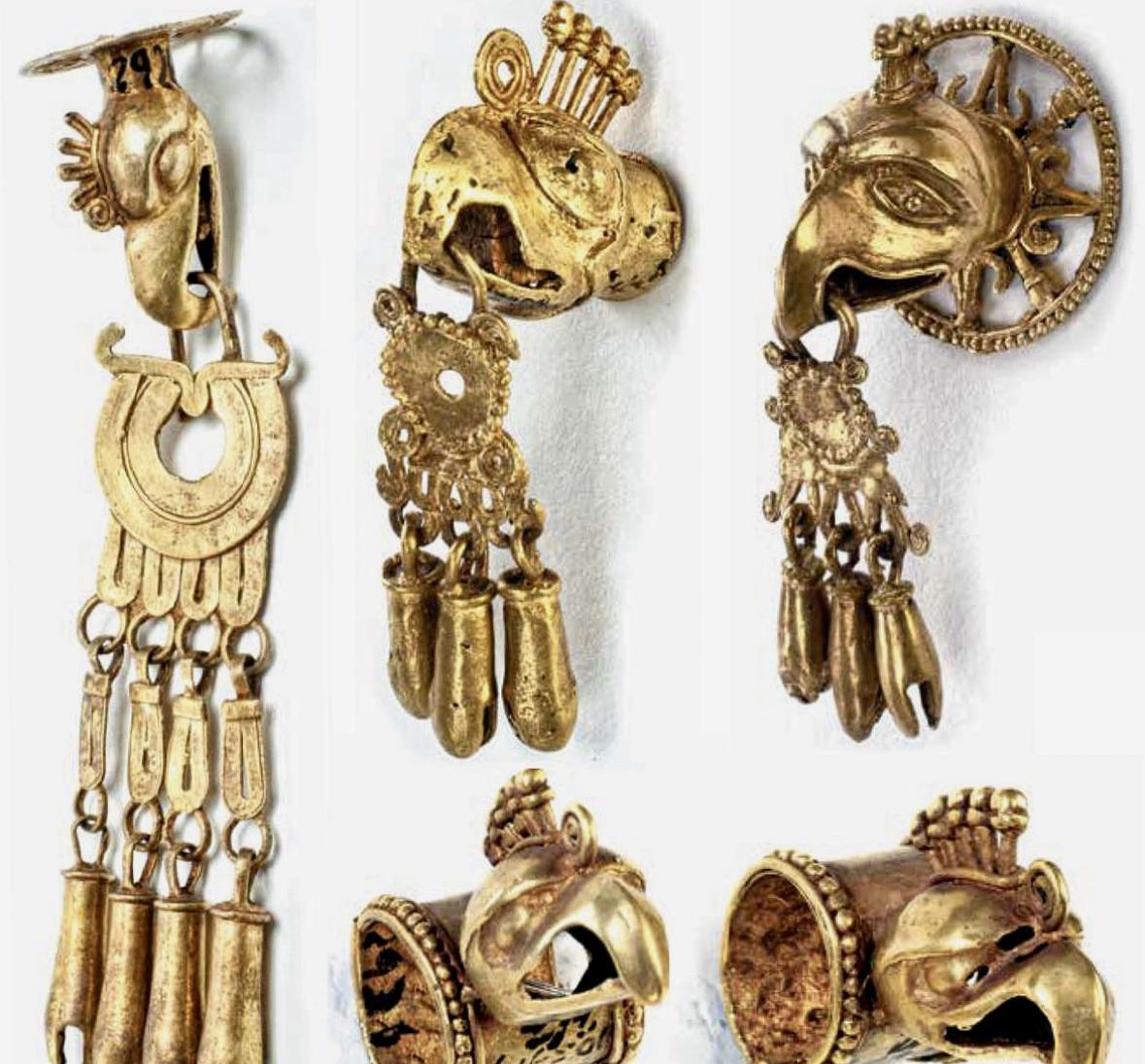
Gold earrings could be produced through hammering, casting, soldering, and the attachment of small decorative components. Their designs ranged from simple hoops to elaborate forms incorporating floral, animal, and geometric motifs.
Manufacturing Techniques
Ancient goldsmiths used several techniques to create detailed jewelry. Hammering allowed thin sheets of gold to be shaped into different forms, while casting produced solid or hollow components.
Granulation involved attaching tiny gold spheres to a surface to create decorative patterns. Filigree used fine gold wires arranged into intricate designs.
The combination of these techniques required specialized knowledge and careful control of materials. Microscopic examination can reveal soldering points, tool marks, and the sequence of manufacturing operations.
Earrings and Funerary Customs
Jewelry placed in graves can provide information about personal appearance, social status, and beliefs concerning death and remembrance.
Gold earrings in a burial may have been worn by the deceased during life or selected specifically as grave offerings. Their placement may also reflect family traditions or ceremonial practices.
However, grave goods should not be interpreted as direct indicators of wealth without considering the complete burial assemblage. The presence of gold jewelry may reflect social status, but it could also have religious, familial, or commemorative significance.
Ikaria and Aegean Exchange Networks
Ikaria's position in the eastern Aegean made it relevant to maritime connections involving the Cyclades, Samos, and the coast of Asia Minor.
The movement of jewelry could occur through trade, gift exchange, migration, marriage connections, or the movement of individual craftspeople. Similar decorative styles across different islands may indicate cultural interaction, although they do not necessarily prove that objects were produced in the same workshop.
A comparison of possible Ikaria finds with securely dated Archaic jewelry from neighboring regions could help establish their artistic relationships.
Archaeological and Scientific Examination
The study of gold earrings should include detailed recording of dimensions, weight, shape, decoration, and manufacturing traces.
Elemental analysis may help identify the composition of the gold alloy. Microscopic examination can reveal manufacturing techniques and later repairs. Comparisons with documented jewelry may help establish stylistic chronology.
Most importantly, the original tomb context should be documented. Burial architecture, associated pottery, coins, and other grave goods may provide chronological information.
Conclusion
The proposed study of Archaic gold earrings from Ikaria tombs offers an opportunity to investigate ancient jewelry production, funerary customs, and social relationships in the eastern Aegean.
The historical significance of the objects depends on establishing their date, material composition, and archaeological context. Properly documented examples could contribute to understanding how personal ornaments reflected identity and cultural interaction during the Archaic period.