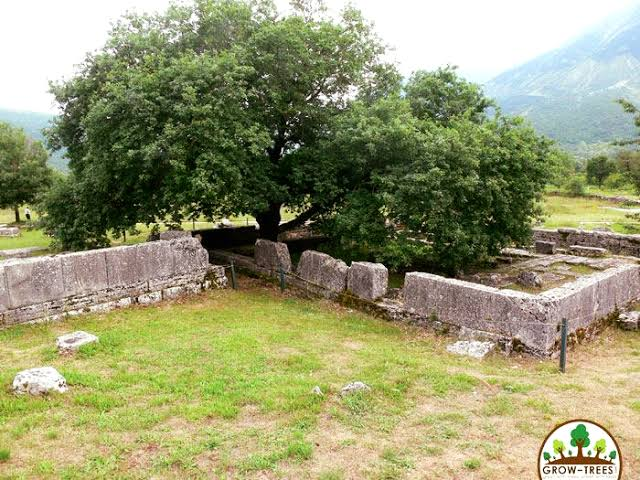
Dodona, in Epirus, was one of the most important ancient Greek oracular sanctuaries. It was especially associated with Zeus and the sacred oak tree. Ancient literary and historical sources describe divination connected with the tree and with the interpretation of sounds or signs associated with the sanctuary.
The oak held symbolic importance because of its longevity and its presence within the sacred landscape. Its leaves, branches, and surrounding natural sounds could be interpreted within religious practices. The sanctuary also produced inscribed lead tablets on which visitors recorded questions for the oracle. These tablets provide valuable evidence for the concerns of ancient worshippers, including family matters, travel, health, property, and public affairs.
The idea of “whispers” from the oak is a poetic way of describing the relationship between nature and divination. It should not be taken as a literal description of a single, unchanging ritual. Ancient sources preserve different accounts of how the oracle operated, and scholarly interpretations continue to examine the role of priests, ritual objects, and natural signs.
Dodona’s importance extended beyond the local community. Visitors from different parts of the Greek world consulted the sanctuary, making it a place of religious communication and regional interaction.
The study of Dodona’s divination practices can combine archaeology, epigraphy, ancient literature, and environmental history. The sanctuary shows how natural features could become central to religious authority and how written questions preserved the voices and concerns of ancient individuals.