Introduction and Historical Background
Rings were important objects in Bronze Age societies. They could function as personal ornaments, markers of identity, symbols of authority, or objects associated with religious and administrative practices.
The Mycenaean civilization developed during the Late Bronze Age and maintained connections throughout the Aegean and eastern Mediterranean. Its artistic traditions included representations of animals, mythical creatures, religious ceremonies, and elite activities.
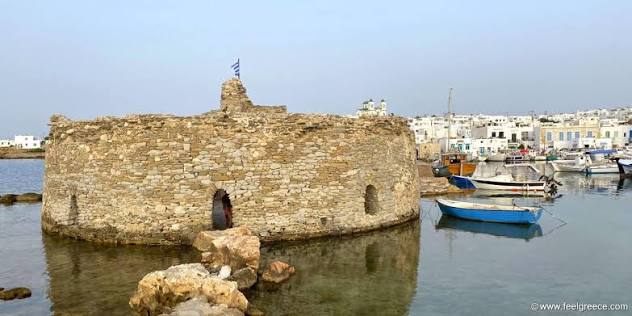
Paros, one of the central Cycladic islands, occupied a position within maritime networks connecting the Cyclades, mainland Greece, Crete, and the eastern Aegean.
The proposed study of Mycenaean griffin rings in Paros hoards raises questions about Bronze Age symbolism, jewelry production, and the movement of elite objects between island communities. The specific existence and dating of such rings in Paros hoards must be confirmed through archaeological publications and collection records.
The Griffin in Aegean Art
The griffin is a mythical creature generally represented with the body of a lion and the head and wings of an eagle. It appears in artistic traditions across the ancient Near East and the eastern Mediterranean.
Griffin imagery was adopted and adapted by different cultures. In Aegean art, such representations may reflect contact with eastern Mediterranean visual traditions.
The meaning of the griffin varied according to context. It could be associated with power, protection, guardianship, or elite imagery, but these interpretations should not be applied automatically to every representation.
Mycenaean Jewelry and Ring Production
Mycenaean jewelry included rings, beads, pendants, bracelets, and other personal ornaments. Gold and other materials were used according to the object's intended function and the resources available.
Rings could be produced through casting, hammering, shaping, and soldering. Engraved surfaces might contain images or symbols that communicated personal or cultural meaning.
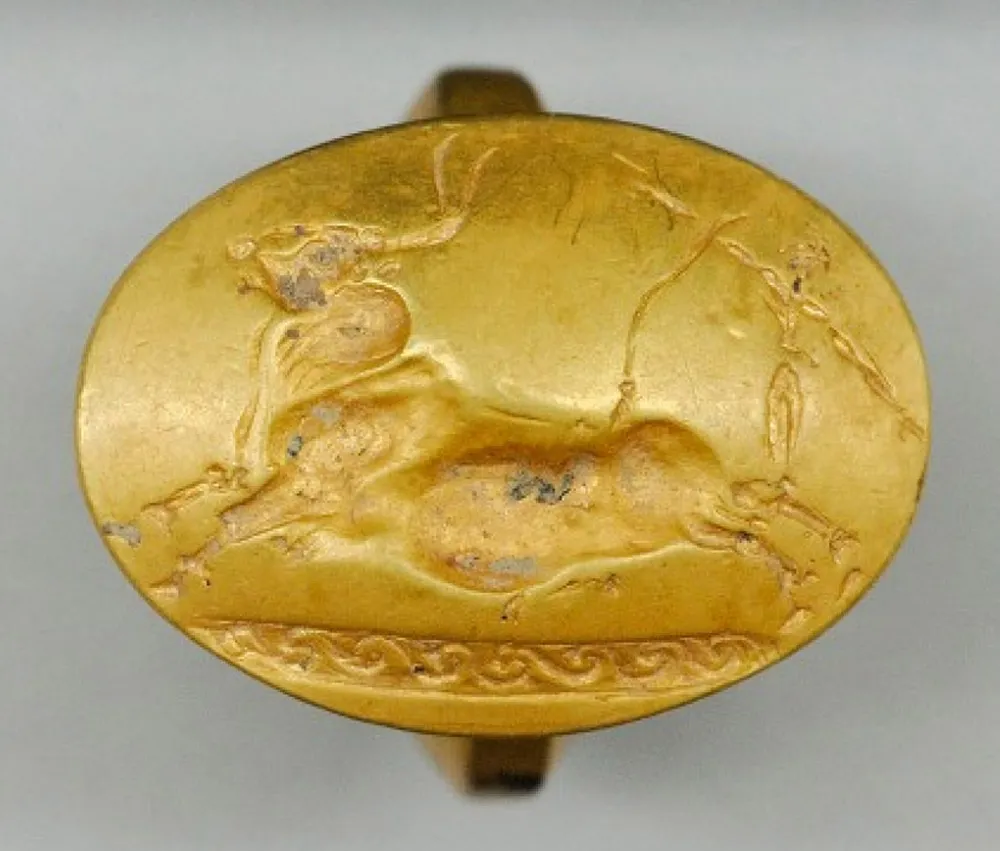
A ring bearing a griffin design could have served as a personal ornament or signet, depending on its construction and evidence of use.
Hoards and the Deposition of Valuable Objects
A hoard is a group of objects deliberately deposited together. Hoards may contain precious metals, tools, jewelry, coins, or other valuable materials.
The reasons for hoard deposition varied. Objects might have been hidden during periods of insecurity, stored for later use, accumulated as wealth, or deposited for ritual reasons.
A group of rings discovered together should not automatically be described as a hoard. Researchers must establish whether the objects were intentionally deposited as a group and whether their archaeological context is secure.
Paros and Bronze Age Exchange
The Cycladic islands participated in maritime networks that connected different parts of the Aegean. Raw materials, pottery, metal objects, and artistic ideas moved between islands and mainland settlements.
If a Mycenaean ring were securely identified on Paros, it could provide evidence of contact between the island and Mycenaean communities. Its arrival might have resulted from trade, gift exchange, migration, or later movement.
The presence of a Mycenaean-style object does not necessarily mean that the object was manufactured on the mainland. Local artisans could also adopt and reproduce external artistic forms.
Iconographic and Technical Analysis
A study of griffin rings should document their dimensions, material, construction, decorative details, and signs of wear.
Iconographic comparison can help identify similarities with securely dated Mycenaean and eastern Mediterranean objects. Metal analysis may provide information about alloy composition and manufacturing practices.
Microscopic examination may reveal engraving techniques, soldering, repairs, and traces of use. Such evidence can help distinguish objects intended for everyday wear from those produced primarily for display or ceremonial purposes.
Conclusion
The proposed study of Mycenaean griffin rings in Paros hoards offers a framework for examining Bronze Age jewelry, symbolic imagery, and cultural interaction in the Cyclades.
The historical significance of the proposed assemblage depends on verifying the rings' material, date, archaeological context, and relationship to documented Mycenaean examples. Properly established evidence could contribute to understanding the movement of elite objects across the Late Bronze Age Aegean.