Introduction
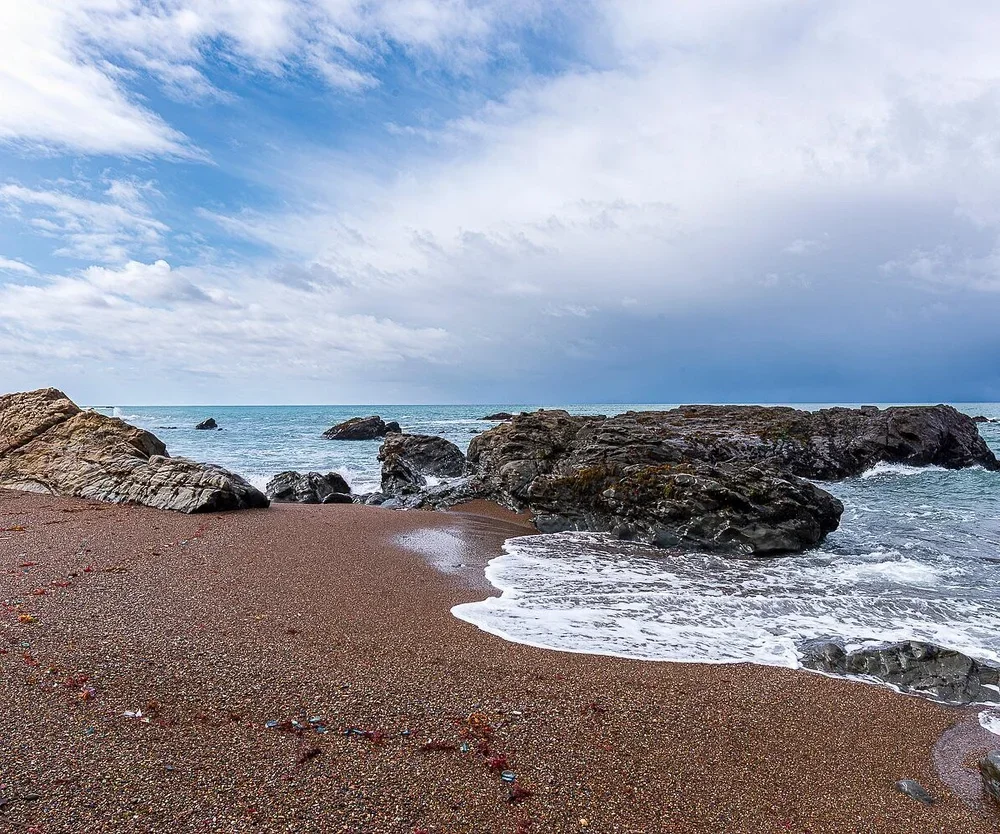
The Strymon River, also known as the Struma, flows through southeastern Europe before reaching the northern Aegean Sea in Greece. Its delta is an important coastal landscape shaped by river sediment, waves, currents, and changing sea levels. Such environments contain beaches, wetlands, lagoons, sandbars, and other landforms that evolve through the movement of sediment.
The possibility of gypsum dunes along the Strymon Delta beaches raises an interesting geological question. Gypsum is a sulfate mineral that can form through evaporation of mineral-rich water, while dunes are accumulations of sediment shaped by wind. Although gypsum-rich deposits can occur in evaporative environments, the presence of actual gypsum dunes in the Strymon Delta requires mineralogical confirmation.
This topic explores the processes that create gypsum, the formation of coastal dunes, and the methods used to determine whether unusual beach deposits contain gypsum rather than ordinary sand.
The Strymon River Delta
The Strymon River drains a large area of the Balkans before entering the northern Aegean. Its lower reaches transport sediment from inland geological formations toward the coast.
When river water reaches the sea, its flow slows and suspended material begins to settle. Sand, silt, and clay accumulate in different areas depending on water depth, currents, wave action, and sediment supply.
Over time, these processes can create new landforms. River channels may shift, wetlands may develop, and coastal sandbars may form or disappear.
The delta is therefore a dynamic environment where geological materials from different parts of the drainage basin become mixed.
What Is Gypsum?
Gypsum is a naturally occurring mineral composed of hydrated calcium sulfate. Its chemical formula is CaSO₄·2H₂O.
It commonly forms when water containing dissolved calcium and sulfate evaporates. As water volume decreases, dissolved minerals become concentrated until gypsum begins to crystallize.
Gypsum is relatively soft, with a hardness of approximately two on the Mohs scale. It can occur as massive deposits, transparent crystals, fibrous forms, or fine-grained sediment.
Its appearance varies. Some varieties are white or colorless, while impurities can create gray, brown, reddish, or other shades.
How Gypsum Deposits Develop
Gypsum commonly forms in evaporative environments such as restricted marine basins, saline lakes, and coastal lagoons. These environments experience water loss through evaporation while dissolved minerals remain behind.
Repeated cycles of evaporation and water replenishment can produce thick evaporite deposits. Gypsum may occur alongside other minerals, including halite and anhydrite.
In coastal settings, gypsum can also form in localized areas where groundwater interacts with saline sediments. Mineral precipitation may occur when chemical conditions become favorable.
However, a gypsum-bearing deposit is not necessarily a dune. The mineral may be present beneath the surface or mixed with ordinary sand and other sediment.
How Coastal Dunes Form
Coastal dunes develop when wind transports loose sediment from beaches and deposits it around obstacles such as vegetation, driftwood, or small changes in topography.
The accumulation of sand creates mounds and ridges that may gradually become larger. Vegetation can stabilize dunes by trapping additional sediment and reducing erosion.
Dune formation depends on several factors, including wind strength, sediment supply, moisture, vegetation, and the shape of the coastline.
Most familiar coastal dunes are composed primarily of quartz-rich sand or carbonate grains. In unusual geological environments, other mineral grains may become part of the dune material.
Could Gypsum Form Coastal Dunes?
Gypsum grains can be transported by wind if they are exposed, sufficiently dry, and present in suitable particle sizes. In theory, a gypsum-rich sediment deposit could be reworked into dune-like landforms.
However, gypsum's physical properties differ from those of quartz. It is softer and can be more vulnerable to abrasion and dissolution.
In a humid or frequently flooded coastal environment, gypsum may dissolve or be altered by water. This makes the long-term preservation of exposed gypsum dunes dependent on local climatic and hydrological conditions.
A genuine gypsum dune field would therefore require a suitable source of gypsum-rich sediment, sufficient wind transport, and environmental conditions that allow the material to persist.
Identifying Gypsum in Beach Sediments
Visual appearance alone is not enough to identify gypsum. White or pale beach deposits may consist of quartz, carbonate fragments, shell material, salt crusts, or other minerals.
Geologists begin with field observations and representative sediment sampling. They may examine grain shape, texture, color, and hardness.
Laboratory methods provide more reliable identification. X-ray diffraction can determine the mineral phases present, while chemical analysis can measure calcium and sulfate concentrations.
Microscopy can reveal whether grains are individual gypsum crystals, fragments of evaporite rock, or mixtures of different materials.
Researchers must also examine the geological context. A gypsum-rich layer beneath a beach may have formed through evaporation long before the modern coastal dune developed.
The Role of Groundwater and Salinity
Coastal groundwater can influence mineral formation. Freshwater moving through sediment may mix with seawater or encounter minerals already present in the ground.
Changes in salinity and evaporation can alter the chemical balance of groundwater. Under appropriate conditions, gypsum may precipitate within sediment pores or at the surface.
These processes are especially relevant in lagoons and areas where water circulation is restricted.
However, the presence of saline water does not automatically produce gypsum. Mineral precipitation depends on the concentrations of dissolved calcium and sulfate, temperature, evaporation, and other chemical conditions.
Environmental and Coastal Implications
Dunes are important natural barriers. They can reduce the impact of storm waves, protect wetlands, and provide habitats for specialized plants and animals.
If gypsum-rich sediment were present in a coastal dune system, its physical and chemical properties could influence vegetation and soil development.
Changes in dune composition may also affect erosion and sediment movement. Researchers would need to examine whether the mineral grains are naturally occurring, transported by the river, or introduced through human activities.
Protecting the Strymon Delta requires monitoring sediment supply, coastal development, river regulation, and changes in shoreline position.
Conclusion
The possibility of gypsum dunes along the Strymon Delta beaches offers an opportunity to investigate the interaction between evaporite minerals and coastal sediment processes. Gypsum can form through the evaporation of mineral-rich water, while dunes develop through wind-driven sediment accumulation.
However, these are distinct geological processes. A gypsum deposit does not automatically constitute a gypsum dune, and pale beach sediments cannot be identified as gypsum without mineralogical analysis.
Field sampling, laboratory testing, and coastal geomorphological studies would be necessary to establish whether gypsum-rich dunes occur in the delta. Such research could contribute to a more detailed understanding of the region's sediment sources, groundwater chemistry, and evolving coastline.