The Labyrinth as Cultural Memory
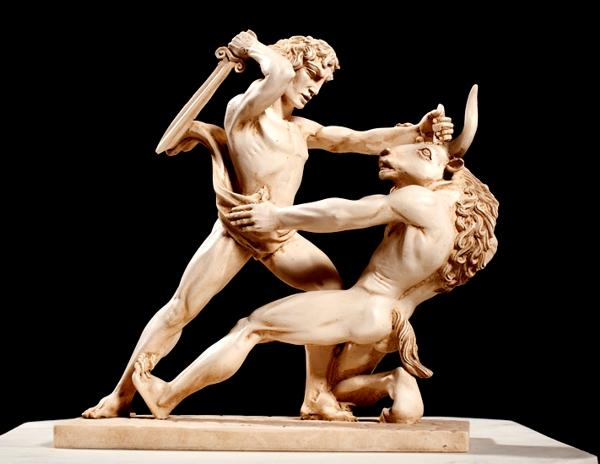
The myth of Theseus and the Minotaur is often interpreted as a blend of myth and historical memory.
The setting—Crete under King Minos—aligns with archaeological evidence of the powerful Minoan civilization. The palace of Knossos, with its complex layout, may have inspired the idea of the Labyrinth.
The Minotaur as Symbol
The Minotaur represents:
The fusion of civilization and savagery
The consequences of divine punishment (born from Pasiphaë and a sacred bull)
The hidden horrors within structured systems
Ariadne’s Thread: Knowledge and Navigation
Ariadne plays a pivotal role. Her thread is more than a tool—it is a symbol of:
Rational thought guiding one through chaos
The importance of memory and direction
Feminine wisdom in a male-dominated narrative
Political Interpretation
The tribute of Athenian youths may symbolize:
A historical subjugation of Athens
Cultural dominance of Crete
Ritual sacrifice transformed into narrative
Theseus’s victory, therefore, may represent Athens reclaiming power and identity.