Education in Ancient Greece was shaped by two very different city-states: Athens and Sparta. Each system reflected its society’s values, priorities, and vision of the ideal citizen.
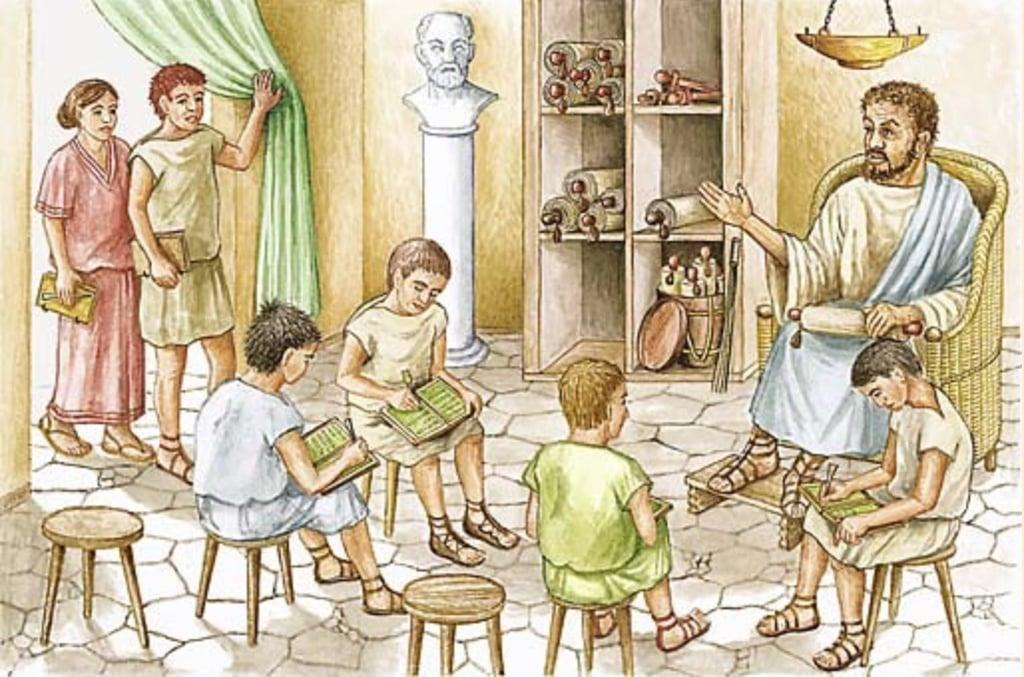
In Athens, education emphasized intellectual growth, creativity, and civic participation. Boys from wealthy families began schooling around age seven. They learned reading, writing, arithmetic, poetry, music, and physical education. Literature, especially Homer’s Iliad and Odyssey, played a major role in shaping moral and cultural identity. Music and poetry were considered essential for developing harmony of mind and character. As they grew older, students studied rhetoric and philosophy to prepare for participation in the democratic assembly.
Athens aimed to produce well-rounded citizens capable of debating, reasoning, and contributing to political life. Girls, however, were largely excluded from formal education and were trained at home in domestic skills.
Sparta had a completely different approach. The Spartan education system, known as the agoge, was state-controlled and focused entirely on producing elite soldiers. Boys entered training at age seven and lived in communal groups where they endured harsh physical discipline, survival training, and combat preparation. Literacy and intellectual studies were minimal because they were not considered essential to military life.
Spartan girls were also physically trained, a rare practice in the ancient world, because strong women were believed to produce strong warriors. However, their education was still oriented toward supporting the state’s military system.