Greek philosophy and literature form the intellectual foundation of Western civilization. Together, they shaped how people think about ethics, politics, science, storytelling, and human existence.
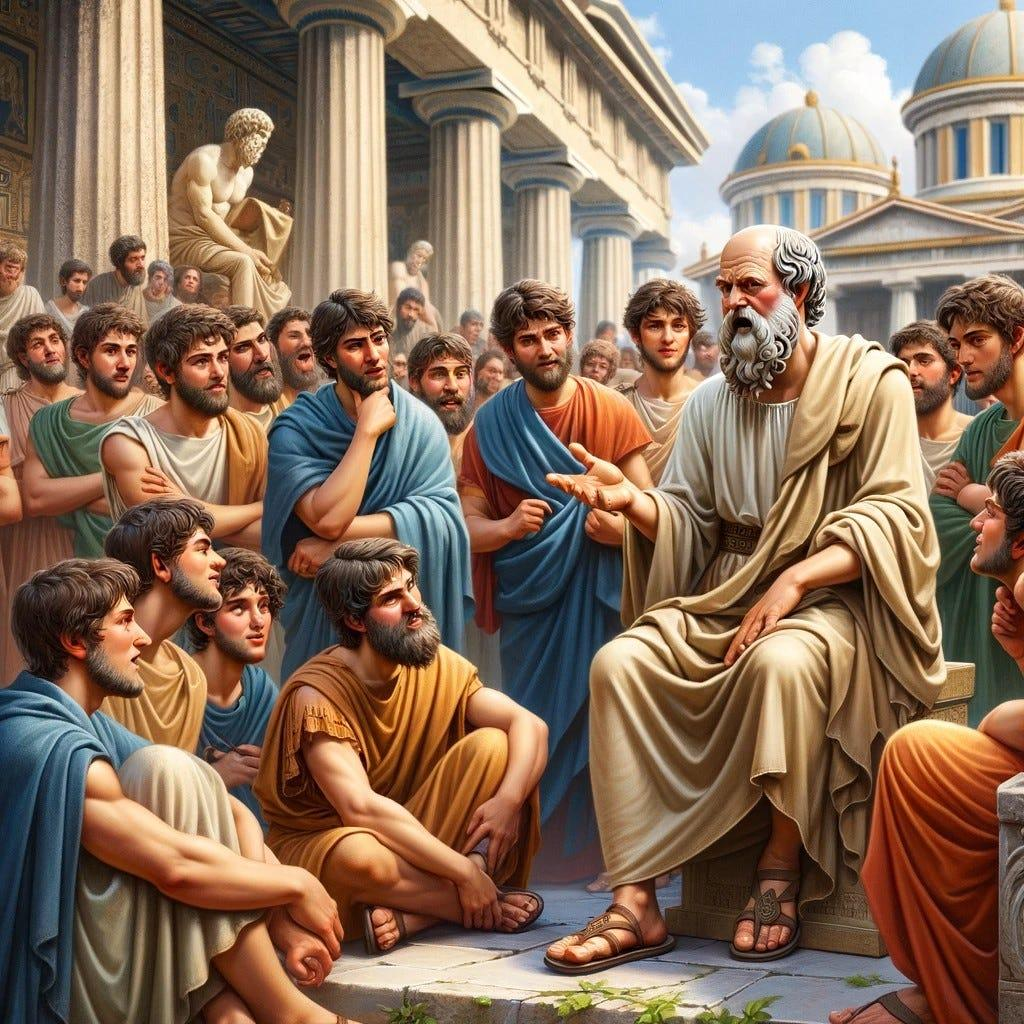
Philosophers such as Socrates, Plato, and Aristotle transformed the way humans understand knowledge and morality. Socrates focused on questioning assumptions and encouraging critical thinking. Plato explored ideal forms of justice and governance, while Aristotle developed systems of logic, biology, ethics, and politics that influenced science for centuries.
Greek literature developed alongside philosophy. Epic poets like Homer created foundational works such as the Iliad and the Odyssey, which told stories of heroism, war, gods, and human struggle. These epics shaped Greek identity and influenced storytelling traditions across the Western world.
Greek drama also became a powerful literary form. Tragedies explored serious themes such as fate, divine punishment, and human suffering, while comedies often criticized politics and society through humor. Performances took place in large outdoor amphitheaters, where thousands of citizens gathered to watch.
Philosophy and literature were deeply connected in Greek culture. Both aimed to understand human nature and the world, one through reason and argument, the other through narrative and emotional expression.
Together, they created a cultural legacy that still shapes education, politics, and art today.