• Home page/Blog
    • Ancient Greece
    • Archaeology
    • Mythology
    • Architecture
    • Artefact
    • Inventions
    • Tourism
    • News
    • Science
    • General
    • Weird
    • Recipes
    • Blog
  • About
  • Contact
Menu

GHD

  • Home page/Blog
  • History
    • Ancient Greece
    • Archaeology
    • Mythology
  • Art
    • Architecture
    • Artefact
    • Inventions
  • Travel
    • Tourism
  • Other
    • News
    • Science
    • General
    • Weird
    • Recipes
    • Blog
  • About
  • Contact

The Art of Greek Warfare: Hoplites and Phalanx Formations

April 16, 2026

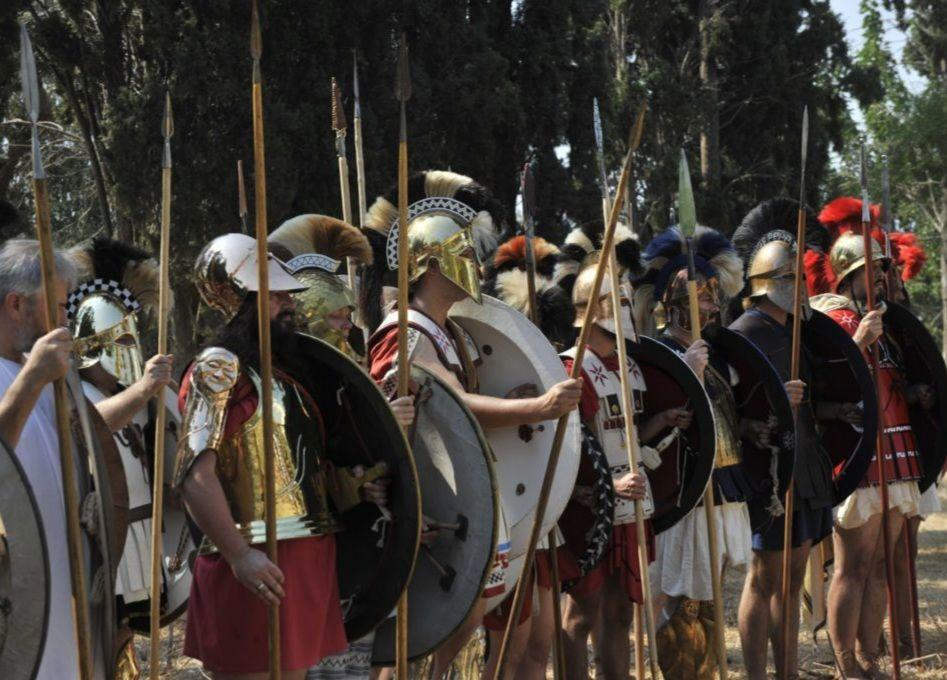
Greek warfare was dominated by heavily armed infantry soldiers known as hoplites. These citizen-soldiers formed the backbone of Greek military power and fought in a highly organized formation called the phalanx.

Hoplites were typically middle- or upper-class citizens who could afford their own armor and weapons. Their equipment included a bronze helmet, chest armor, greaves for the legs, a large round shield called a hoplon, and a long spear known as a dory. A short sword was used as a secondary weapon.

The phalanx formation was a tightly packed arrangement of soldiers standing shoulder to shoulder in rows. Each soldier’s shield protected not only himself but also the soldier to his left. This created a powerful wall of defense and offense.

Success in phalanx warfare depended on discipline, unity, and coordination. Soldiers had to maintain formation at all times, as breaking ranks could weaken the entire line.

Battles such as Marathon (490 BCE) and Thermopylae (480 BCE) demonstrated the effectiveness of hoplite warfare. Even smaller Greek city-states could defeat larger armies through superior organization and training.

Over time, Greek warfare evolved with the introduction of cavalry and specialized troops, but the hoplite and phalanx remained central for centuries.

Greek military strategy was not just about brute force—it was about structure, cooperation, and civic duty, as every soldier fought as part of a collective citizen body.
← The Concept of Xenia (Hospitality) in Greek SocietyThe Role of Oracles and Divination in Greek Life →
Featured
image_2026-04-15_231125939.png
Apr 16, 2026
Diogenes the Cynic: The Most Eccentric Philosopher
Apr 16, 2026
Apr 16, 2026
image_2026-04-15_230415049.png
Apr 16, 2026
The Sophists: Ancient Greece’s Controversial Teachers
Apr 16, 2026
Apr 16, 2026
image_2026-04-15_230225400.png
Apr 16, 2026
Aristotle’s Contributions to Science and Philosophy
Apr 16, 2026
Apr 16, 2026
image_2026-04-15_225955231.png
Apr 16, 2026
Plato’s Republic: Key Ideas Explained
Apr 16, 2026
Apr 16, 2026
image_2026-04-15_224907483.png
Apr 16, 2026
Socrates: Life, Trial, and Death
Apr 16, 2026
Apr 16, 2026
image_2026-04-15_000054363.png
Apr 16, 2026
The Origins of Greek Philosophy: Thales and the Pre-Socratics
Apr 16, 2026
Apr 16, 2026
image_2026-04-15_000014923.png
Apr 16, 2026
Greek Philosophy and Literature
Apr 16, 2026
Apr 16, 2026
image_2026-04-14_235927153.png
Apr 16, 2026
How Did Greeks Celebrate Their Religious Festivals?
Apr 16, 2026
Apr 16, 2026
SEE MORE

Powered by ©GreeceHighDefinition / Privacy Policy