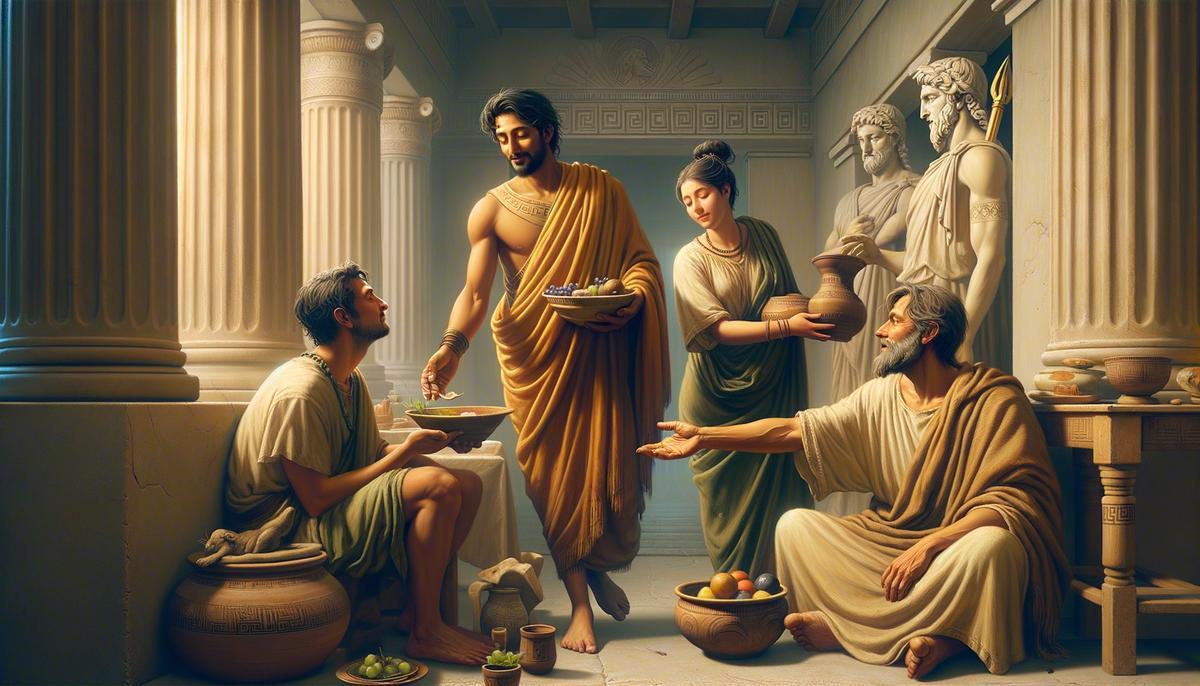
In Ancient Greek society, xenia referred to the sacred bond of hospitality between a host and a guest. It was not just a social custom but a moral obligation believed to be protected by the god Zeus, known as Zeus Xenios, the guardian of travelers.
When a guest arrived at a home, the host was expected to offer food, drink, bathing, and shelter before even asking questions about identity or purpose. In return, the guest was expected to behave respectfully and avoid causing harm or disrespect.
Xenia often created lifelong bonds between families. A guest and host could become “guest-friends,” exchanging gifts and support across generations, even without ever meeting again in person.
Breaking xenia was considered a serious offense that could bring divine punishment. Many Greek myths highlight this, showing how disrespect toward guests often leads to disaster.
In epic literature like the Odyssey, xenia is a recurring theme that shows both the best and worst behavior of humans and even gods.