Oracles and divination played a major role in Ancient Greek religion and decision-making. The Greeks believed that the gods communicated their will through signs, symbols, and sacred intermediaries.
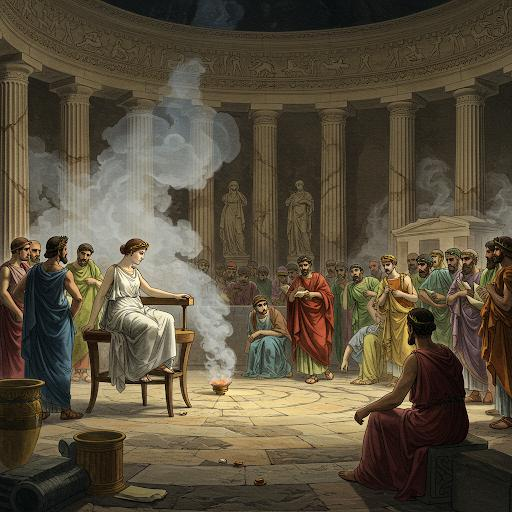
The most famous oracle was the Oracle of Delphi, dedicated to Apollo. At Delphi, a priestess known as the Pythia would enter a trance-like state and deliver cryptic messages interpreted by priests. Leaders from city-states across Greece consulted the oracle before making major political or military decisions.
Divination took many forms beyond Delphi. One common method was haruspicy, the examination of animal entrails after sacrifice. Priests interpreted patterns in the organs to predict outcomes or determine divine approval.
Another method involved interpreting signs in nature, such as the flight of birds, weather patterns, or unusual events. These were seen as messages from the gods.
Oracles were not always straightforward. Their answers were often ambiguous, allowing multiple interpretations. This made them both powerful and politically flexible.
Despite skepticism from some philosophers, oracles remained deeply respected and widely used throughout Greek society. They influenced wars, colonization, laws, and religious practices.