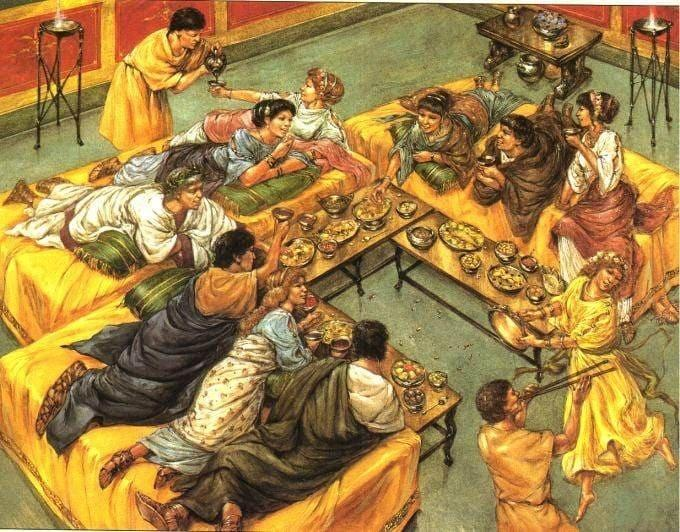
The Greek symposium was a central social institution in Ancient Greece, combining drinking, intellectual discussion, music, and entertainment. It was typically attended by elite male citizens and held after a formal dinner.
Participants reclined on couches arranged around the room while servants poured wine mixed with water from large mixing bowls called kraters. Drinking pure wine was considered improper, so dilution was a key part of the ritual.
The symposium was not just about feasting—it was a space for philosophical debate, poetry recitation, and political discussion. Famous thinkers such as Plato used the symposium setting as a framework for philosophical dialogues, most notably in The Symposium, which explores the nature of love.
Entertainment included music, dancing, and performances by entertainers or courtesans. Guests might also engage in competitive games or riddles.
Symposia were deeply tied to male citizenship and social status. They reinforced elite identity and created bonds between participants, often influencing political alliances.
Religious elements were also present, especially in honor of Dionysus, the god of wine. Libations were poured as offerings before and during drinking.
In many ways, the symposium was both a social gathering and an intellectual institution, blending pleasure with serious discussion.