From the Hemlock to the Barrel: 5 Ancient Rebels Who Rewrote the Human Mind!
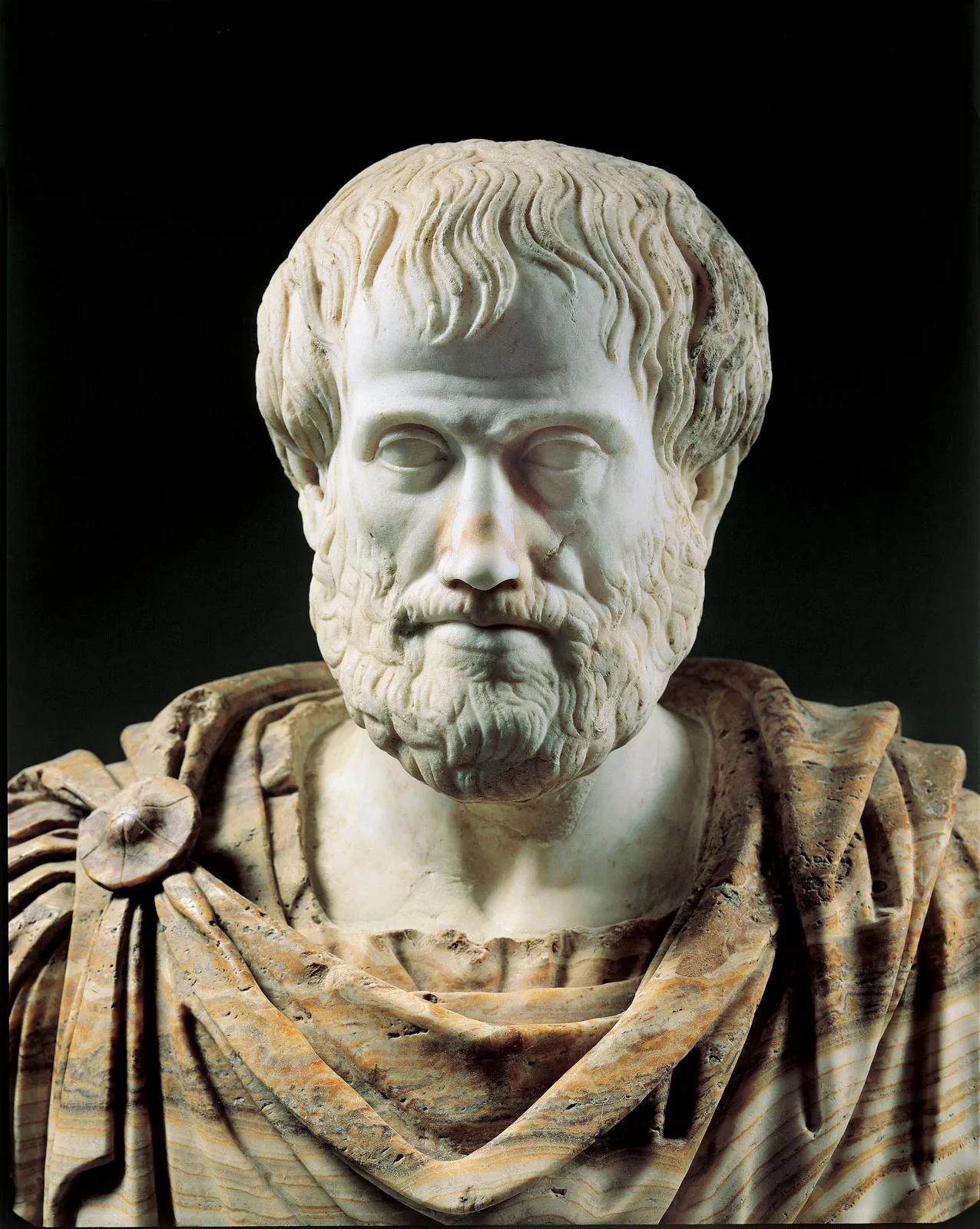
While Plato looked toward the heavens and the abstract realm of "Forms," his most brilliant student, Aristotle (384–322 BCE), famously looked down at the earth. If Plato was the father of political philosophy, Aristotle was the father of the scientific method. Over his 62 years, he produced a body of work so vast that it served as the primary curriculum for Western civilization for nearly two millennia.
Aristotle’s Contributions to Science and Philosophy
Aristotle’s departure from the Academy to found his own school, the Lyceum, marked a pivotal shift in human thought. He rejected the idea that truth exists in another dimension. Instead, he argued that "The Forms" are not separate from objects but are found within them. This transition from Idealism to Empiricism (knowledge through experience) changed the course of history.
1. The Architect of Formal Logic
Before Aristotle, arguments were intuitive and often disorganized. Aristotle invented Formal Logic, specifically the system of the Syllogism. This is a three-part deductive argument consisting of a major premise, a minor premise, and a conclusion.
Example: $All \ humans \ are \ mortal \ (Major) \ + \ Socrates \ is \ human \ (Minor) \ = \ Socrates \ is \ mortal \ (Conclusion)$.
By creating these logical "formulas," Aristotle provided humanity with a tool to test the validity of any statement, laying the groundwork for mathematical and computer logic used today.
2. The Father of Biology and Taxonomy
Aristotle was a tireless observer of nature. He was the first to categorize the natural world in a systematic way.
Classification: He studied over 500 species of animals, dissecting many of them to understand their anatomy. He was the first to distinguish between vertebrates (animals with blood) and invertebrates (animals without blood).
The Scala Naturae: He conceived the "Great Chain of Being," a hierarchical structure of all living things, moving from minerals to plants, then to animals, and finally to humans.
Marine Biology: His observations on the anatomy of octopuses and the social behavior of bees were so accurate that some weren't confirmed by modern science until the 19th century.
3. The Four Causes: Why Do Things Exist?
To Aristotle, understanding a thing meant understanding its "cause." He proposed that everything in the universe is explained by four distinct factors:
Material Cause: The physical stuff it's made of (e.g., the bronze of a statue).
Formal Cause: The design or "essence" (e.g., the shape the sculptor envisioned).
Efficient Cause: The force or agent that brought it into being (e.g., the sculptor’s tools and labor).
Final Cause (Telos): The ultimate purpose for which it exists (e.g., to honor a god or provide beauty).
This concept of Teleology—the idea that everything has a purpose—dominated scientific thought until the Renaissance.
4. Nicomachean Ethics and the "Golden Mean"
In his ethical treatises, Aristotle argued that the goal of human life is Eudaimonia (often translated as "flourishing" or "living well"). Virtue is not something you are born with; it is a habit you practice.
He famously proposed the Golden Mean: the idea that every virtue is a balance between two opposing vices (a deficiency and an excess).
Courage is the mean between Cowardice (deficiency) and Rashness (excess).
Generosity is the mean between Stinginess and Profligacy.
5. Physics and the Geocentric Universe
Aristotle’s physics held that the universe was composed of five elements: Earth, Water, Air, Fire, and the celestial "Aether." He believed the Earth sat motionless at the center of the universe while the planets moved in perfect circular spheres around it. While his physics were eventually replaced by Newtonian and Einsteinian models, his insistence on studying the physical world through observation remained the core of the Scientific Method.