From the Hemlock to the Barrel: 5 Ancient Rebels Who Rewrote the Human Mind!
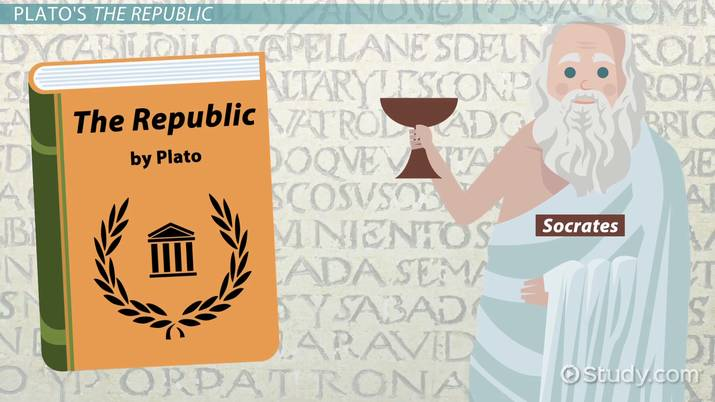
While his teacher Socrates was content to question the world, Plato (c. 427–347 BCE) sought to rebuild it. Deeply scarred by the execution of Socrates at the hands of a democratic jury, Plato dedicated his life to defining justice and excellence. His magnum opus, The Republic, is a 10-book dialogue that serves as the cornerstone of Western political and metaphysical thought.
Plato’s Republic: Key Ideas Explained
To understand The Republic, one must understand that Plato viewed the state as the "soul writ large." He believed that by designing a perfectly just city (Kallipolis), we could discover the nature of justice within the individual human heart.
1. The Theory of Forms and the Cave
Plato’s most revolutionary idea is Idealism. He argued that the material world we see is not the "true" reality, but a collection of flawed, temporary shadows. True reality exists in the realm of Forms—perfect, eternal, and unchanging templates of all things.
To explain this to the layman, Plato used the Allegory of the Cave. Imagine prisoners chained since childhood in a cave, facing a wall. Behind them is a fire, and puppeteers carry objects that cast shadows on the wall. The prisoners believe these shadows are reality. If one prisoner is freed and climbs out into the sunlight, he is initially blinded, but eventually sees the sun (representing the Form of the Good). When he returns to tell the others, they think he is mad. This allegory illustrates that the philosopher’s task is to look beyond the "shadows" of sensory perception to grasp the absolute truth.
2. The Tripartite Soul and the Class System
Plato believed that both the human soul and the ideal city are composed of three distinct parts. Justice is achieved only when these parts exist in perfect harmony, with Reason at the helm.
The Guardians (The Rulers): Driven by Reason. These are the "Philosopher Kings" who have glimpsed the Forms and govern with wisdom. They own no private property and live communally to avoid corruption.
The Auxiliaries (The Warriors): Driven by Spirit. Their virtue is courage. They protect the city and enforce the laws set by the Guardians.
The Producers (The Workers): Driven by Appetite. This includes farmers, artisans, and merchants. Their virtue is temperance (self-control), and they provide the material needs of the city.
3. The Philosopher King
Perhaps the most famous—and controversial—claim in The Republic is that "until philosophers are kings... cities will never have rest from their evils." Plato argued that democracy was inherently flawed because it allowed the "unwashed masses" to make decisions based on emotion and appetite rather than logic. He envisioned a meritocracy where rulers were chosen for their intellect and trained for 50 years before taking power.
4. The "Noble Lie" and Censorship
To maintain this rigid social structure, Plato suggested the Myth of the Metals (The Noble Lie). The state would tell citizens that they were born with different metals in their souls: gold for Guardians, silver for Auxiliaries, and bronze/iron for Producers. This "pious fraud" was intended to ensure social stability. Furthermore, Plato advocated for strict censorship of poetry and music, fearing that stories of "weak" gods or overly emotional melodies would corrupt the character of the Guardians.
5. The Decline of the State
Plato concludes that even the most perfect city will eventually decay. He describes a "Cycle of Regimes" where a perfect Aristocracy (rule by the best) devolves into Timocracy (rule by honor), then Oligarchy (rule by the rich), then Democracy (rule by the mob), and finally Tyranny—the lowest form of government, where a single leader is enslaved by his own darkest appetites.