The Lost Empire: Decoding the Myth of Atlantis in Plato’s Writings
While the modern world views Atlantis as a staple of science fiction or pseudo-archaeology, the story originated as a serious philosophical tool. Atlantis appears in only two of Plato’s dialogues—the Timaeus and the Critias (written around 360 BCE). For Plato, Atlantis was not a mystery to be solved, but a moral fable designed to illustrate the dangers of imperial hubris and the superiority of his "Ideal State."
1. The Origin Story: Solon and the Egyptian Priests
In the dialogues, the story is recounted by Critias, who claims to have heard it from his grandfather, who in turn heard it from Solon, the famous Athenian lawmaker.
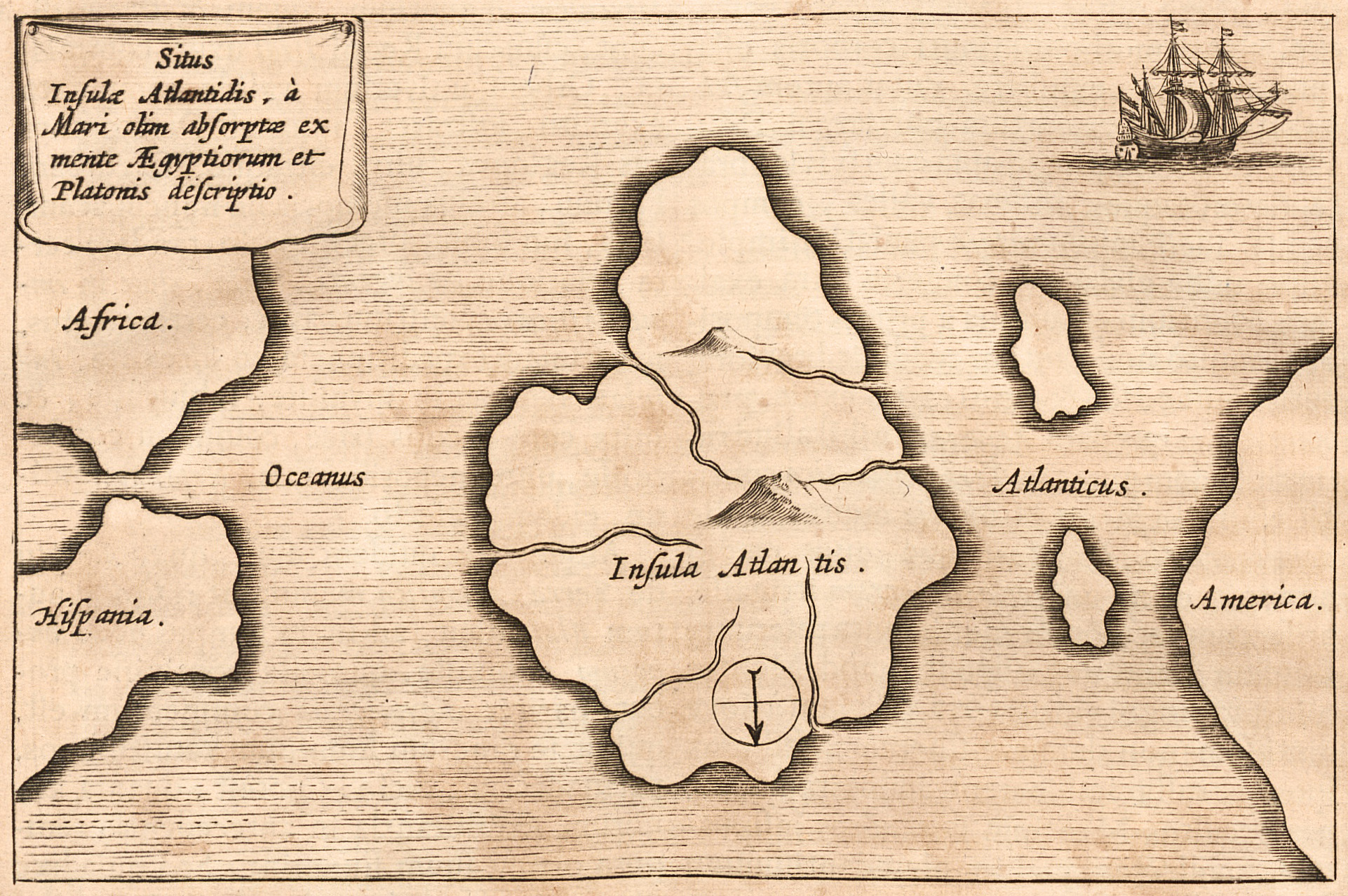
According to the narrative, Solon visited Egypt, where priests at Sais informed him that Greece had forgotten its own ancient history. They revealed that 9,000 years prior, a powerful naval empire existed beyond the "Pillars of Heracles" (the Strait of Gibraltar). This empire, Atlantis, was a continent-sized landmass larger than Libya and Asia Minor combined.
2. The Anatomy of a Superpower
Plato describes Atlantis in meticulous detail, painting a picture of an advanced, wealthy, and technologically sophisticated civilization.
The Geography: The capital was built on a hill surrounded by concentric rings of water and land, connected by bridges and tunnels. This layout served as a formidable defense and a marvel of engineering.
The Resources: The island was rich in minerals, particularly a mysterious reddish metal called Orichalcum. It possessed lush forests, exotic wildlife (including elephants), and fertile plains that yielded two harvests a year.
The Governance: Atlantis was founded by the god Poseidon, who fell in love with a mortal woman named Cleito. He divided the island into ten kingdoms for their ten sons, with the eldest, Atlas, serving as the High King. For generations, the kings ruled with wisdom and moderation, honoring the divine laws of their father.
3. The Fall: Hubris and Divine Wrath
The "Myth" of Atlantis is essentially a tragedy. Plato explains that as the "divine portion" of the Atlanteans' DNA became diluted through interbreeding with mortals, they became "infected with unrighteous ambition and power."
The Imperial Turn: Atlantis transformed from a peaceful utopia into an aggressive imperialist power. They conquered parts of Libya and Europe, enslaving the populations.
The Ancient Athenian Heroism: Only one city stood against the Atlantean tide: Ancient Athens. In Plato’s version of the past, Athens was the perfect society (much like the one he designed in The Republic). Though abandoned by its allies, Athens defeated the Atlantean invaders and liberated the Mediterranean.
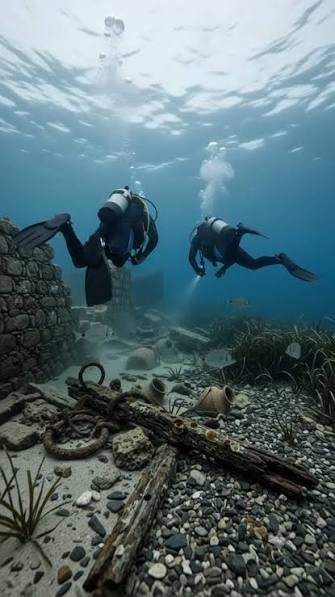
The Cataclysm: Shortly after the Athenian victory, massive earthquakes and floods occurred. In a single "day and night of misfortune," the entire island of Atlantis was swallowed by the sea, leaving behind only a shoal of impassable mud.
4. The Philosophical Purpose: Atlantis as a Foil
Most modern scholars agree that Plato invented Atlantis. It serves as a "thought experiment" to test the theories he proposed in The Republic.
Idealism vs. Materialism: Athens represents the Ideal State—small, virtuous, and governed by reason. Atlantis represents the Material State—massive, wealthy, and governed by appetite.
A Warning to Contemporary Athens: At the time Plato was writing, the actual city of Athens was struggling to recover from its defeat in the Peloponnesian War. Plato likely used the myth to warn his fellow citizens that their own naval imperialism and thirst for wealth would lead to a similar collapse.
5. The Legacy: From Fact to Fiction
Because Plato’s descriptions were so vivid, later generations began to wonder if the story was true.
Ancient Skepticism: Aristotle, Plato’s student, was famously dismissive, reportedly saying of his teacher: "He who created it, also destroyed it."
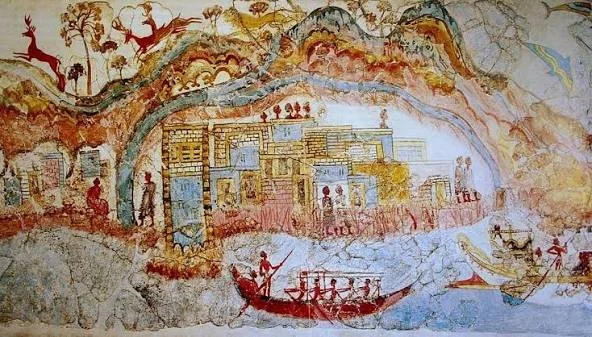
The Thera Connection: Some modern historians suggest the myth might be a distant memory of the Minoan Eruption on the island of Thera (Santorini) around 1600 BCE, which devastated the advanced Minoan civilization.
Pseudo-Science and Pop Culture: In 1882, Ignatius Donnelly published Atlantis: The Antediluvian World, sparking the modern obsession with finding the "sunken city." This shifted the narrative away from Plato’s moral lesson and toward a hunt for a literal lost continent.
Ultimately, the myth of Atlantis remains one of the most successful literary devices in history. Whether it was a sunken continent or a sunken metaphor, Plato’s story continues to haunt the human imagination, reminding us of the fragility of civilization and the eternal danger of forgetting our own limitations.