The Great Reawakening: The Revival of Greek Knowledge During the Renaissance
For nearly a thousand years after the fall of the Western Roman Empire, the original Greek texts that laid the foundation of Western thought were largely lost to Western Europe. While Latin summaries and filtered translations existed, the direct "voice" of the Greeks had faded into a whisper. The Renaissance (meaning "Rebirth") was, at its heart, a massive recovery mission—a period where Europe reached back across the centuries to reclaim its Greek heritage, sparking the transition from the Middle Ages to the Modern Era.
1. The Catalysts of Recovery: Fleeing Scholars and Falling Empires
The return of Greek knowledge was not a sudden accident; it was driven by geopolitical shifts and a new intellectual hunger.
The Council of Florence (1439): This attempt to unite the Eastern Orthodox and Roman Catholic churches brought Greek-speaking scholars to Italy. Men like Gemistus Pletho dazzled Italian intellectuals with the works of Plato, which had been almost entirely unknown in the West.
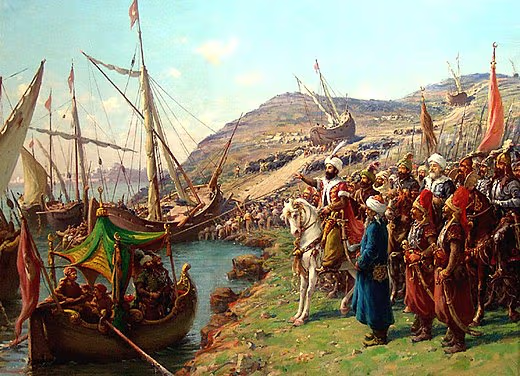
The Fall of Constantinople (1453): As the Byzantine Empire collapsed under the Ottoman Turks, a wave of Greek scholars fled to Italy. They did not come empty-handed; they brought crates of precious manuscripts—the original works of Sophocles, Euripides, Thucydides, and the primary texts of Greek science and philosophy.
The Printing Press: Around 1450, Johannes Gutenberg’s invention allowed these newly recovered texts to be mass-produced. The Aldine Press in Venice, run by Aldus Manutius, became famous for its "portable" Greek classics, making ancient wisdom accessible to a rising middle class of students and thinkers.
2. Humanism: Shifting the Focus from God to Man
The hallmark of the Renaissance was Humanism (Studia Humanitatis). This movement was fueled by the Greek focus on the individual, reason, and the physical world.
Ad Fontes (To the Sources): The battle cry of the Humanists was "back to the sources." They were no longer satisfied with medieval commentaries; they wanted to read the Greeks in the original language. This led to a massive surge in the study of Ancient Greek across European universities.
Platonism vs. Aristotelianism: While the Middle Ages were dominated by a rigid, religious interpretation of Aristotle, the Renaissance "rediscovered" Plato. His focus on the soul’s ascent to beauty and the existence of an ideal realm inspired a new generation of artists and poets, shifting culture away from dry logic toward aesthetics and transcendentalism.
3. The Scientific Revolution: Challenging the Ancients
Ironically, the revival of Greek science provided the very tools needed to eventually surpass it.
Astronomy and Geography: The recovery of Ptolemy’s Geography and Almagest provided the mathematical framework for the Age of Discovery. Explorers like Columbus used Greek calculations of the Earth’s size to plan their voyages.
Medicine: The translation of Galen’s original Greek medical texts moved anatomy beyond superstition. However, as Renaissance thinkers like Vesalius studied the Greek texts more closely, they began to perform their own dissections, realizing that even the great Galen was sometimes wrong. This spirit of "questioning the masters" is what gave birth to the modern scientific method.
4. Artistic Revival: The Greek Ideal of Beauty
Renaissance art is defined by a return to the Classical Ideal—the Greek belief that the human body is the measure of all things.
Proportion and Anatomy: Artists like Leonardo da Vinci and Michelangelo studied Greek sculpture to understand the "golden ratio" and anatomical precision. Michelangelo’s David is a direct descendant of the Greek Doryphoros (Spear-Bearer), embodying the Greek concept of Arete (excellence).
Mythology as Allegory: No longer confined to strictly biblical scenes, Renaissance artists filled the chapels and palaces of Europe with scenes from Greek myth—Botticelli’s The Birth of Venus and Raphael’s The School of Athens are visual manifestos of the Greek revival.
5. Political Philosophy: The Birth of Modern Citizenship
As thinkers like Machiavelli and Erasmus read the histories of Thucydides and the political theories of Aristotle, they began to reimagine the state.
Civic Humanism: The Greek idea of the "active citizen" who owes a duty to the polis (city-state) replaced the medieval idea of the passive subject who owes a duty only to a feudal lord.
The Seeds of Democracy: The "rediscovery" of Athenian democracy and the Roman Republic (which was built on Greek ideas) provided the intellectual ammunition for later Enlightenment thinkers to challenge the absolute power of kings.
Conclusion: A Bridge Across Time
The Renaissance revival of Greek knowledge was more than a history lesson; it was a psychological shift. By looking back to the Greeks, Europeans found a mirror that reflected their own potential for reason, creativity, and self-governance. The bridge built during the Renaissance ensured that the "Greek Miracle" didn't remain buried in the ruins of the past, but became the living DNA of modern global civilization. Without this revival, the Scientific Revolution, the Enlightenment, and the modern university would likely never have happened.