Tensions in the Aegean are once again rising, as Turkey launches a new verbal attack against Greece—this time over fishing maps.
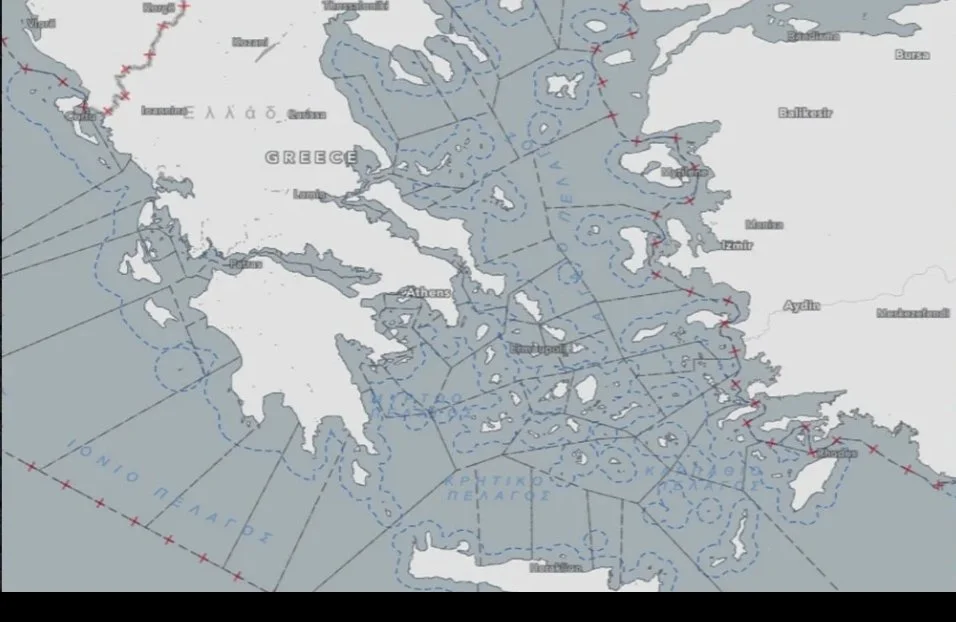
According to reports, Greek authorities published maps outlining restricted fishing zones, aimed primarily at environmental protection and sustainable management of marine resources. However, Ankara reacted aggressively, claiming that these maps “draw imaginary maritime borders” in both the Aegean and the Eastern Mediterranean.
Turkey’s Foreign Ministry argues that Greece has no jurisdiction beyond its 6 nautical miles in certain areas and insists that any restrictions imposed outside those limits—including in what it considers international waters—are “invalid.”
At the core of this dispute is the long-standing conflict over maritime boundaries, sovereignty, and economic rights in the Aegean Sea and the Eastern Mediterranean. These disagreements are not new—they form part of a broader geopolitical struggle that has defined Greek-Turkish relations for decades, involving territorial waters, airspace, and exclusive economic zones.
Greece, aligning with EU frameworks and environmental policies, has increasingly moved toward regulating fishing and expanding protected marine areas. Turkey, on the other hand, rejects many international maritime conventions applied by Athens and continues to promote its own strategic doctrine over the region, often clashing with Greek positions.
This latest episode highlights a familiar pattern: even technical or environmental measures—such as fishing regulations—quickly escalate into geopolitical flashpoints. The Aegean remains not just a sea, but a contested space where sovereignty, resources, and national strategy collide.