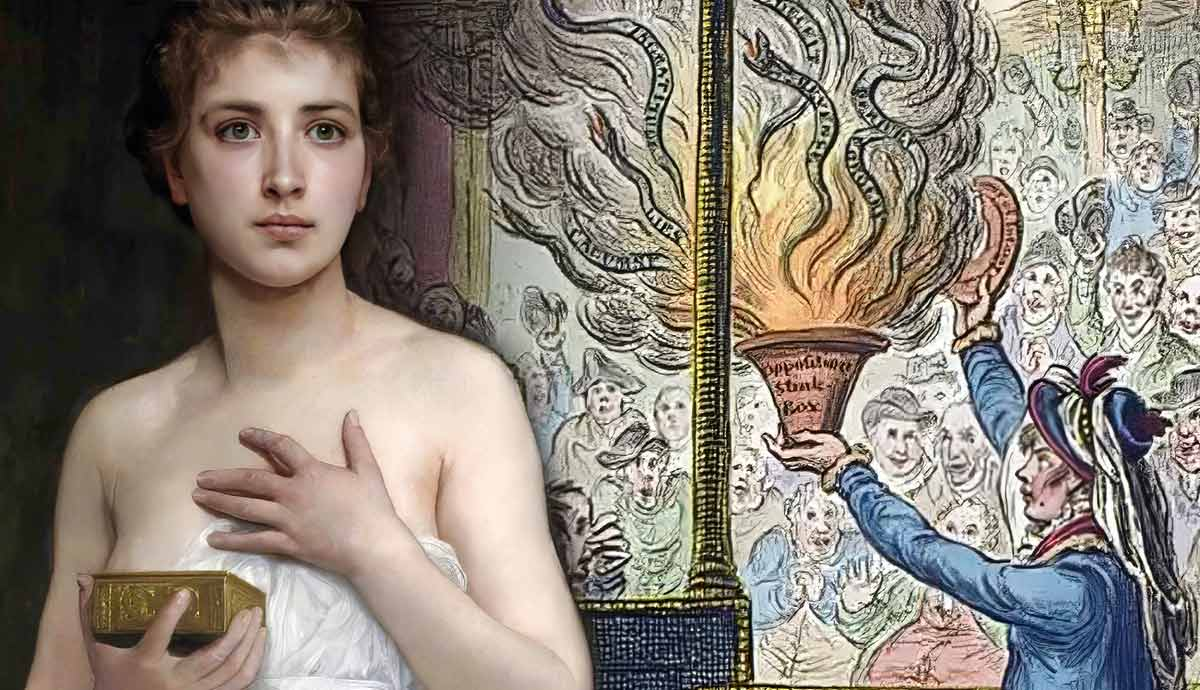
The myth of Pandora’s Box (originally a pithos, or large jar) is the Greek "origin story" for the presence of suffering in the world. It serves as a complex counterpoint to the story of Prometheus, exploring themes of curiosity, divine retribution, and the strange persistence of hope.
1. The Weaponized Woman
Pandora was not born; she was manufactured. Following the theft of fire by Prometheus, Zeus was blinded by rage. He did not just want to punish Prometheus; he wanted to punish the humanity that had benefited from the fire.
The Divine Craftsmanship: Zeus ordered Hephaestus to mold the first woman out of earth and water. Each god bestowed a "gift" upon her: Aphrodite gave her beauty, Hermes gave her a "shameful mind and a deceitful nature," and Athena clothed her.
The Name: Her name, Pandora, literally means "All-Gifted" or "Giver of All."
2. The Fatal Marriage
Prometheus, whose name means "Foresight," warned his brother Epimetheus ("Afterthought") never to accept a gift from Zeus. However, when Hermes delivered Pandora to Epimetheus, he was so dazzled by her grace that he ignored the warning and married her.
The Wedding Gift: As part of her dowry, Pandora brought a large, sealed storage jar. She was strictly instructed never to open it.
3. The Opening of the Jar
Contrary to modern interpretations that blame Pandora’s "wickedness," the original myth by Hesiod emphasizes her uncontrollable curiosity.
The Great Release: Unable to resist the mystery, Pandora lifted the lid. In that moment, all the "labors and sorrows" that had been hidden away flew out.
The Plagues of Humanity: Out came sickness, old age, envy, greed, and death. Before this moment, humans lived in a state of perpetual ease; now, the world was filled with "countless miseries" that "roam among men by day and night."
4. The Mystery of Elpis (Hope)
As the evils escaped, Pandora scrambled to replace the lid. She succeeded just in time to trap one final thing at the very rim of the jar: Elpis, or Hope.
This is the most debated part of the myth. Philosophers ask: Why was Hope in a jar of evils?
The Mercy View: Zeus included Hope so that humans wouldn't be completely destroyed by the other plagues. It is the "balm" that allows us to endure suffering.
The Cynical View: Some argue that Hope is actually the worst evil—a form of "blind expectation" that keeps humans suffering through misery because they believe things will get better.
5. Misogyny or Metaphor?
The myth of Pandora has often been compared to the biblical story of Eve. Both stories have been used historically to justify patriarchal control by blaming a "first woman" for the downfall of a golden age.
However, from an archaeological and linguistic perspective, Pandora's "Jar" (the pithos) was a vessel typically used to store grain, oil, or wine. In this sense, Pandora represents the "storage" of life’s complexity—the idea that you cannot have the "fire" of civilization without also accepting the "suffering" that comes with it.
6. The Prometheus-Pandora Balance
The myth creates a cosmic balance. Prometheus (Foresight) gave man the technology to survive, while Pandora (Afterthought/Curiosity) brought the conditions that make that survival difficult. Without Pandora, the fire of Prometheus would have made men like gods; with Pandora, they remained grounded, mortal, and desperate.
The story suggests that humanity’s greatest strength—our curiosity—is also the source of our greatest burdens.