The founding myth of Athens is one of the most significant tales in Greek mythology, illustrating the transition from a society centered on raw power and maritime dominance to one focused on wisdom, agriculture, and civic order.
The contest wasn't just a battle for a city; it was a debate over what kind of civilization the Greeks wanted to build.
1. The Challenge for Attica
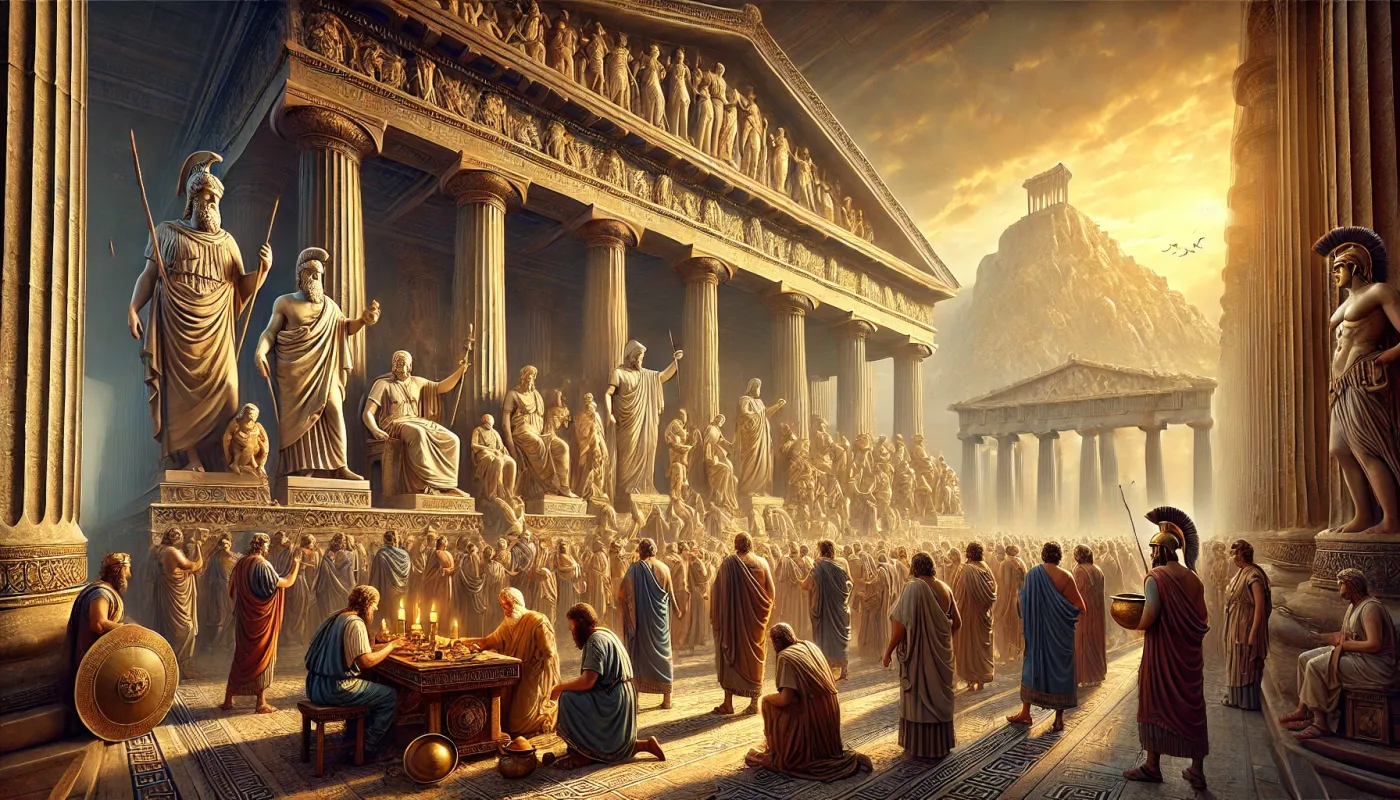
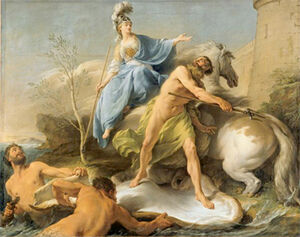
In the early days of Greece, the city that would become Athens was a small but strategically located settlement. Both Poseidon, the god of the sea, and Athena, the goddess of wisdom and war, desired to be its patron deity.
To settle the dispute, Zeus declared that each god would offer a gift to the citizens. The King of the city, Cecrops (a half-man, half-serpent figure), and the people would decide which gift was more valuable.
2. The Gift of Poseidon: The Salt Spring
Poseidon was the first to strike. He stepped onto the Acropolis and struck the hard rock with his trident. Immediately, a spring of water welled up.
The Symbolism: This represented maritime power, naval supremacy, and control over trade routes.
The Flaw: Because Poseidon was a god of the sea, the water was salty and undrinkable. While it promised power, it did not provide the basic necessity for life in a dry climate.
3. The Gift of Athena: The Olive Tree
Athena stepped forward and quietly planted a seed in the earth. In moments, a silver-leafed olive tree sprouted, laden with fruit.
The Utility: The olive tree provided everything: food (olives), fuel and light (oil), and wood for construction.
The Symbolism: The olive tree represented peace, prosperity, and the long-term stability of agriculture. Unlike a salt spring, it could sustain a population for generations.
4. The Verdict and the Name
King Cecrops and the citizens (in some versions, only the men voted for Poseidon and the women for Athena) chose the olive tree. They found Athena’s gift more beneficial for the growth and survival of the city.
The Naming: The city was named Athens in her honor.
The Retribution: Poseidon, known for his temper, was enraged by the loss. In his fury, he flooded the Thriasian Plain, submerging the surrounding lands under seawater until Zeus intervened to calm him.
5. The Reconciliation: The Erechtheion
The Greeks were careful never to fully alienate a god. On the Acropolis today stands the Erechtheion, a temple unique because it is dedicated to both Athena and Poseidon (along with the legendary King Erechtheus).
The Living Evidence: Ancient travelers claimed you could still see the marks of Poseidon's trident in the rock and the "Sea of Erechtheus" (the salt spring) inside the temple. Right outside, the Athenians maintained a sacred olive tree, said to be a direct descendant of the one Athena planted.
6. Political and Cultural Legacy
This myth reflected the real-world identity of the Athenians. They were a naval power (Poseidon), but they took the most pride in their laws, their philosophy, and their olive groves (Athena). The olive branch became the universal symbol of peace, derived directly from this contest.
The story suggests that while strength and trade are important, the foundation of a great city must be wisdom and sustainability.