For most of the Classical period, the Greeks viewed Macedon as a rugged, semi-barbaric frontier—a land of timber, horses, and "primitive" kings who still hunted wild boar and drank their wine unmixed. Yet, in just two decades, it transformed from a kingdom on the brink of collapse into the greatest military machine the world had ever seen.
The rise of Macedon is the story of one man’s vision: Philip II, and his son, Alexander the Great.
1. The Kingdom of Chaos (359 BCE)
When Philip II took the throne, Macedon was a "failing state." It was surrounded by enemies (Illyrians, Thracians, and Paeonians) and torn apart by internal dynastic assassinations.
Philip’s genius was not just in his bravery, but in his systemic reforms. Having spent years as a hostage in Thebes, he had studied under the great general Epaminondas. He took the lessons of the Theban "Oblique Order" and perfected them.
2. The Macedonian Phalanx: The "Wall of Bronze"
Philip’s most significant innovation was the redesign of the Greek hoplite. He realized that if he couldn't out-train the Greeks in traditional combat, he would out-range them.
The Sarissa: He replaced the 7-8 foot Greek spear with the Sarissa, a massive pike measuring 15 to 18 feet long.
The Formation: Because the pikes were so long, the first five ranks of the phalanx could all project their points toward the enemy at once. This made the Macedonian front virtually impenetrable.
Combined Arms: Unlike the Greeks, who relied almost solely on infantry, Philip integrated the Companion Cavalry (the elite noble horsemen) to act as the "hammer" to the phalanx’s "anvil."
3. The Battle of Chaeronea (338 BCE)
The defining moment for Macedonian dominance was the Battle of Chaeronea. A coalition of Greek cities, led by Athens and Thebes, made a final stand to protect Greek "liberty."
The Turning Point: An 18-year-old Alexander led the cavalry charge that broke the line of the Sacred Band of Thebes.
The Result: The Greek city-states were forced into the League of Corinth. For the first time in history, Greece was unified—not by democratic consensus, but under the "Hegemon" of Macedon.
4. The Architecture of Conquest
Philip didn't just use spears; he used siege engineering and diplomacy.
The Torsion Catapult: Philip funded the development of the torsion catapult, allowing his armies to breach city walls that had previously been considered invincible.
The "Golden Rain": Philip famously said, "No fortress is so strong that an ass laden with gold cannot enter it." He used the wealth from the gold mines of Mt. Pangaion to bribe Greek politicians and fund his professional standing army.
5. The Assassination and the Shift to Asia
Just as Philip was preparing to lead a united Greek force against the Persian Empire, he was assassinated in 336 BCE.
The Young Lion: The Greek cities revolted, thinking the "boy king" Alexander would be easy to handle. Alexander responded by razing Thebes to the ground as a warning.
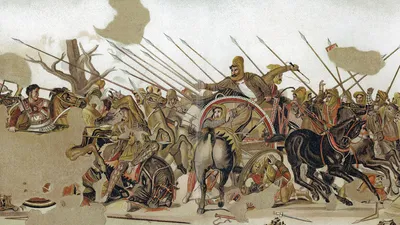
The Persian Campaign: With Greece secured, Alexander crossed the Hellespont in 334 BCE. Using the army his father had built, he dismantled the Persian Empire in a series of lightning strikes at Granicus, Issus, and Gaugamela.
6. The Legacy: The Hellenistic World
The rise of Macedon ended the era of the independent polis and began the Hellenistic Age. Greek culture was no longer confined to the Aegean; it spread to the borders of India and the depths of Egypt.
Alexandria: The founding of cities like Alexandria in Egypt created hubs of science and philosophy that would preserve Greek knowledge for the Roman and Islamic worlds.
The Diadochi: After Alexander’s death, his generals (the Diadochi) carved up the empire into the Ptolemaic, Seleucid, and Antigonid kingdoms, which would dominate the Mediterranean until the rise of Rome.
Philip II built the machine, and Alexander drove it to the ends of the earth. It is one of history’s most potent examples of how a "backwater" can leapfrog established powers through technological and tactical disruption.