For centuries, the primary export of the Greek world wasn't just olives or pottery—it was the hoplite. Highly trained, heavily armored, and famously disciplined, Greek mercenaries became the elite "special forces" of the ancient Near East.
While the Persian and Egyptian empires were vastly wealthier than the Greek city-states, they lacked the specific heavy infantry tradition that the Greeks had perfected. This created a symbiotic, often treacherous relationship between the Great Kings of the East and the soldiers of Hellas.
1. The Egyptian "Bronze Men"
Greek contact with Egypt was revolutionized during the 7th century BCE. According to Herodotus, the Pharaoh Psamtik I was told by an oracle that "men of bronze" appearing from the sea would help him reclaim his throne.
The Carian and Ionian Pioneers: When Greek and Carian pirates in bronze armor were blown ashore, Psamtik hired them immediately. They were so effective that he granted them permanent settlements known as The Camps (Stratopeda) on the Pelusiac branch of the Nile.
The Greek Colony of Naukratis: This mercenary presence led to the establishment of Naukratis, a dedicated Greek trading post. For the Egyptians, the Greeks were a vital counterweight to the traditional priestly and military castes.
2. The Persian Paradox
The Persian Empire was the greatest enemy of the Greek city-states, yet it was also their largest employer. By the late 5th century BCE, the Persian "Immortals" were often supplemented or even replaced by Greek hoplites in critical engagements.
Professionalism vs. Feudalism: The Persian army was largely a levy system—vast and diverse, but often lacking cohesion. Greek mercenaries provided a "solid core" of heavy infantry that could hold a line against any obstacle.
The Power of the Daric: Persian kings realized that paying Greeks in Gold Darics was more efficient than attempting to conquer them. Throughout the 4th century BCE, thousands of Greeks served Persian Satraps, often fighting against other Greeks in the process.
3. The Ten Thousand: A Turning Point
The most famous instance of Greek mercenary service was the expedition of Cyrus the Younger in 401 BCE. Cyrus hired over 10,000 Greeks to help him seize the throne from his brother, Artaxerxes II.
The Battle of Cunaxa: The Greeks were victorious on their wing, but Cyrus was killed, leaving the mercenaries stranded in the heart of the Persian Empire.
The Anabasis: Chronicled by the soldier-historian Xenophon, the "March of the Ten Thousand" proved that a disciplined Greek force could march through the entire Persian Empire and survive. This revelation deeply embarrassed the Persians and later served as a strategic blueprint for Alexander the Great.
4. Memnon of Rhodes: The Persian’s Best General
When Alexander the Great began his invasion, the most dangerous man he faced was not a Persian, but a Greek mercenary commander named Memnon of Rhodes.
The Scorched Earth Strategy: Memnon understood the Macedonian army's weakness: supply lines. He advised the Persian Satraps to burn their own crops and retreat, starving Alexander out.
The Granicus: The Persians ignored Memnon at the Battle of the Granicus, placing their Greek mercenaries in the rear. Alexander slaughtered them as "traitors to Greece," highlighting the brutal political reality of being a mercenary during a Panhellenic crusade.
5. Why the Greeks? Tactical Advantages
Ancient armies in the East typically relied on archers and light cavalry. The Greeks brought three things that the East lacked:
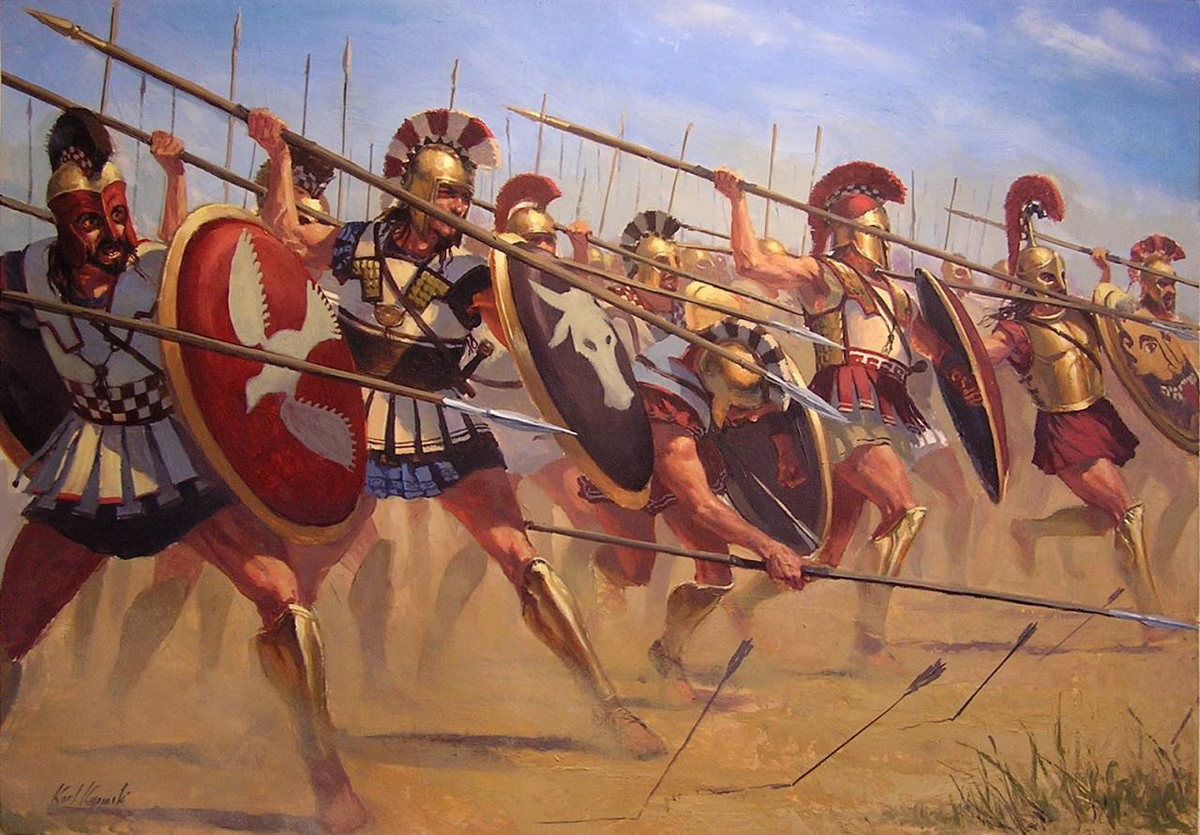
The Aspis: The large, circular bronze-faced shield that allowed for the "interlocking" protection of the phalanx.
The Othismos: The "shove." No Eastern infantry could withstand the literal physical weight of a Greek phalanx charging at a run.
Economic Necessity: Constant warfare in Greece created a class of "professional exiles." For many, the choice was either poverty in a defeated city-state or a high-paying career in the service of a Satrap or Pharaoh.
6. The End of the Era
The rise of the Macedonian professional army eventually rendered the traditional "freelance" mercenary less unique. However, the legacy of the Greek mercenary lived on; the Ptolemies and Seleucids essentially turned their entire Greek populations into a permanent, settled mercenary class to maintain their empires.