Introduction: The Porous Frontier
Ancient Greek warfare was not characterized by the modern concept of a linear, guarded international border. Instead, the borders of a polis (city-state) were fluid, defined by contested agricultural land, mountain passes, and coastal points of ingress. Because the Greeks lacked the centralized, nation-state bureaucracies capable of staffing thousands of miles of static border walls, they developed a layered, decentralized defensive doctrine. This system relied on a combination of geographical barriers, early-warning signal networks, and small, mobile frontier garrisons, creating a "defensive depth" that forced invaders to fight through a series of tactical hurdles before reaching the city's heart.
1. The Strategy of Natural Barriers
The Greek landscape—characterized by high, jagged mountain ranges and narrow, constricted coastal plains—was the foundation of their border defense.
The Pass-Control Doctrine: Invading armies, particularly those burdened with baggage trains and heavy infantry, were physically tethered to specific routes. The Greeks utilized the geography to create natural "choke points." Rather than guarding an entire mountain range, they would fortify a single narrow pass—like the famous Thermopylae—where a small, elite force could negate a massive army's numerical advantage by simply refusing to be bypassed.
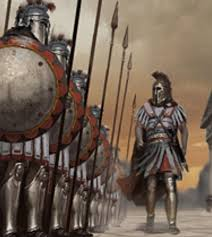
The "Dead Ground" Defense: Commanders were trained to scout their borders for areas where heavy hoplite phalanxes would be forced to break formation due to broken, rocky, or wooded terrain. They would purposely leave these areas undefended, knowing that any invader foolish enough to move through them would become disorganized, at which point a small local garrison could launch a devastating flank counter-attack.
2. The Early Warning System: The Phryktorai
In a world without electronic communication, speed was the difference between a successful mobilization and a total surprise attack. To bridge the gap, the Greeks pioneered the phryktoria (fire-signaling) network.
The Beacon Stations: Strategic peaks and watchtowers along the borders were outfitted with large, dry-wood beacon arrays. When a scout spotted the dust clouds or armor-glint of an approaching enemy army, they would ignite a series of carefully coded fires.
The Relay Speed: These signals were relayed from peak to peak across the countryside. Thucydides recorded that signals could travel from the frontier to the center of a city in a matter of hours, allowing the polis to call up its citizen-militia and close the city gates long before the invaders arrived.
The Hydraulic Telegraph: By the 4th century BC, engineers developed more sophisticated methods, such as the hydraulic telegraph described by Aeneas Tacticus. This involved two identical water-filled pots at two different stations, each containing a floating rod marked with specific messages (e.g., "Cavalry spotted," "Infantry," "Ships"). By opening a tap at the exact same time, the sender could signal exactly what type of threat was approaching.
3. Frontier Garrisons and Phrouria
Border security was not purely passive; it was enforced by permanent, militarized frontier outposts known as phrouria.
The Phroura (Guard Duty): These outposts were small, fortified stone towers or stockades strategically positioned to oversee key mountain passes or coastal landings. They were staffed by young citizen-soldiers undergoing their mandatory military training, known as the Ephebeia.
The Active Patrol: The function of these garrisons was not to win a pitched battle against a full-scale invading army, but to harass, delay, and report. A frontier phroura would engage in constant skirmishing, ambushing enemy scouting parties, blocking supply lines, and destroying water sources (or poisoning wells) to slow the invader’s progress, buying time for the main citizen-hoplite army to mobilize at the city center.
4. The Kastron and Border Forts
In regions of persistent conflict, such as the frontier between Athens and Boeotia, the Greeks constructed massive, permanent border forts called kastra.
The Tactical Buffer: These were not simple watchtowers; they were full-scale fortified military bases designed to function as an "unmovable obstacle." A fortress like Phyle or Eleutherae (on the Attic border) sat physically in the path of the primary invasion route.
The Deterrent Effect: An invading army could not simply march past a kastron. If they left it in their rear, the garrison could sally out and attack their baggage train, burn their supplies, or cut off their retreat route. This forced the invader to stop and conduct a full-scale siege, which could consume weeks or months, during which the city-state could organize a defense or negotiate for help from allies.
5. Maritime Border Defense: The Coastal Signal Network
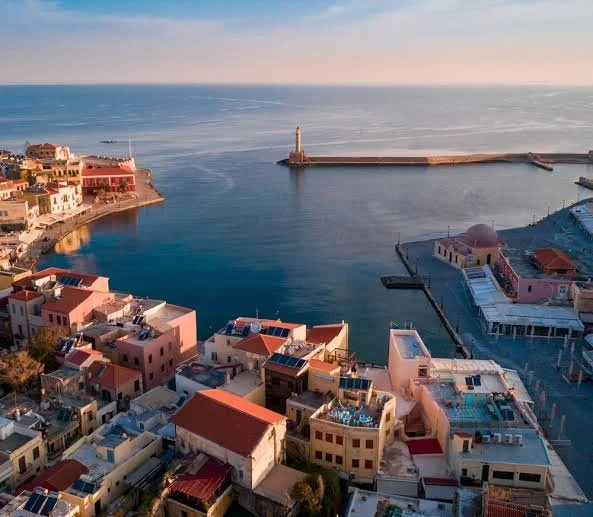
For maritime city-states like Athens, the coastline was the border. Protecting the sea meant monitoring harbor approaches and potential landing sites.
Coastal Watchtowers: Networks of towers were constructed along prominent headlands. These stations monitored for the silhouette of approaching triremes, using the same fire-signal systems as the land border to alert the main naval harbor at Piraeus.
The Neorion Defense: The ultimate border defense was the naval base itself. By keeping a large portion of the fleet in high-security, covered ship-sheds (neorion), the city could rapidly deploy a naval blockade the moment an enemy fleet was sighted off the coast, effectively keeping the war at sea and away from the city's agricultural territory.