Building on our previous exploration of the Milesian naturalists and the logic of the classical era, the convergence of Greek philosophy and science reached a remarkable zenith during the Hellenistic period. Thinkers began to move beyond purely theoretical speculation, developing rigorous mathematical models and empirical methodologies that anticipated modern scientific inquiry.
1. The Hellenistic Synthesis: Mathematics as the Language of Reality
In the Classical period, philosophy often existed as a verbal exercise. By the 3rd century BC, thinkers like Archimedes and Apollonius of Perga treated the physical world as a geometric problem to be solved.
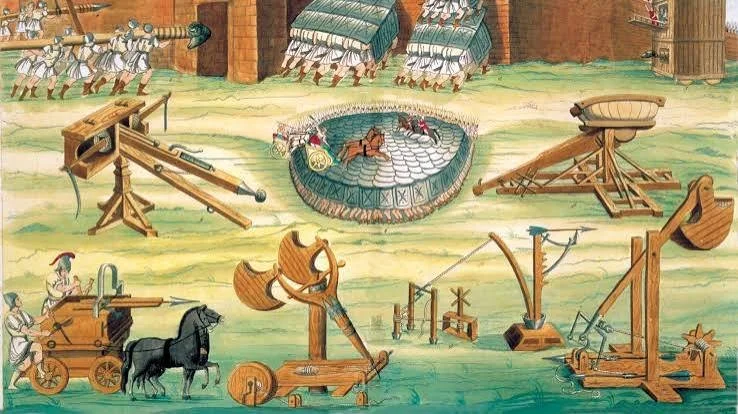
Archimedes of Syracuse: He is perhaps the greatest bridge between pure philosophy and applied science. His work on the law of the lever—which he famously summarized as, "Give me a place to stand, and I will move the earth"—was a direct application of the Stoic and Pythagorean belief in the mathematical harmony of the cosmos. He didn't just speculate about forces; he calculated the mechanical advantage required to manipulate them.
Euclidean Geometry: While often viewed as a purely mathematical tool, Euclid’s Elements provided the logical framework for all future Greek scientific thought. It established that complex phenomena could be broken down into foundational axioms—a method that would later underpin the scientific method itself.
2. The Great Observers: Astronomy and Geography
As the Greek world expanded under the influence of the Diadochi (successors of Alexander), philosophical inquiry shifted toward the heavens, driven by the practical needs of navigation and calendar-keeping.
Aristarchus of Samos: Centuries before Copernicus, Aristarchus proposed the heliocentric model, arguing that the Earth revolved around the Sun. His peers largely rejected this, not out of superstition, but because they lacked the optical technology to detect stellar parallax. This remains one of the most brilliant examples of philosophical deduction—using math to conclude a reality that the senses contradicted.
Eratosthenes of Cyrene: Acting as the chief librarian at Alexandria, he performed one of the most famous scientific measurements in antiquity. By comparing the angle of shadows cast by the sun at noon in two different Egyptian cities (Syene and Alexandria), he used basic geometry to calculate the circumference of the Earth with startling accuracy.
3. The Medical Revolution: Empirical Physiology
Medicine evolved from the mystical traditions of the cult of Asclepius toward a rigorous, anatomy-based discipline, primarily through the work of Herophilus and Erasistratus in the Alexandrian schools.
The Study of Anatomy: For the first time, Greek thinkers engaged in systematic dissection (and, according to some Roman sources, vivisection). Herophilus accurately distinguished between sensory and motor nerves and identified the brain, rather than the heart, as the center of the nervous system.
Galen’s Systemization: Writing later in the Roman era, Galen synthesized centuries of Greek medical philosophy into a comprehensive, if sometimes flawed, systemic biology. His insistence on clinical observation—documenting the progression of diseases and the anatomical results of injuries—formed the basis of Western medical training for over a millennium.
4. The Philosophical Underpinnings of Scientific Causality
The transition from "science" as a branch of philosophy to a distinct discipline was enabled by the development of causal logic.
Stoicism and Determinism: The Stoic school argued that the universe was governed by Logos (rational, universal law). This philosophical commitment to a rational universe was the prerequisite for science; if the universe follows a law, then that law can be discovered through observation and reason.
The Epicurean Atomism: Epicurus and his follower Lucretius expanded on the earlier atomist philosophy of Democritus. They proposed a materialist universe composed entirely of atoms in a void. While they lacked microscopes, their deduction that "nothing comes from nothing" was a proto-scientific rejection of supernatural explanations, forcing scientists to search for physical, tangible causes for all phenomena.