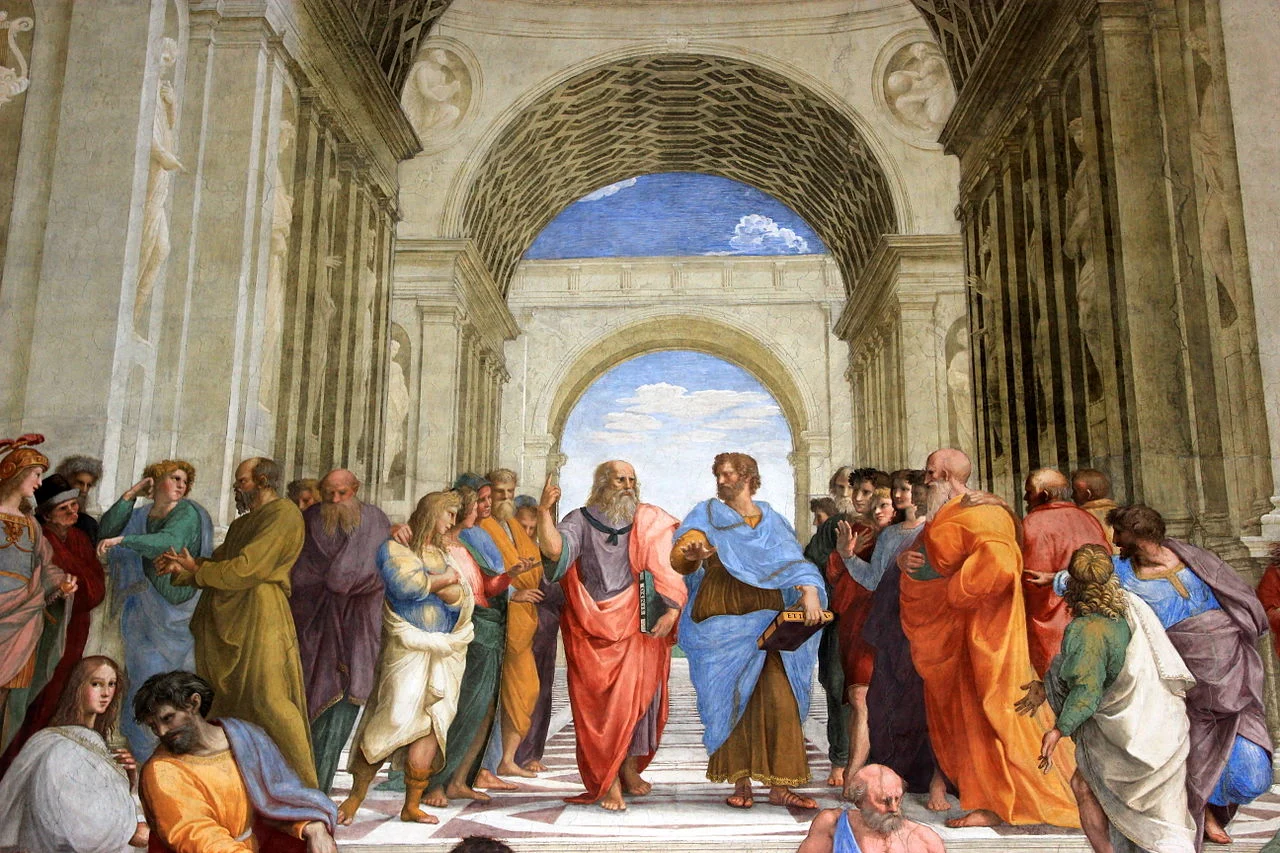
The tragedy of Aristotle’s "lost works" is a central narrative in the history of Western thought. While we often think of Aristotle as the systematic philosopher of the Nicomachean Ethics or the Metaphysics, the reality is that the vast majority of what he actually wrote—and what he was most famous for in antiquity—has vanished.
Scholars estimate that Aristotle wrote as many as 200 treatises, of which only about 31 have survived. The works we possess today are largely his "esoteric" writings—dense, technical lecture notes meant for students at his school, the Lyceum. His "exoteric" works, which were polished dialogues written for the general public, are almost entirely lost.
+1
What Was Lost?
The lost corpus was stylistically and thematically distinct from the lecture notes we study today:
The Dialogues: Aristotle originally wrote in dialogue form, much like his teacher Plato. The Roman orator Cicero famously described Aristotle’s prose in these lost works as a "river of gold." These were meant to be accessible, rhetorically sophisticated, and dramatically framed.
The Protrepticus: An "Exhortation to Philosophy," this work was designed to convince young people of the value of a life dedicated to contemplation. It was a foundational text for ancient readers interested in ethics.
On Philosophy: A treatise where Aristotle articulated his early relationship with Plato’s Academy and began to diverge from the Theory of Forms. Recovering this would provide a "missing link" in how his thought evolved from a Platonist framework to his own unique system.
On the Nature of Comedy: The second book of his Poetics. While the first book (on tragedy) survives and defined Western dramatic theory, the lost second book would have fundamentally altered our understanding of Greek humor, satire, and the role of laughter in ancient society.
On Justice and On Kingship: These would have expanded his political theory beyond the Politics we currently possess, potentially revealing his views on the practical application of justice in evolving city-states and his perspective on the roles of monarchs.
Why Does This Matter?
The absence of these works creates a significant "distortion" in how we perceive Aristotle today:
The "Dry" Aristotle: Because we only have his lecture notes, we perceive him as a dry, methodical scientist. We have lost the "literary" Aristotle—the one who could use narrative and rhetoric to make complex arguments feel vital and engaging.
Missing Scientific Context: We know from ancient citations that he wrote on a much wider range of historical and empirical subjects than what remains. We have lost his broader context as a historian and a scientist, which could have provided deeper insight into how he performed his empirical research in botany, biology, and historical record-keeping.
Intellectual Gaps: Fragments of his works on the "unwritten doctrines" of Plato or his critiques of the Theory of Forms are scattered in the writings of later authors like Cicero, Plutarch, and Iamblichus. We are essentially trying to reconstruct his personality and his total philosophical vision from these "citations of citations."
The Ongoing "Treasure Hunt"
Modern scholars, through projects like FragArist, are attempting to bridge these gaps. They utilize digital humanities, papyrology, and even Syriac and Arabic translations of long-lost Aristotelian fragments to piece together a more comprehensive view of his mind.
The recovery of even a small portion of these works—such as the 19th-century discovery of the Constitution of the Athenians—shows that the Aristotelian corpus is not necessarily "closed." Every scrap of papyrus found in the sands of Egypt or every quote preserved in a medieval manuscript offers a chance to refine our understanding of one of history's greatest intellectual architects.
+1
We are not just missing books; we are missing the "river of gold" that once flowed through the ancient world, and with it, a clearer map of how we arrived at our modern understanding of ethics, politics, and science.